The game now stays on your device between visits: a return visit downloads almost nothing, and Install game files in the Esc menu fetches the whole game once. Chrome and Edge can also install it as an app. Every earlier update is below, week by week.
Averse Lands is still growing. Numbers and art may change as we balance and test.
9 to 15 November · guilds and an encyclopedia, armour for Dexterity, and the beta through Discord
The week of 9 November
Live now
Guilds arrived, with a records book and an encyclopedia of everything you find. The week also opened the beta through Discord and added six armour sets for Dexterity, with packs for more bag room. The website grew too, with a new home page, guides and a database of the game’s items and monsters.
the game stays on your device between visits
The game’s files now stay on your device between visits.
Install game files: fetch the whole game once, from the Esc menu.
Chrome and Edge can install the game as an app.
Until today, a visit a day after your last one downloaded most of the game again: 50 to 77 MB in our own play. A browser’s cache is one pool for every site you visit, and a day of ordinary browsing pushed the game out of it.
The Esc menu a minute after a first visit: 87 of 165 MB are already kept. Taken on a test copy of the game.
Kept as you play
The game now keeps its files in storage of its own on your device, which other sites cannot push out. It fills by itself as you play. In our test, a return visit with the browser’s cache emptied fetched 0.48 MB before the Enter screen, where it used to fetch about 8 MB. After an update, only the files that changed are fetched.
Install game files
Press Esc and look under Downloads. Install fetches the rest of the game now, about 165 MB in all on most computers, with the starter beach and Thousand Year Town first. You can keep playing while it runs.
Pause and Resume. An unfinished install carries on at your next visit. On a phone or a data-saver connection it waits for you to press Resume.
Remove. Deletes the kept files. The game then plays from the network, as it did before.
If your browser says no. A private window, or a browser with its storage turned off, cannot keep the files. The menu says so, and the game plays as before.
Install, start to finish · recorded on a test copy of the game whose files come from the same computer, so the bar fills in seconds. On the live game it takes as long as your connection needs.
The game as an app
On a computer, Chrome and Edge can now install the game: look for Install in the address bar or the browser’s menu, and the game opens in a window of its own. The phone test can be added to a Home Screen too (on an iPhone: Share, then Add to Home Screen). It then opens without the browser’s bars and keeps its files, where an iPhone’s browser clears what a site keeps after a week without a visit. We are still testing this on real phones.
a new look for the website, and a town that keeps its roofs on a slow connection
A painted header and a new home page for the website.
A page for each of the twelve weapons.
No more flat roofs in town on a slow connection.
Two things in this patch. The website now looks and reads more like the game it belongs to, and the game mends a fault for players on slow connections.
The home page on a test copy of the site, signed in with a test account. The ranks it shows are test characters.
The header and the home page
Every page now sits under a carved bar with a dragon at each end, in the same painted kit as the game’s own windows. The home page is laid out like a notice board at a town gate:
News of the realm. The three newest patches, on a parchment sheet beside the logo.
Weapons, places and monsters. Eight weapon slots, three places as tall paintings, and six monsters that open their database pages.
The top of the ranks. The first five of the Level board, beside the way in to the beta.
A new town clip. The market of Thousand Year Town, with a mage healing himself.
The weapon slots and the three places, on the same test copy.
A page for every weapon
Each weapon slot on the home page opens that weapon’s page: the One-handed Sword, the Bow, the Staff and nine more. The pages are made from the game’s own rules and remade with every patch.
In the hand. One hand, two hands or a pair, and whether a shield fits beside it.
What a hit trains. How much Strength and how much Dexterity each hit grows.
The weapon it swaps to. Each weapon shares a main skill with one other: the one-handed and two-handed sword, the spear and the javelin, the bow and the crossbow.
Techniques, traits and the ladder. Every technique and trait, and every weapon of the kind with its damage, speed and the skill it asks for.
The One-handed Sword’s page. The picture behind the title is a painting, not the game: each weapon has one, with armour, a monster and a place from the game.
Flat roofs in town
On a slow connection, Thousand Year Town could open with flat grey and brown roofs, plain flagstones and a plain wall, and stay that way until you reloaded. Those surfaces are painted pictures. The browser was fetching them last, behind everything else, and the game stopped waiting for them after ten seconds.
First in line. The roof, paving and wall paintings are now fetched ahead of the rest. In our test at 1.3 megabits a second they arrive within 12 seconds of being asked for, where they took about 50.
Waited for. The start gives them their time before it builds the town.
Late roofs repair themselves. If a roof painting still comes late, the roofs take it the moment it arrives, with no reload.
Before: plain slabs under the fountain and flat roofs in the bottom corners.After: the painted flagstones and the shingles are in. Both taken in the local test game with a test character, 85 seconds after entering, on a connection held to 1.3 megabits a second.
The sculpted houses and the fountain’s statue are separate models. On a slow connection they still arrive after you are in, and you see their simpler stand-ins until they do: the statue in both pictures above is one.
no more drawing a map nobody sees
Return visits skip a map drawing that was hidden anyway.
Thousand Year Town’s woods are placed a little quicker.
Nothing to set, and nothing more is stored.
This follows yesterday’s two patches for the wait before the Enter button. It is the smallest of the three, and again it helps most when you have been here before.
The map you see on M and in the corner is this painting. Taken in the local test game with a test character.
A map behind the map
Every map has two pictures. One is a painting, which is what M and the corner map show. The other is a plainer map the game draws itself from the roads, trees and houses it has just placed, and it only stands in until the painting has loaded. On a return visit the painting is already in your browser, so the stand-in was drawn at every start and never seen.
What changed
Not drawn when not needed. When your browser already holds the painting, the game no longer draws the stand-in at the start. If the painting ever fails to load, the stand-in is drawn then.
Less work when it is drawn. On a first visit, and for each map you travel to, the stand-in is still drawn, and drawing it now asks for each height of the ground once instead of three times.
The woods are placed quicker. Thousand Year Town checks every tree, bush and tuft of grass against its roads. It now looks only at the stretches of road nearby. Every tree stands where it stood.
In our test on a slowed-down computer, a return visit to Thousand Year Town reached the Enter screen in 5.1 seconds, down from 5.4, and a second run gave the same three tenths. The Landing’s start is too short to show a difference.
Good to know
There is nothing to set, and nothing new is kept in your browser. Every map looks exactly as it did.
the ground of your map is kept between visits
Return visits no longer work out the ground under your map.
Every map’s ground is quicker to work out, first visits included.
Nothing to set: it starts from your second visit.
This patch follows the afternoon’s. It shortens the wait before the Enter button again, mostly for players who have been here before.
The Landing’s path, sand and shore: the kind of ground this patch keeps. Taken in the local test game with a test character.
The ground under every map
Each map’s hills, roads and shores are worked out when the game starts: close to 200,000 heights a map. Until now that happened on every visit, for the map you start on and for the maps next to it.
What changed
Kept between visits. The ground of the map you start on, and of the maps next door, is kept in your browser and read back. On a phone it is the map you start on only.
Checked before use. The game tests a kept ground against its own rules at a thousand spots and works it out afresh if anything differs, so you always walk the ground the server has.
Quicker to work out. The sums themselves are faster too: Thousand Year Town’s ground takes well under half the time it did. That helps a first visit and every map you travel to.
In our test on a slowed-down computer, a return visit to Thousand Year Town reached the Enter screen in 7.6 seconds, down from 9.3. On The Landing it took 5.1, down from 5.7.
Good to know
As with the afternoon’s patch, the saving from reading starts on your second visit. It uses about 2 MB more of your browser’s storage. If the browser has no room, or clears its data, the game works the ground out again as before. A later update that changes a map does it once more.
new lettering for every name over a head
Every name over a head in one storybook face of small capitals.
Players, guilds, monsters and townsfolk all share the new look.
A sharp dark shadow keeps names readable on bright ground.
Names over heads have a new look. They now use the storybook face that the keepers’ and merchants’ names already had, with a sharp dark shadow in place of the old soft glow. Each word starts with a capital and the rest is in the face’s small capitals.
Thousand Year Town’s square. Staged in the local test game with test players in test guilds.
Names over heads
Everyone’s. Players and their guilds, monsters, and the people of the towns.
The same colours. Each name keeps its colour and marks: a guild’s green, a monster’s hunt colours and its STR · DEX · INT line, a keeper’s gold.
Only over heads. Chat, the target frame and every list show names as they were typed.
Words under the name. When a player talks, their words now sit just under their name, without a box.
A party at a Dire Wolf camp outside Thousand Year Town. Staged in the local test game with test players.
coming back to the game is quicker
Return visits reach the Enter screen a third to a half sooner.
The game keeps its painted textures and your armour’s fit between visits.
Nothing to set: it starts from your second visit.
This patch is about the wait between opening the game and the Enter button, for everyone who has played before.
The Enter screen on a return visit. Taken in the local test game with a test character.
Why coming back was slow
The game’s files stay in your browser after a first visit, so a return visit downloads almost nothing. But the game still did a lot of work each time it started. It painted its ground and cloth textures from scratch, and it fitted your armour to your character’s body again. That work had grown over the last month, and returning players were waiting much longer than they did in October.
What changed
Painted once. The textures the game paints are kept in your browser and read back on the next visit.
Fitted once. So is the fit of the armour you start in. Change what you wear and the new fit is kept after your next start.
Less up front. One large texture that play never showed is no longer painted, which helps a first visit too. The ground of the maps next door is now prepared while the Enter screen waits for your click.
In our test on a slowed-down computer, a return visit to Thousand Year Town reached the Enter screen in about 8.5 seconds, down from 12 to 15. On The Landing it took about 5, down from 10.
Good to know
The saving starts from your second visit after this patch: the first one does the work and keeps it. It uses about 12 MB of your browser’s storage. If the browser has no room, or clears its data, the game does the work again as before. A later update that changes how textures are painted or armour is fitted does it once more.
new pictures on the website, six more guides and a richer database
New pictures of the game on the home page and guides.
The database shows every item and monster with its art.
Six more guides, twelve in all.
Nothing in the game changed in this patch. The website now shows the game as it looks when people play it together.
New pictures
The home page and all twelve guides have new pictures: parties hunting, a boss fight, the market, and guilds meeting in the Sundered Ravine.
A capture-the-flag match in the Sundered Ravine. Staged in the local game with test players.
The database
Art on every page. Each database page opens on a painting from the game, with the item’s icon or the monster’s portrait beside its name.
Numbers at a glance. Level, health and what a monster trains sit in a row under its name.
Lists you can scan. Weapons, armour and monsters are tiles in tier bands, and drops show the item with its chance.
Where it lives. A monster’s page shows the maps it is found on.
The Dire Wolf’s page in the database.
Six more guides
There are now twelve guides. The new six cover free games you can play online, old-school games, and how Averse Lands compares with other games people know.
lighter downloads on a phone, and a quicker first start
Download ahead: phones fetch only the maps near you.
A new player’s first start is about a megabyte lighter.
The website’s pictures now stay in your browser for a day.
This patch is about what the game downloads, and when.
The new Downloads section in the Esc menu. Taken in the local test game.
Download ahead
Once you are in the world, the game quietly fetches the rest of it in the background, so the next map opens quickly. On a home connection that is what you want. On a phone’s data plan it is not: in our test, the 20 seconds after arriving fetched 124 MB. Press Esc and look under Downloads to choose:
Auto. The default. Everything on a computer. On a phone, or a slow or data-saver connection, only the map you are on and the ones it leads to.
Everything. Fetch it all, whatever the connection.
Nearby only. Hold the far maps back, on a computer too. The same 20 seconds came to 50 MB.
Nothing is lost by waiting. When you travel somewhere far, the game fetches that map as you cross, so that one loading screen may take a little longer.
On a phone · here Auto means nearby only. Taken in the local test game on a phone-sized screen; the line across the top is the phone test’s readout, and its numbers are a computer’s.
A quicker first start
A new player used to wait for one picture holding every item icon in the game, about a megabyte, to see a potion and a scroll on the bar. They now get a small sheet of the 47 icons a new character can meet, a tenth of the size, and the full set follows once the townsfolk are in. In our test on a slow connection, a first play reached a busy Landing about two seconds sooner.
The website
The pictures and clips on these pages were checked with the server again on every visit. Your browser now keeps them for a day, so the Updates page and the guides open faster the second time.
a frame rate setting, and a game that rests when you do
Frame rate: Full, 60 or 30, in the Esc menu.
The game rests at 30 a second while you are away.
It now tells us how smoothly it runs for you.
Two changes make the game easier on your computer, and a third helps us find where it runs badly.
The two new rows under Graphics in the Esc menu. Taken in the local test game.
Frame rate
Until now the game drew a frame every time your screen refreshed: 60 times a second on most screens, and 144 or 240 on a fast one. Press Esc and look under Graphics to choose:
Full. Your screen’s own rate, as before. It is the default, so nothing changes unless you pick another.
60. About 60 a second. On a faster screen the frames stay evenly spaced, so a 144 Hz screen draws 72.
30. About 30 a second: the coolest and quietest, and the kindest to a battery.
Frame rate · recorded in the local test game on a 240 Hz screen. The counter at the top is a test readout, started again at each click by the test script.
Rest when idle
After a minute away from the mouse and keyboard, with your character out of a fight, the game draws 30 frames a second until you touch them again. It does the same whenever you switch to another window. The world, the chat and other players carry on as normal, and the full rate is back at once.
On by default. Turn it off with the Rest when idle box under Graphics.
The phone test. It never rests, so testers’ numbers stay comparable. Frame rate works there too.
How it runs for you
The game now sends us a small report of how smoothly it ran. For each stretch on a map it says how many frames it drew and how long they took, your graphics quality and window size, and the name of your graphics card. It is kept with your account and your browser’s family, and holds nothing you typed and no internet address. We use it to find the maps and machines where the game struggles, so we fix the right things first.
guilds, a records book and an encyclopedia
Guilds: a name in green and a logo over every member.
A records book, and an encyclopedia that pays rewards.
A card says what happened while you were away.
Four things arrive together, to give you more to work towards and more people to play with.
Two guilds in the town square, and Aldwin clicked. Staged in the local test game with test players; their guilds and logos were set by the test script.
Guilds
From level 8 you can found a guild in the Guild tab of the Group Finder (O). It is free during the beta.
Over your head. Your guild’s name shows in green above your name, with its logo beside it, to everyone near you.
The logo. The leader uploads a picture, and it shows at once. Our staff remove one that breaks the rules.
Members. Up to 30, all on the founder’s side, Humans or Ashborn, and one guild for each character. The leader invites with /ginvite Name.
Guild chat. /g talks to every member online, on any map, and /groster shows who is in the guild.
PvP rank badges. Click a player and their frame shows the badge of their PvP rank. There are ten ranks now: Warmaster at 4,000 Glory and Ravine Legend at 6,500 are new.
The records book
Press Y, or open Records in the character window. The book counts the monsters you kill, family by family, the lairs you clear and the Rare and Epic gear you find, starting with the kills you have already made.
Everyone in the closed beta also gets a starter pack, once for each account: 30 Small Health Potions, 30 Small Mana Potions and 5 Scrolls of Return.
The records book · recorded in the local test game on a test character whose book the test script filled in
The encyclopedia and Rested Vials
The book opens on a new encyclopedia of weapons, armour, accessories, crafting materials and monsters. An item unlocks when you get it yourself: from a monster’s loot or a party roll, by crafting it, as a quest’s reward or from a shop. Trades, the Exchange and the stash do not count. A monster unlocks on your first kill, and what your character already holds is counted in.
Rewards. Every five unlocks on a page opens a reward to claim: potions, Barr, Scrolls of Return and Rested Vials.
Rested Vials. Drink one for 15, 30 or 60 minutes of rest: experience, stats and skill grow twice as fast. The time runs only while you are in the lands, you can hold an hour at most, and a vial is bound to you.
The Weapons page · a reward ready to claimThe Monsters page · your kills by family
While you were away
Come back after an hour or more and a card says what happened.
Rested. The rested experience your time away earned, and any Rested Vial still running.
The Exchange. What sold, and the Barr waiting in your Collect box.
Your guild. How many lines were said in guild chat, over the last five days at most, and by whom, with three of them quoted. Lines that name you come first.
Within reach. The gear you are closest to being able to use, and what it still needs.
The card after 14 hours away. Staged in the local test game: the test script gave it the numbers and the guild lines.
packs: more room in your bag
Three packs, each opening another row of ten bag cells.
Leatherworking makes them at a smith’s new Packs plaque.
A worn pack adds 1 to 4% experience from monsters.
Your bag still starts with three rows of ten. A pack, worn in its own new slot at the foot of the bag window, opens more: the Satchel one row, the Backpack two, the Expedition Pack three, for 40, 50 and 60 cells. The rows you have not opened show as locked, and the bag scrolls to them.
An Epic Backpack worn: 50 of the bag’s 60 cells open, the last row still locked. Taken in the local test game on a test character; the pack was put in its bag by the test script.
Three packs
Wearing a Backpack · recorded in the local test game; the pointer is drawn by the test scriptSatchel, Backpack, Expedition Pack · the icons’ painting
Taking one off. A pack comes off, or is swapped for a smaller one, only while the rows it opens are empty, so nothing is ever lost.
On a death. A worn pack never falls. The one bag cell a death may take is drawn from the cells you have open.
Trade. Packs are not bound: trade them or sell them on the Exchange. No shop sells one and no monster drops one.
Leatherworking
Leatherworking had no recipes until now. The smiths have a new Packs plaque, and each pack takes pieces of its own tier, mostly Leather:
As with all crafting, a pack takes the rarity of its pieces, and a better one pays: while worn, a Basic pack adds 1% to the experience monsters give you, Uncommon 2%, Rare 3% and Epic 4%. It stacks with rested experience. The bonus is on experience only, not on attribute or weapon skill gains.
No pack: 30 cells open and the rest locked. Taken in the local test game.
a new home page, guides and a database of the game
A new home page, and a press kit for writers.
A database of every item, monster and skill.
Joining the beta starts with your email, then Discord.
Nothing in the game changed in this patch. The website did: it now says what Averse Lands is to someone who has never heard of it, and lets you look things up without opening the game.
The home page on a test copy of the site, signed in with a test account.
The home page and the press kit
The home page now shows the game: what it is, pictures and clips from the world, what is in the beta, and how to join. For anyone writing about the game there is a press kit with a fact sheet, the logo, screenshots and clips to use.
The database
The database is made from the game’s own rules, so it says what the game does. It is remade with every patch.
Items. Every weapon, armour piece, shield, tome, jewel, potion and material, with what it needs and what it gives.
Monsters. Where each one lives, its level and health, what fighting it trains, and what it can drop with the chance of each drop.
Skills and experience. Each skill and how it grows, and the experience needed for every level.
The Dire Wolf’s page in the database.
Guides
Six guides answer what people ask before they try the game: how it compares with the games they know, and whether it runs on a Mac, a Chromebook or a phone with nothing to download.
The guides page.
Joining the beta
Email first.Join the beta now asks for your email, so we can write when places open and when a big update lands. Every email has an unsubscribe link.
Then Discord. The next screen is the Discord sign-in, as before. If you have already left your email, one link takes you straight there.
Counting visits. The website’s pages now use Google Analytics to count visits; the game itself does not. The privacy notice says what is kept.
Step 1 of 2 on the Join the beta page.
your character on My account, as the game draws them
My account shows each character as your inventory does.
The right face, armour, weapon and stance, for every set.
It is drawn again when you change what you wear.
The figure beside your gear on My account was a picture made ahead of time for two armour sets and six weapons, all on one man. Anything else came out bare, and every man had the same face. Now the game draws the figure itself.
A test character on a test copy of the site. The figure is the one the local game drew for him in its inventory window.
How it works
The game draws it. When you play, your inventory window draws your character once more at the size the website needs and sends it to your account. It takes a moment and nothing on your screen changes.
It keeps up with you. Put on other armour or take up another weapon and the picture is drawn again; My account shows the newest one.
Until then, your face. A character that has not been played since this patch shows its face there until its next visit to the world.
It is yours. Only your own My account page shows the picture.
a lighter frame on every computer
About half the draw calls in town on the High setting.
Less graphics memory on every setting.
Shadows a little sharper; nothing else looks different.
On a computer the game was held back less by the graphics card than by the work of handing it each frame, and Thousand Year Town was the heaviest place for it. This patch takes that work out in three places and leaves the picture as it was.
Before: the square with this patch switched off, 802 draw calls a frame.After: the same view, 442 draw calls. Both taken in the local test game on our PC; the readout is the test page’s own, and the townsfolk had walked on between the two.
Shadows drawn only where you can see them
The sun’s shadows were worked out for a wide square of ground round you, most of it off the screen. Now they are worked out for what is in view, on every map, hills and harbours included. The same shadows fall in the same places, a little sharper.
The picture drawn once
On the High setting the soft shading in corners and under things had the whole scene drawn a second time. It now takes what it needs from the first drawing. The shading is the same to the eye; the inside of the plaza fountain’s basin is shaded a touch more than before.
Less graphics memory
The game kept two large smoothed copies of the frame where it needs one. On Medium that is about a fifth less graphics memory out in the fields, and it helps most on laptops whose graphics share the computer’s memory.
The square with this patch · recorded in the local test game, the camera turned by the test script; the readout’s numbers are our PC’s
armour for Dexterity, and a new blow between players
Six armour sets that ask for Dexterity, from 13 to 67.
Every piece now and then turns a blow aside.
Blows between players are worked out like blows on monsters.
Dexterity is the stat of bows, knuckles and daggers, yet every armour in the game asked for Strength. Now six sets ask for Dexterity instead: lighter than the strength sets, about as tough at the same number, and every piece now and then turns a blow aside.
Displacer · the men’s cut on the town square, the camera going once round. Recorded in the local game.Strong Leather · the women’s cut. Recorded in the local game.
The six sets on both bodies, from 13 Dexterity on the left to 67 on the right. A staged shot from the armour test page, with the game’s own models.
Strong Leather, 25 Dexterity: Helm 2, Jerkin 7, Leggings 6, Boots 5. Hard-tanned hide in marsh greens, studded, with steel plates where the blows land.
Scaled, 45 Dexterity: Helm 3, Cuirass 9, Greaves 8, Sabatons 6. Blue steel scales riveted in silver, with a closed visor.
Banded, 53 Dexterity: Helm 4, Cuirass 11, Greaves 10, Sabatons 8. Plate harness blued in the forge, with pale gold rims.
Displacer, 67 Dexterity, the top of the line: Helm 6, Cuirass 11, Greaves 10, Sabatons 8. Gunmetal plate over fine gold scale.
Where to get them: Brann in Thousand Year Town and Osric in the Capital sell every piece, at three times its value like every top piece (a chest piece’s value runs from 610 Barr for Tempered Leather to 1,500 for the Displacer). Every piece also has a recipe at the anvil, from Armoursmithing 5 for Tempered Leather to 65 for the Displacer.
Each set has its own icons, and players past “Players shown in full” are drawn in them too.
The sets’ icons, as they show in your bag.
Evasion
Every piece of the six sets turns some blows aside. On 10 in every 100 blows aimed at you, a piece takes 10 points off the attacker’s chance to hit; the Displacer’s pieces do it on 15. The item card reads “+10 Evasion on 10% of blows”.
Each worn piece rolls on its own and they add up, so a full set takes about 4 points off every blow on average, and the Displacer about 6. It works against monsters and players alike. Now and then two or more pieces fire on the same blow.
A chance to hit never goes below 1 in 100 or above 99 in 100, whatever the evasion, Dodging and traits add up to.
New needs for the metal sets
Emberwatch: 38 Strength (was 42), with new numbers: Helm 3, Cuirass 9, Greaves 8, Sabatons 5 (was 10, 9 and 6 for the last three), and cheaper.
Plate: 60 Strength (was 56). Golden: 65 (was 63).
Nightguard: 73 Strength (was 49), with new numbers: Helm 6, Cuirass 14, Greaves 13, Sabatons 9 (was 4, 11, 10 and 7), and dearer.
If you wear a piece you no longer have the Strength for, it moves to your warehouse when you next log in, or to your bag if the warehouse is full. Nothing is lost.
Fights between players
One blow for players and monsters. A blow on a player is now worked out like a blow on a monster, with no special rules for players. All of your Strength now counts in your defence, and skills and bows hit players as hard as they hit monsters (skills were cut to 60% and bows raised to 125%). The whole Dexterity gap counts towards hitting (it was half), and potions keep their usual cooldown in a fight (it was 5 seconds).
Armour takes a share of each blow, not a set amount. A blow does its damage × 25 ÷ (25 + your defence), at least 1: a defence of 25 halves it, 75 leaves a quarter, and your defence counts your armour and all your Strength. With a set amount taken off instead, most blows between two well-armoured players did nothing at all.
Armour rolls on every blow: each piece you wear counts at anything from its low to its high defence, drawn fresh on each blow from a player. Monsters still meet its full defence.
Tested with bots on a local copy of the server, 12 at a time on three maps: a kill took about 5 to 10 seconds up to level 24, much as today, about 18 seconds at levels 25 to 29 (today about 10) and about half a minute at levels 40 to 50 (today 10 to 15). Evasion from the Dexterity sets turned blows aside as often as the rules say.
And in groups: in bot matches of 5 against 5 in the Sundered Ravine, nobody at full health went down to three blows or fewer. A kill took about 8 seconds at levels 14 to 20 (as today), 12 at levels 25 to 31 (today 5) and 16 at levels 44 to 50 (today 9). When four or five players pile onto one target, it can still fall inside three seconds: about 1 death in 7 up to level 31 and none at levels 44 to 50, where today it is between 1 in 5 and 1 in 3.
the beta through Discord
Averse Lands is opening its beta to a small group of testers, and the way in is our Discord server.
Apply · averselands.com/beta, before you sign in.Approved · the same page once we approve you. Staged in a local copy of the site with a made-up tester, Wren the Brave.
Joining the beta
Apply with Discord. Open averselands.com/beta (the home page links to it too) and sign in with Discord. Discord tells us your Discord ID and name, and adds you to the Averse Lands Discord server. We never see your Discord password, email or messages.
We read every application ourselves, and Discord tells us the moment one arrives. While you wait, the page tells you where you stand, and its Open our Discord button takes you to #general, where you can talk with us and other players.
Once we approve you you get the Beta Tester role in our Discord server, which opens the beta channels: news, bug reports, feedback, chat, looking for a group and two party voice rooms. Our bot sends you one message to say you are in.
Then make your beta account on the same page, with a username and a password: one account per Discord account. It can enter the world while the game is invite-only, with no wait for a tester grant.
Accounts made before today carry on as they are.
The privacy notice now lists what the Discord sign-in keeps.
2 to 8 November · the Exchange, weapon mastery, seven starting weapons and the first thirty levels put right
The week of 2 November
Live
The week opened with the Exchange, the game’s first market, and went on to weapon mastery, Plate and Golden armour, seven starting weapons and portals between the four towns. It ended with attacking on the move, as a trial, and more than a hundred fixes to the first thirty levels. Patch by patch below, newest first.
monsters that keep up with you
You could walk away from almost anything. A monster stood still while it bit and while it readied the next bite, so by the time a blow landed you had stepped out of its reach, and a steady walk took no damage at all. Not any more.
Before · the wolf at its own 4.7 metres a second drops behind a walk. Staged in the local game: a test character, and the wolf moved by the server’s own monster code with the old rule.Now · it keeps up and bites as it runs. Staged the same way, with the new rule.
No more walking away
Monsters chase a little faster than you walk. You walk at about 5.3 metres a second. A monster after you now runs at about 5.8, or at its own speed if that is faster. Until now all but five of the game’s 87 monsters were slower than your walk.
They keep after you while they bite. A monster in reach used to stand still through its bite and the pause after it. Now it steps after you through both, so its bite lands on someone walking away as it does on someone standing.
What still holds a monster in place: a caster’s spell while it is cast, an elite’s special move, such as the Bone Guard’s Shield Wall or the Barrow Brute’s crush, and a root. The group bosses, the Crypt Knight, the Cult High Champion and the Rime-King, keep their own pace and still stand to swing: their fights are built round their marked attacks.
The way out. A Swiftness Potion takes you to about 6.1 metres a second, faster than any chase. Monsters still give up where they always did: too far from home, or at a town’s edge.
With the trial of attacking on the move (in the patch below), walking backwards as you swing no longer keeps you out of reach: what you fight now fights back.
In our tests a character walked straight away from each monster for 20 seconds. Before, not one blow reached them. Now a Dire Wolf lands 11 of its 11 bites and a Zombie 8 of its 9, and every other monster that fights hand to hand lands nearly all of its blows, except while it uses a special move.
attacking on the move, one big loot bag, and the first thirty levels put right
Two changes you will feel at once, and the results of a long hunt through the first thirty levels for anything a new player would trip over.
Swinging on the run · a sword keeps your full speed. Staged in the local game: a test character, and a wolf held still so the loop stays in reach.
Attacking on the move: a trial
You keep walking. Until now, while a swing ran your movement keys did nothing, so with a target set you barely moved. Now your attack goes on while you walk with the keys or the thumbstick, and you turn to face what you fight while it is in reach.
Melee keeps your full speed. With a sword, an axe or knuckles you walk at about 5.3 metres a second, swinging. A blow still has to reach: walk out of reach before it lands and it misses.
A shot or a throw slows you to half speed while it runs. That comes to about 3.5 metres a second with a bow and under 3 with thrown javelins. A wolf runs at 4.7, so what you fight still catches you. Press Escape to drop your target and run at full speed.
A technique still holds you in place while it runs, a step still breaks a spell’s wind-up, and a click on the ground still drops your target and walks you there.
This is a trial. We may change it, or take it back. Tell us how it feels.
Shooting on the move · a bow walks at half speed while each shot runs. Staged in the local game: a test character, and a wolf held still.One bag · five Dire Wolves killed across eleven metres, one bag, and the planks of two kills in one cell. Played on a test server, with a test character.
One big loot bag
Your kills share a bag. Each kill’s loot used to lie in a sack of its own at the body. Now your kills within 12 metres of one another share one bag, lying at your latest kill, and one window holds all of it. You take anything in it from where you stop by the bag.
The same thing shares a cell. Planks from three wolves show as one cell with their count, and taking it takes them all. Gear keeps a cell each. A kill farther off starts a new bag.
Take all says it once. One line in the chat for the whole bag, not a line for each thing. If your bag fills part way, it stops and says so.
Who may take what has not changed. A kill’s loot is held for its hunter, or the hunter’s party, for 20 seconds, then it is anyone’s. Each thing in a bag keeps its own 3 minutes, and the time shown is the first to go.
What you drop from your bag, and what is left where you fall, lie as they always did.
Smoother in a crowd
Sacks are far cheaper to draw. Every sack on the ground is now drawn together. Among 40 test bots at a wolf camp, on our own PC, the picture went from 37 frames a second to 61.
Ten names at most. Hunters used to leave a wall of gold names over a camp, with yours lost in it. Now at most ten show: the one under your pointer, your own, then the nearest. Any sack shows its name when you point at it.
The game steps down by itself when frames stay slow. Under 25 frames a second for 20 seconds, it shows fewer players in full, then lowers the graphics, with one line in the chat for each step. A number you picked in the menu, or graphics you picked with G, stay as you set them. A reload starts again.
Before · a camp after 40 test bots had hunted it. Bots never pick up, so this is as bad as it gets.After · the same camp and the same bots, with ten names at most. Taken before sacks began sharing a bag, which leaves fewer still.
The first thirty levels, put right
We went through levels 1 to 30 with test bots and real browsers, looking for anything that would trip a new player, and fixed more than 130 things. The ones you are most likely to have met:
Quests. An item a quest hands you as it starts now shows in your bag at once. Steps that start, fail or get dug up now say so. A class quest you left behind at the road no longer stays in your log for ever. Three Mainland quest givers no longer read out a developer’s note, and at level 18 something finally tells you the ferry exists.
A poor connection. It no longer counts as cheating: a stall that catches up scores nothing, and a short one no longer snaps you back. A drop of a few seconds no longer ends your party or your crypt run, and a blip during a trade shuts the window with a word.
Slow computers. Under 20 frames a second everything used to run slow, and at 10 your keys locked up in a fight. Now you walk at full speed down to about 5.
Phones. The menu button no longer opens and shuts the menu in one tap, the bag opens on the right tab, the world map has a close, the harbour board and the Sun Temple door have a tap of their own, and a sideways swipe on a list no longer throws you out of the game.
Windows and keys. A quest’s buttons no longer shrink away with another window open. Tab stays in the chat line. A click on the small map opens the world map where it used to walk you there. Using the windows now counts as being there, so they no longer log you out for idling. On a small window the warehouse and the Exchange say what to do.
Fights and finds. A shot from inside a town’s ring no longer trains you for ever where nothing can touch you. Space and the lesson’s arrow prefer a monster nobody else is fighting. The last dig of a Torn Map on a full bag lays the rest at your feet where it used to destroy them. Javelin players can open the Pinning Throw page of the book.
Rest. Logging out in the Capital or King’s Quay now earns rested experience, as it does in other towns.
The world map on a phone · it has a close now. Staged in the local game, in Chrome’s phone view.
room for a crowd of newcomers, and a clear word when the world is full
We are getting the game ready for many more people playing at once, and that starts where everyone starts. We sent crowds of test bots through The Landing, and they found its wolves ran out. So there are more of them now, and they come back far sooner.
A crowd on The Landing · the first wolf camp with forty newcomers on it. Staged in the local game: the forty are test players, walking.
The Landing holds a crowd
More wolves, back sooner. Its two wolf camps hold 18 Dire Wolves, up from 10, and a wolf comes back in 8 to 14 seconds instead of 20 to 32.
Nobody holds them back. Anywhere else, a monster waits to come back while a player stands near its home. On The Landing a crowd always does, so here it no longer waits. The wolves there never start a fight, so one coming back beside you is no danger.
What it changes: with 48 test bots on the beach, the five kills of the first quests took about 22 minutes. Now they take under 5.
The Landing is still no farm: its kills pay no Barr and drop only what its quests want. Redcliff Cove, the Ashborn’s Landing, has the same changes.
The world is full · what you see while you wait for a place. Staged in the local game: the screen called directly, over the loading painting.
When the world is full
The world holds a set number of players at once, so that everyone in it stays smooth. Until now, trying to enter a full world only said “Reconnecting”, for ever.
Now it says the world is full, tries again by itself every little while, and lets you in as soon as there is a place. You do not have to reload anything. This is not yet a queue: whoever tries first when a place opens gets it.
Your place stays yours for a minute. Changing maps reloads the page, and a connection can drop for a moment. Neither loses you your place to someone waiting.
Sharing one connection
Many more players can now play from one internet address, and more of them can sign up from it in a day. The old limits would have stopped a house full of friends, a café or a campus. Wrong passwords are still slowed down exactly as before.
pick your starting weapon, nine more weapons, and portals between the towns
A new character now picks a starting weapon outright, from seven: the one-handed sword, the one-handed axe, the javelin, knuckles, the bow, paired daggers and the staff. Your three attribute points are only your attributes now, so any weapon goes with any spread. Point at a weapon, or tap it on a phone, and a card says what it is good at and what it costs you. And on The Landing, sword, axe, javelin and staff starters get a quest that puts the next weapon in their hands.
Fast, but no shield · the daggers’ card while the sword is picked.A shield, but slower · the javelin’s card, and the quest it opens.
Seven starting weapons
Picked, not worked out. Until now your three free points chose your weapon for you (three on Strength gave the axe, and so on). Now you click the weapon you want, and the points stay where you put them.
The seven: the one-handed sword and axe, the javelin (one hand, thrown at range), knuckles, the bow, paired daggers and the staff. The javelin starts with the Training Shield, as the sword and the axe do. The spear has left the row: the javelin takes its place, and the spear is one of the javelin’s quest rewards (below). A character who already started with the spear keeps it.
Each weapon’s card shows its swing speed grade, from A for the quickest to F for the slowest, its damage and reach, and whether a shield fits beside it, with one line for it and one against. The trade is the same throughout: quick weapons hit often but lightly, heavy ones hit hard but slowly, and a weapon that takes both hands, or a pair, leaves no hand for a shield.
The knuckles’ and daggers’ descriptions no longer say they train Constitution: no weapon does. Constitution grows from the blows aimed at you.
At the end of The Landing, the Sailor still lets you swap your training weapon, now for any of the seven.
The Long Blade · the Quartermaster’s offer to a sword starter. Staged in the local game: a test character with The Landing’s lessons marked done.
A quest for the next weapon
Once you have finished Made by Hand, the Quartermaster on The Landing has one more task, depending on how you started: a sword starter tries the Training Greatsword, an axe starter the Training Great Axe, a javelin starter the Training Spear, and a staff starter learns what the tome in their off hand is for.
He hands you the weapon to keep. Three Dire Wolves must fall with it in your hands: it takes both hands, so your shield goes back in the bag while you try it. The staff’s lesson counts three wolves with the staff in hand and the Training Tome in the other. Each pays 15 Barr and rested experience.
They are optional: the Road to Town does not wait on them.
a new way to train magic, and the quests put right
Magic now trains in a new way. A staff learns from the spells you cast with it as well as from its blows, a tome learns like a shield, each school of magic grows only from its own spells, and changing between White and Black is done at a keeper, at the cost of starting the school you leave again. With it come fixes from a look over everything added in the last two weeks: the King’s Quay quests, the quest journal on the Mainland, a run of tooltips and The Landing.
Brother Anselm, Keeper of the Temple, offering a Black wizard the change to White. Recorded in the local game, which has no server, so its button is greyed there.
How magic trains
The Staff learns from casting. Every spell that counts (an attack spell that lands on a monster, a heal on another hurt player, Protection, a cure that cured) cast with a staff in hand now also trains the Staff, one step a cast, and so Arcane. Its melee blows train it as before. Until now a caster who only cast never raised it, and its techniques waited behind it.
The Tome learns like a shield: from the blows your main-hand weapon lands, at that weapon’s pace, as well as from attack spells and from heals on other players as before.
Each school grows from its own spells. Blue Magic from Blue spells only; White and Black no longer give Blue a share.
White and Black open at 20 Intelligence. Anyone who has already learned one keeps it.
Changing side is done at a keeper now, not in the spell book: Brother Anselm at the Capital’s temple or Master Corvin in the Western Ruins. The school you leave starts again at level 1 instead of losing 20 levels; its spells stay in your book, uncast until you come back.
Quests
The King’s Quay road works online. A word with a person, opening the map and reading the harbour board now count on the server, so The Lay of the Land, The Guild Square, Guild Row and The Temple’s Blessing can be finished. A word with anyone counts, not only with those who just chat.
The journal on the Mainland lists the Mainland’s quests on the Ashen Graves and the other desert maps, not the old Southern Isles ones.
The quest window names the Mainland’s givers and their maps, offers Claim reward only at the one who takes the quest, and says each task’s steps in words.
Tooltips and The Landing
Item cards in the bag count a weapon’s or armour’s gem and bone upgrades, the Exchange’s Beast parts filter shows its goods, and the moral tooltip’s numbers are the game’s own.
Wording put right on the Scroll of Return, Help, Constitution, Dexterity and Mana; the dagger and javelin show an icon on the Skills page.
The Landing: the Quartermaster speaks his own smith’s line, the selling lesson points at a spare draught, and the Sailor counts every training weapon Brann gives.
Plate and Golden armour
Two new armour sets above Nightguard: Plate, bright steel plate rimmed in copper-gold with mail at the joints, worn from 56 Strength; and Golden, a coat of bronze-gold scales under a polished gold breastplate, from 63. Each comes in a men’s and a women’s cut, with a helm that closes with a slitted visor. Brann sells both at his dear price for the best gear; nothing drops them yet.
Plate · the men’s cut on the town square, the camera going once round. Recorded in the local game.Golden · the women’s cut. Recorded in the local game.
Emberwatch, Plate and Golden on both bodies. A staged shot from the armour test page, with the game’s own models.
The two sets
Plate: Helm 4, Cuirass 12, Greaves 11, Sabatons 8 defence; 56 Strength. Worth 480 / 1,470 / 1,300 / 1,180 Barr, at three times that from Brann like every top piece.
Golden: Helm 5, Cuirass 13, Greaves 12, Sabatons 8; 63 Strength; 480 / 1,480 / 1,370 / 1,220 Barr, dear at Brann’s as well. The heavier set of the two.
Crafting: both have recipes at the anvil: Plate at Armoursmithing 48, the Golden Helm at 70 and the Golden body pieces at 95, from metal, wood, leather and linen.
In the crowd: players past “Players shown in full” are drawn in them too, and both sets have their own icons.
Emberwatch moves down
42 Strength instead of 56, with numbers to match: Helm 3, Cuirass 10, Greaves 9, Sabatons 6 defence, and 480 / 1,080 / 1,080 / 990 Barr. Until now it had Plate’s numbers; the real Plate takes those.
The climb is now Studded (30), Emberwatch (42), Nightguard (49), Plate (56), Golden (63). Anyone wearing Emberwatch keeps it.
The daggers, javelins and crossbow of the last few days get ladders to climb: three more of each, each as strong as the weapons of its rank beside it. They drop from the same monsters, and Brann sells each one dear.
The Swordbreaker · one in each hand, the teeth on its back to catch a blade. Staged in the local game: a test character, the wolf held still.
Three more daggers
Ratcatcher’s Seax (Brawling 13, 4–6): a plain broad-backed knife.
Barrowbone Knife (Brawling 26, 7–9, Tier 1): a grip of ringed bone.
Swordbreaker (Brawling 32, 8–11, Tier 1): a parrying dagger with a toothed back.
Each strikes like the knuckles of its rank, a pair in both hands, and drops where they drop.
Ratcatcher’s Seax · the pair at rest (staged: a test character)
Javelins cut from the spears
Three spears made short enough to throw: the Gatewarden Javelin (Spears 14, 9–12), the Trident Javelin (Spears 20, 11–15) and the Webwarden Javelin (Spears 22, 12–16), all Tier 1.
Each is its spear’s head on a shaft about a third shorter. Like every javelin it stabs up close, is thrown out to 8 metres and leaves a hand free for a shield.
Each drops beside the spear it was cut from.
The Gatewarden Javelin · drawn back to throw (staged: a test character, the wolf held still)
Three crossbows
Until now the Training Crossbow was the only one. Now there are three more, each beside the bows of its rank under Archery: the Crossbow (24, 8–13, Tier 1), the Heavy Crossbow (36, 12–20, Tier 2) with a crank at the butt, and the Spirit Crossbow (45, 14–22, Tier 2) in green lacquer.
They shoot as the Training Crossbow does, a bolt to 12 metres, and drop where bows of the same rank drop.
The Heavy Crossbow · bolt after bolt (staged: a test character, the wolf held still behind the bushes)The kick · the bolt leaving (staged the same way)
Their bag icons · the Seax, the Barrowbone Knife and the Swordbreaker, then the three crossbows. The javelins use their spears’ icons.
Portals between the towns
Every town’s way · Selwyn’s dialog once you have done Landfall. Staged in the local game: a test character with Landfall marked done.
Once you have done Landfall, the first task on King’s Quay, the four portal keepers open a way to every town, not only to their own partner: Selwyn in Thousand Year Town, Wenna at the Heroes’ Respite, Aelwen on the Capital’s Guild Square and Iyla in Wardens’ Rest.
Each way costs the same 1,000 Barr, less your charisma discount, and opens as before: hold still while it opens. Before Landfall each keeper keeps to his own one way, and says the others open once you have landed.
The ferries between Thousand Year Town and King’s Quay still make one crossing each.
the Dire Wolf’s old moves back
The new wolf animations of 1 November did not move the Dire Wolf the way it should, so the Dire Wolf and the Dire Wolf Alpha are back on the models and moves they had before.
Walk · the Dire Wolf coming for you. Staged in the local game: a test character who never loses health.Bite · its old lunge
The Dire Wolf as it was
Two of them: the Dire Wolf and the Dire Wolf Alpha. The Coyote, the Grave Jackal, the Barrow Hound and the Barrow Hound Alpha keep their new moves for now.
Unchanged: their strength, speed, reach and loot.
paired daggers, the javelin, and knuckles in both hands
Weapon mastery’s first new weapons. Brawling gains paired daggers beside the knuckles, and Spears gains the javelin beside the spear: each trains a skill of its own to 120 and feeds its family’s main skill and bank, as every weapon does. And knuckles are now a pair, one on each fist.
The Iron Dirk · one in each hand. Staged in the local game: a test character, the wolf held still.
Paired daggers
One in each hand. A dagger is one item: you carry one and the game draws its twin in your other hand. A pair takes both hands, so no shield or tome goes with it.
Daggers fight on the knuckles’ quick timing, the hands taking turns, and train Dexterity most and some Strength, as knuckles do.
Training Daggers are free from Brann beside the other training weapons. The Iron Dirk (Brawling 10) is on Brann’s shelf too; it and the Staghorn Dagger (Brawling 21) drop where knuckles of the same rank drop, and Brann sells the Staghorn Dagger dear.
Cross Slash at Dagger 10: both blades cross through your foe for 1.6 times your blow, and the wound bleeds a tenth of it every second for 4 seconds. The Dagger Aura comes at 20 and a trait at 30: Serrated Edge (a blow can make the foe bleed), Light Step (harder to hit) or Opportunist (more damage on a stunned or pinned monster).
Hand after hand · the Iron Dirk’s blows (staged: a test character, the wolf held still)Cross Slash · its motion, the blades crossing (staged: techniques play online, so this is the move alone)
The javelin
Stab or throw. The javelin is one-handed, so a shield goes with it. Close in it stabs with one arm; further off, out to 8 metres, you throw it, and another is always in your hand: no ammunition, and the same damage either way.
A throw that misses flies past and stands in the ground, as a missed arrow does.
The Training Javelin is free from Brann. The Barbed Javelin (Spears 10) and the Pilum (Spears 17, Tier 1) drop where spears of the same rank drop, and Brann sells them dear.
Pinning Throw at Javelin 10: a throw for 1.3 times your blow that holds a monster where it stands for 2 seconds; up close it is a thrust that stuns it for 1. The Javelin Aura comes at 20 and a trait at 30: Phalanx (more defence with a shield), Skirmisher (throws hit harder) or Volley Call (a throw can mark a monster so your party hits it harder).
Thrown · the Barbed Javelin from nine metres (staged: a test character, the wolf held still)Up close · the one-armed thrust, with a shield (staged the same way)
A miss · it flies past and stands in the ground (staged: the local game's roll forced to miss)
Knuckles in both hands
The Leocrot Gauntlet · now on both arms (staged: a test character)
Knuckles are a pair now, as daggers are: one item, worn on both fists, with no shield or tome. Their numbers are unchanged.
If you were wearing knuckles with a shield or a tome, it goes into your bag the first time you log in (into your stash if the bag is full), and a line tells you where.
The new skills, techniques and traits have their own tiles on the Skills page and in the spell book.
buy orders on the Exchange, and a price chart
You no longer have to wait for someone to list what you need. Post a buy order at either broker, for as many as you want at the most you will pay for each, and other players can sell to it while you are off adventuring. What they sell you waits in your Collect box.
Roughhide on Browse: the price guide, the chart and a buy order for 30 at up to 12 each (staged: test characters, and a computer’s two weeks of sales behind the chart). Taken on a local server.
Buy orders
Open a material, potion or scroll on Browse, choose Post a buy order, and say how many and the most you pay for each. The Barr for all of it leaves your purse at once and waits in the Exchange, with the same 2 % fee a listing pays (kept). An order for 30 Roughhide at 12 holds 360 Barr and costs 8.
Sellers fill the best orders first, the highest price before the lower ones, and an order fills in parts: 20 of your 30 today, the rest tomorrow.
An order stands for 7 days. Cancel it at any time on My listings: the Barr it has not spent comes back to your Collect box. Orders and listings share your 20 slots.
You can order something nobody sells yet: type its name in the filter on Browse. For a material, pick its tier.
An order cannot offer a price that someone already sells for, or more: buy those instead, they cost you less. A listing cannot ask a price an order already pays, or less: sell to the order instead, it pays you more.
Never above a listing · an order at 14 is refused while ten stand for sale at 14 (test characters)My listings · your orders: how many came, the Barr still held, Cancel; a message when someone sells to you (test characters)
Selling to buy orders
The Sell tab with Roughhide picked: the wanted line, and Sell to buy orders for 20 at no less than 12 each. Taken on a local server, with test characters.
Pick a material, potion or scroll on the Sell tab. If anyone wants it, the price guide shows the wanted line, and Sell to buy orders sells at once: say how many, and the least you take for each.
Each order pays its own price, less the 5 % tax, straight into your purse: no listing fee, no waiting, nothing to collect. If another seller gets there first, you are told and keep your goods.
Selling to an order trains Charisma as any sale does; the buyer’s trains when it collects what came.
Collecting what your orders bought
Your order · what it bought, waiting at any broker (test characters)Cancelled · the Barr an order did not spend comes back (test characters)
The price chart
Two weeks of Roughhide, one day’s numbers under the pointer (staged: a computer’s two weeks of sales). Taken on a local server.
Every material, potion and scroll now shows its last two weeks on the Exchange: a gold line through each day’s average price, a mark from its cheapest to its dearest sale, and how many sold below.
Hold the pointer over a day for its numbers. Sales to buy orders count as every sale does, in the chart, the last ten sales and the 7-day average.
The brokers have their own badge now: a bronze balance scale on wine-red enamel beside Wilmot’s and Ottavia’s names, where a strongbox stood in.
weapon mastery and the crossbow
Weapons now have skills of their own. Every weapon trains its own skill to 120 under its family’s main skill (Swords, Axes, Spears, Brawling, Archery, Arcane, Defence, and Magic for the three schools), and once a weapon is mastered its exp fills the family’s bank, which you can pour into a sister weapon. STR, DEX and INT are trained exactly as before.
The Skills page · Axes, with the One-handed Axe mastered and its exp in the bank, the Two-handed Axe picked to pour intoAfter the pour · whole levels bought for exp and Barr. Staged in the local game: a test character with set numbers, not earned ones.
The pour · five levels of the Two-handed Axe bought from the Axes bank, 15 to 20. Staged in the local game, the same test character.
Each weapon its own skill. A weapon learns from the experience your hits earn, so tougher monsters teach it faster, at the pace weapon skills had before: about an hour and a half of fighting to 30 and twenty hours to 120, for every weapon. Its family’s main skill learns a little slower, never passes your best weapon in the family, and adds up to 5 % damage to all of them.
What gear asks. A weapon now asks only its family’s main skill (“Requires 20 Swords”), not STR or DEX, so Axes 30 wields any axe that asks 30 or less, two-handers too. Shields ask Defence and STR, tomes and staffs Arcane and INT. Every number was set so a weapon opens at about the point in play it opened before.
The bank. A weapon at 120 sends what it earns to its family’s bank. On the Skills page (C, then Skills) you can pour whole levels into a sister weapon below 120, anywhere but in a PvP fight or a battleground match: each level costs its exp and 100 Barr × the level it reaches.
Magic. Blue, White and Black magic are skills to 120 now, levelling cast for cast as their mastery did. Blue is Magic’s main skill and learns from your side’s spells too. The Hold padlocks and the 200 total are gone; levels past 100 keep raising spell power.
Your character carries over. Every weapon keeps its level (anything above 120 goes to the bank), each family’s main skill starts at your best weapon in it, an old bare-hand skill goes into the Brawling bank, and each school’s mastery becomes its level. We checked every character’s worn weapons, shields and tomes against the new asks: nobody has to take anything off.
The first crossbow. A Training Crossbow joins the bow under Archery: two-handed, free from Brann beside the other training weapons, with the bow’s range. It trains a Crossbow skill of its own and feeds Archery as the bow does. Its model is a stand-in for now; more crossbows come later.
The Training Crossbow · a bolt in flight at a Dire Wolf. Staged in the local game: a test character, the wolf held still, and the crossbow’s stand-in model.On a phone · the same page, the bank stacked below the tiles
the Swiftness Potion, a portrait for every monster, and steadier saves
A new potion at Mira’s, painted portraits for the last monsters without one, and a change behind the scenes that keeps busy maps saving smoothly.
The Swiftness Potion
Mira’s Buy list in Thousand Year Town. Taken in the local game.
What it does: you walk 15% faster for 10 minutes.
Where: Mira the Alchemist sells it for 500 Barr. It stacks to 50 in your bag.
A painted portrait for every monster
Eight of the 22: Karl, the Coyote, the Grizzly, the Honey Badger, the Gila Monster, the Desert Mummy, the Sun Priest and the Cult High Champion.
Who: the 22 monsters that still had none, among them Karl the town snake, the desert’s creatures and raiders, and the Sun Temple’s cultists. Every monster in the game now has one.
Where you see it: in the target frame when you pick a monster, in place of the small picture drawn from its model.
Steadier saves on busy days
Every five seconds the server saves what has changed for each player: where you stand, your health and mana, the training from your last hits, and how worn your gear is. It used to write each player on their own; now it writes everyone’s routine saves together, in one go. Nothing changes in play.
Why: in our crowd test, with 400 players on one map, those routine saves were 400 separate writes every five seconds. Kills, loot and trades waited in line behind them, and when 150 players arrived at once some of them were dropped so their characters stayed safe.
What changed: the routine saves of up to 200 players now go in a single write. Each player’s save is still checked on its own, and if anything goes wrong the server falls back to saving each player separately, as before.
Unchanged: kills, loot, trades and purchases are still saved one by one, the moment they happen.
Measured on a test copy of the game on our PC, with 400 players saving at once while 250 kills a second came in: the slowest kill took 22 thousandths of a second to save instead of 233, and 2,000 saves took 10 writes instead of 2,000.
no more sinking into the Ashen Graves
Walking into the Ashen Graves or the Crimson Vines from the map next door could leave you buried in the ground up to your chest, or standing on thin air, with the monsters and people round you the same. Both maps are drawn as mirror images of the ground they are built on, and a map you walked into kept the unmirrored ground under your feet, so you stood at the height of the far side of the map. You now stand on the ground you see, however you come in. Logging in on those maps was never affected.
Before · walked in from Goldleaf Mill and buried to the chest by the Mongman barrowsNow · the same walk, on the ground. Staged in the local game with a test character; the before was taken on the previous build
Walls and edges of those two maps were mirrored for you in the same way, which could stop you short in open ground; they are back where they are drawn.
dungeon fixes
Two fixes for the dungeons (the Crypt, the Sun Temple and the Ice Caves), found by parties of test bots run through them.
He stays down · the Crypt Knight fallen in his chamber. Staged in the local game: a test character and three test players, the Knight laid low by hand.
Cleared floors stay cleared. A dungeon’s levels now stay as your party left them until the whole party has left the dungeon. Before, a level was made afresh whenever everyone stood on the other one: stepping down the stair and back up brought back every elite on the first level, and going back down after the boss brought him back too, loot and all. A party that leaves, or all takes the way out, still finds the dungeon made afresh next time, and a boss you run from still gives up the chase and is whole again when you return.
No idle logout on rising. If you fall in a dungeon you wait there until the fight is over, then rise at the level’s entrance. A long wait counted as idling, so you could be logged out a few seconds after standing up. Rising now counts as you doing something, and the 3-minute idle clock starts again from it.
the Exchange, a market for the whole world
Players can now buy and sell with each other without meeting. There is one Exchange for the whole world: list something at one broker and anyone can buy it at any broker. Wilmot, the Market Clerk, stands on the cobbles north-east of the fountain in Thousand Year Town, and Ottavia, the Exchange Factor, before the west market hall of the Capital.
Wilmot by the fountain in Thousand Year Town. Taken on a local server, with test characters.
Buying
Goods · one line for each material, potion or scroll, with its price guide (test characters’ listings)Gear · every piece listed on its own, asking once more before you buy (staged: two test characters race for it)
Goods (materials, potions and scrolls) are one line each: say how many you want and the most you will pay for each, and you buy the cheapest first. If someone buys first and the price goes up, you pay nothing and are told.
Gear (weapons, armour, shields, tomes and jewellery) is listed piece by piece, with the same card the trade window shows: its rarity, damage rolls, wear and upgrades. Filter by kind, rarity, the strength it needs, a quicker swing, and price.
The price guide shows the cheapest price now, the last ten sales, the 7-day average, and what Mira and Brann pay and ask.
What you buy goes into your bag, or into your Collect box if your bag is full. If two players buy the last piece at the same moment, only one gets it and the other pays nothing.
Selling
The Sell tab: the fee and what you collect after the tax, worked out before you list. Taken on a local server, with a test character.
Click something in your bag on the Sell tab, set your price, and list it. A listing stands for 7 days; you can cancel it at any time.
The cost: 2 % of the asking price to list (at least 1 Barr, kept even if it does not sell), and 5 % of each sale. A Long Sword listed at 400 costs 8 to list and pays you 380 when it sells.
Up to 20 listings a character. Buyers never see who is selling.
Bound items and quest items cannot be listed.
The Collect box
The Collect box after two sales and a listing that ran out (staged: the test set the listing’s end back a week). Taken on a local server, with test characters.
The Barr from your sales, anything that did not sell in 7 days, anything you cancelled and anything you bought with a full bag waits in your Collect box, at any broker. Collect it all at once or one by one.
A message tells you when something of yours sells while you are online, and when you log in with sales waiting.
Selling and buying train Charisma, as trading with the merchants does.
26 October to 1 November · the Ashborn, the Mainland, phone controls and 100 players on screen
The week of 26 October
Live
A second people arrived, the Ashborn, and both peoples now start together on The Landing, while the ferry began to sail for the Mainland: King’s Quay, the Capital, nine hunting maps and two dungeons. The phone test got its own controls, every monster a painted portrait, and up to 100 other players now show at once. Patch by patch below, newest first.
steel-grey weapons in the crowd
Players drawn in the crowd held weapons that shone almost white in the sun, most of all the two-handed axe’s round heads and the greatsword’s blade. Their steel and gold are darker now, so they read as steel beside the weapons of the players drawn in full.
Before · the crowd’s weapons near-white in the sunNow · steel grey. Staged in the local game: eight test players, one of each weapon, all in the crowd but the two in the middle, who are in full
bare-hand hits pay nothing
Fighting with nothing in your hands no longer pays anything. A bare-hand hit now earns no experience, no Constitution and no Bare-hand skill, so fight with a weapon to grow.
Bare-handed · the blows land and pay nothing. Staged in the local game: a test character punching a wolf held still.
Constitution still grows the main way, from the blows monsters aim at you, landed or missed, when they are yellow or harder for you.
Spells cast bare-handed pay as before: a spell isn’t a hit.
A bare-handed killing blow still counts for the kill’s loot and for quests.
crowds drawn by your graphics chip, and Players shown in full
Past the nearest few, other players are now drawn together as one crowd by your graphics chip instead of one at a time, each still in their own armour. In a busy town that about halves the work of drawing them.
Before · all 100 in full: 3,763 draw calls and 26.8 million triangles a frameNow · the nearest 32 in full, the other 68 in the crowd: 1,983 draw calls and 13.1 million triangles. Staged on our PC on High: 100 test players, the meter’s numbers this PC’s
One crowd, in its own armour
100 players walking · staged in the local game on our PC: test players walking circles round where they stood, the nearest 32 in full and the rest in the crowd
Who is in the crowd: every other player past the number shown in full. Their suits, helms and weapons are simpler versions of the real ones, made for distance, and they stand, walk, run, strike, cast and fall with the full characters’ own moves.
Always in full: your target, the player you’ve selected, the one under your pointer, your party, and up to 8 players fighting within 15 metres of you.
Far off: past 45 metres (20 on a phone) a crowd figure keeps its body in its armour’s colours and drops the armour’s shapes.
Small downloads: each armour set’s crowd version is 50 to 140 KB, fetched only once someone near you wears it.
In full · every armour set, the back row with weapons outIn the crowd · the same players, zoomed right in. Up close the faces are plain and every weapon is held as a sword is; at the game’s usual height it hardly shows. Staged with test players
Players shown in full
The game menu’s new Graphics row (Esc). Taken in the local game, with test players round the fountain.
Auto (the default) follows your graphics quality: 32 on High, 16 on Medium and Low, 10 on a phone. When the start-up check lowers the quality on a slow device, this comes down with it.
10, 16 or 32 set the number yourself; All draws everyone in full, as computers did before.
The menu scrolls: on a short screen the game menu’s settings now scroll inside its frame, where the last of them used to run off the bottom.
How much lighter
On a phone: past the nearest 10, other players used to be identical brown stand-ins; now they wear their own armour, for less work. With 100 players in Thousand Year Town a mid-range phone went from 22 frames a second to between 24 and 30 in our test.
On a computer: on our gaming laptop with 100 players in town, High went from 40 frames a second to 60, and Low from 40 to 119.
Measured on our PC with test players in the local game. The phone figures come from the PC slowed to a mid-range phone’s speed but drawing with its own graphics card, so a real phone may differ; a busy town of real players will be the true test.
Also
Names over heads: other players’ names, stance jewels and health bars are now painted on one layer instead of a hundred separate pieces of the page. They look the same; a player who is talking keeps the old kind, for the speech bubble.
Sounds in crowds: at most 24 sounds from other players and monsters play at once, and 6 of any one sound. Your own always play.
the wolves’ new moves, no freeze on targeting, and the Mainland’s trees on arrival
We sent test characters levelling across every hunting map of the Mainland, and fixed what they ran into. The wolves got new animations along the way.
Gallop · the Dire Wolf chasing, on the game’s own monster test pageBite · its attack, timed to land when the hit doesFall · its death
The wolves move like wolves
Six of them: the Dire Wolf and the Dire Wolf Alpha, the Coyote, the Grave Jackal, the Barrow Hound and the Barrow Hound Alpha. Each keeps its own look.
New moves: a four-legged walk that steps each paw, a gallop when it chases you, a snapping bite instead of a lunge, and a fall onto its side when it dies, where it used to tip over with its legs in the air. The moves come from Mesh2Motion’s free animation library.
Unchanged: their strength, speed, reach and loot.
No freeze when you target a new monster
The Lich in the target frame, its portrait drawn from its own model. Staged on a local server: a test character fighting liches on the Amber Plains.
What happened: the first time you targeted a kind of monster that has no painted portrait yet, the game could stop for up to three seconds, worst on the Amber Plains’ liches. The target frame’s small picture of the monster was drawn in a way the rest of the game never draws, so the game had to prepare its graphics again from scratch, there and then.
What changed: the picture is now drawn the same way as everything else on screen, so it reuses what the game has already prepared. It looks the same. In our test, fighting liches for six minutes, the longest hitch was a quarter of a second.
Real trees when you arrive on the Mainland
5 seconds in · the stand-in trees30 seconds in · the real trees, with the player standing still. Taken on a local server.
What happened: each map first draws simple stand-in trees and swaps in the real ones once they have loaded, but only where you were not looking, so you never saw a tree change. On the Mainland the stand-ins are flat green cones, and if you stood near where you arrived you kept seeing them.
What changed: on the Mainland the real trees now take the stand-ins’ place as soon as they are ready, a few at a time, even in view: usually within half a minute of arriving.
Also
Revive message: the chat after you rise where you fell now reads “Lost 6250 EXP”, not “Lost −6250 EXP”.
smoother players near you
Other players walk more smoothly now, most of all the ones near you. Each update now says how old every player’s position is, so your game places them where they really were at that moment instead of treating every position as brand new.
Walkers near you · staged on a local server: test players run by a script walk back and forth about 13 metres from the player in the middle, each sent 10 times a second
Smoother walkers
Why they wobbled: another player’s game tells the server where they are about every tenth of a second, out of step with the updates the server sends you, so a position in an update could be brand new or nearly a tenth of a second old. Your game took every one as brand new, so a walker near you wobbled off their line by about 15 centimetres and stuttered.
What changed: every player in an update now carries the age of their position, one extra byte, and your game places each position at the moment it was true.
A little later: your game shows other players about a twentieth of a second later than before, on average (a walking player about a quarter of a metre further back), so it always has a newer position to walk them on to. Players near you are drawn a fifth of a second behind the server, farther ones up to six tenths, as they are sent less often.
Hits are unchanged: the server still decides every hit by where everyone really is.
In our test, with 130 players walking round one spot, a walker near you now strays about 5½ centimetres off a straight line instead of 15 and stutters on 2 frames in every hundred instead of 24; one at middle distance strays 3½ instead of 9. The extra byte costs about a tenth more data for players: with 64 people walking near you, 3.8 KB a second instead of 3.5. Measured on our PC with test players and a local server, not on the live server.
100 players on screen, and far-off players sent less often
Crowds grew again. Your map now shows up to 100 other players instead of 64, and the game sends players far from you less often, in a much smaller form, so a busy place costs your connection about a sixth of the data it did.
The nearest 100 of 130 players outside Thousand Year Town’s walls; the minimap shows the rest. Staged on a local server: they are test players run by a script, dressed in the five armour sets.
100 on screen
100, not 64: with up to 100 other players on your map, you see every one of them.
Past 100: you see the 100 nearest, chosen as before.
Still always on screen: anyone who hit you in the last 30 seconds, anyone who has you as their target, your own target, the player in your target frame and your party, however big the crowd.
On the phone test: as before, the 10 nearest players wear their full armour and the rest are drawn plainly.
Far-off players sent less often
By distance: a player within 25 metres of you is sent 10 times a second, as before; from 25 to 60 metres five times a second; farther off twice a second.
Still smooth: your game draws a farther player a fifth to half a second behind, so they walk evenly between updates. When they start or stop walking, swing, change weapon or stance, or take a flag, you see it straight away.
Always at full speed: everyone who is always on screen (above) is sent 10 times a second, however far off they are.
Smaller updates: the positions in each update are now packed as numbers instead of text, about a third of the size. Chat, events and everything else are sent as before.
A fix: two updates that reached your game together could throw a nearby walker a few metres ahead for a single frame. They no longer do.
With 64 other players walking around you in town, that is about 3.5 KB a second instead of 21.3; with 100 players and 30 monsters, about 9 KB instead of 30. Measured on our PC with test players walking, not on the live server.
Near, middle and far · staged on a local server: test players run by a script walk back and forth at set distances, the farthest sent twice a secondThe same crowd on the phone test · staged on a local server with the same test players; the 10 nearest wear their armour
a lighter town on phones
Thousand Year Town was the heaviest place in the game for a phone, even with nobody else around. This patch takes work off every frame there without changing how anything looks.
Before: the square on the phone page with this patch switched off, 263 draw calls a frame.After: the same view, 190 draw calls. Both taken in the local test game; the readout is the phone test’s own, measured on our PC rather than a phone, and the townsfolk had walked on between the two.
What changed
Townsfolk in one piece: each townsperson was drawn in six to ten pieces (eyes, skin, the parts of the outfit, hair, brows, beard). Now it is one, or two for a man with a beard, with the same textures, colours, shadows and hit flashes.
The map in blocks: the game checked every piece of the town against your view, one by one, every frame. It now checks blocks of 40 metres and skips the ones you cannot see, unless their shadows reach you.
Townsfolk out of view: someone you cannot see now thinks four times a second instead of every frame, and wakes the moment they come into view.
The minimap and nameplates: the minimap is drawn off the page and copied in, and nameplates no longer make the page work out its layout again for each one.
On the phone test in town that is about a quarter fewer draw calls and roughly 4 to 5 ms off a 25 to 30 ms frame, measured on our PC with the phone’s slower processor imitated; a real phone’s numbers will differ.
The square with this patch · recorded in the local test game, the camera turned by the test script; the readout’s numbers are our PC’s
a new Sand Crawler, and five new portraits
A second look at two of the Mainland’s newest creatures.
A new Sand Crawler
Closer to its old self: the Sand Crawler of Sunwhite Sands is now a round, leathery, olive-brown beast with small red eyes and orange horn nubs, holding itself up on two long arms and big clawed hands, much nearer the creature it was in the old game our world grew from.
How it fights: it hauls itself across the sand on its hands and swipes at you with one arm. Its health, damage, speed, levels and loot are unchanged.
The Sand Crawler · recorded in the local test game; the test script set the crawler on the hero
Painted portraits
In the target frame: the Devil Warrior, the Forest and Frost Trolls, the Desert Scorpion and the Sand Crawler now show a painted portrait when you target them, in place of a picture of their model, each against the land it lives in.
The five in the target frame, taken in the local test game.
the Mainland opens
The ferry sails. From level 18 you can cross from Thousand Year Town to the Mainland: King’s Quay, the Capital above it, and nine hunting maps stretching from the golden Amber Plains to the Frozen Tundra, the hardest field map in the game, with two dungeons for parties. The Southern Isles’ old lands are part of it, now the Mainland’s desert.
The ferry at King’s Quay’s north quay, where it sets you down. Taken in the local test game; the camera was turned to look out over the harbour (in play it always faces north).
The ferry
Where: Captain Merrow, the Ferry Master, stands at the head of Thousand Year Town’s pier. Talk to him and choose To King’s Quay.
Who: his cog sails for travellers of level 18 and up.
The fare: 200 Barr, less your charisma discount, paid only as you sail. Hold still while you cast off: a fight on the pier and you do not sail.
Home again: Osgar, the Master of the Ferry, waits at the gangway on King’s Quay and takes you back to Thousand Year Town for the same fare.
Captain Merrow on the pier head. Taken in the local test game; the test character was raised to level 18 and given the fare for the picture.
King’s Quay and the Capital
King’s Quay: the Capital’s harbour quarter, a double harbour in the old style. The merchant harbour, where the ferry ties up, opens to the sea between two towers with a chain across its mouth; a canal leads on to the round naval harbour, ringed with ship sheds, its war galleys round the Admiralty on its island.
The harbour’s people: Harbourmaster Wulfric before his hall on the square and Captain Hereward at the Admiralty’s bridge, with Osgar at the ferry. Four tasks for new arrivals, starting with Osgar’s Landfall, walk you round the Quay and up the road to the Capital.
The Capital: out of King’s Quay’s west gate and up the road to the Capital’s east gate. The Guild Square is its heart, with the Guildhall, Guild Row’s craft halls, Temple Close, the Bank and the Inn Yard round about.
Everything you need: Warden Aldous gives tasks at the Guildhall, Osric keeps the smithy, Ysolde and Edda sell potions and goods, and Godric keeps your stash in the strongroom. Aelwen, the portal keeper, opens a way to Wardens’ Rest on the Ashen Graves.
Your home on the Mainland: a Return Scroll or a death there takes you to the Capital’s Guild Square. Wicked and Devil characters go to Wardens’ Rest instead.
Something below: a barred sewer mouth in King’s Quay’s sea wall, the Old Outfall, is chained shut for now.
The Admiralty in the round naval harbour, with its galleys. Taken in the local test game, the camera at its furthest zoom.
Nine hunting maps
Out of the Capital’s north gate the road forks: west to the Bleached Colonnades, east to the Amber Plains. From there the maps run north to the snow. Each is tiered by the Strength its monsters train, from the low thirties on the Amber Plains to 83 on the Frozen Tundra, and the card under the minimap shows each map’s range. The levels are the ones each map is meant for.
The desert: the Bleached Colonnades, Goldleaf Mill, the Ashen Graves and the Crimson Vines are the Southern Isles’ lands, with new monsters. Wardens’ Rest on the Ashen Graves is the Mainland’s Respite: Kesh the smith, Sister Amaru’s wares, and Iyla’s way back to the Capital.
The Amber Plains: a golden savanna of acacia groves and red mesas, with a dry river, a watering hole and the Herders’ Kraal, a safe ring of huts where Eadric the herdmaster keeps watch.
Soggy Bottom: a mangrove swamp of black pools and shallow channels round the Old Mother, one giant old tree. Fenwick’s Stilts by the road in are safe ground; the Drowned Village to the north-west is not.
Sunwhite Sands: a white beach on a turquoise sea, with two hooked lagoons, the Castaway’s Camp where Wystan the beachcomber lives, the Raiders’ Beach and the broken Old Watchtower.
The Dolomite Highlands: steep pastures, pine woods round two cold tarns, a waterfall and pale limestone crags. Hrothgar, Warden of the High Pastures, keeps the Shepherds’ Fold.
The Frozen Tundra: snowfields, frozen lakes you can walk on, an old stockade and the Devil’s Cairn under the peaks, with snow falling. Gytha the fur trapper keeps the Trappers’ Camp, and in the north-west the Ice Caves’ Mouth opens in the cliffs.
New faces: the swamp’s Mangrove Crocodiles, Giant Mud Crabs, Bog Wasps and Drowned Dead, and the north’s Snow Lynx, Musk Oxen, Yetis and Frostbitten Dead are all new to the game.
Borrowed bodies: some of the Mainland’s monsters wear the body of a like monster of ours for now, until their own models are made.
The Sunwhite Strand · recorded in the local test game; the Desert Scorpions were held still for the clip, as the test character is level 1The Frozen Tundra · recorded in the local test game; the lynx were held still for the clip, as the test character is level 1
The Drowned Village in Soggy Bottom, and its dead. Taken in the local test game; the monsters were held still for the picture.
Two dungeons for parties
The Sun Temple: its gate stands on the Ashen Graves. Two levels for a party of 2 to 5, held by the Sun Cult: Sun Cult Zealots, Cult Archers, Sun Priests and Cult Brutes, and below them the Cult High Champion. For about levels 30 to 35.
The Ice Caves: the Frozen Tundra’s dungeon, through the Ice Caves’ Mouth. Two levels for a party of 2 to 5, for about levels 56 to 60. Rime Ghouls guard the Rime Hall behind a Rime Shell that takes three quarters off each blow for three seconds, Ice Golems crush, Cave Bats swarm, and the Rime-King, nearly four metres tall, waits on his dais in the hall below.
The rules you know: as in the Crypt, each has a two-hour lockout, its elites drop their own loot, and its boss always drops Tier 2 gear and materials.
A first pass: both dungeons’ numbers come from our balance simulator and may change once parties take them on.
The Rime-King in his hall, on the Ice Caves’ second level. Taken in the local test game; the camera was turned to face him, and he was held still for the picture.
Tasks
52 new tasks from 17 people: King’s Quay’s four and Guild Row’s three, then the hunting maps’: Captain Cuthbert at the Capital’s north gate, Master Idris in the Colonnades, Tarek and Old Zehra at Goldleaf Mill (the Crimson Vines’ too), Captain Ishani and Sister Amaru on the Ashen Graves, Eadric on the Amber Plains, Fenwick, Wystan, Hrothgar and Gytha.
From level 18 to 56: each map’s tasks are for its levels, and Captain Ishani sends parties into the Sun Temple after its Zealots and the Cult High Champion.
Hunts, hides and errands: most ask for a count of the map’s monsters, a few for materials such as Bullhide, and Guild Row’s show you the Capital’s guilds, a trade and the temple.
64 players on screen, and no unseen attackers
Crowds got bigger. Your map now shows up to 64 other players instead of 32, and nobody can fight you while staying out of sight.
64 armoured players round the fountain in Thousand Year Town. Staged in the local test game: the 64 are test players, built and dressed the way the game builds real ones.
Bigger crowds
64, not 32: with up to 64 other players on your map, you see every one of them, wherever they stand.
Past 64: you see the 64 nearest. The list is refreshed about twice a second, and someone already on screen keeps their place unless a newcomer is clearly closer, so the edge of a crowd doesn’t flicker.
On the phone test: the 10 nearest players still wear their full armour and the rest are drawn plainly, as before, to keep phones running smoothly.
No unseen attackers
Always on screen: however big the crowd, you always see anyone who hit you in the last 30 seconds, anyone who has you as their target, your own target, the player in your target frame and your party.
Straight away: they appear at the next update, without waiting for the crowd’s list to refresh.
Behind the scenes: the server now finds the players near you with a grid instead of sorting everyone on the map. With 512 players on one map, each update took about 8 ms instead of 39 on our test PC.
A crowd of 64 · staged in the local test game with 64 test players, the camera turned by the test script
one start for both peoples, and the Ashborn open to all
The Ashborn are open to everyone, and both peoples now begin in the same place: The Landing, then Thousand Year Town. Humans and Ashborn share every town, task and rule, and neither is the other’s enemy.
A new Ashborn at the Sailor’s fire on The Landing, where every character starts. Taken in the local test game.
One start for both peoples
Open to all: the Ashborn button on the create screen is no longer greyed out. Pick it and choose from their eight faces.
The same beach: a new Ashborn wakes on The Landing by the Sailor’s fire, learns the same fifteen lessons and sails on to Thousand Year Town.
Everything shared: one town, one set of tasks, merchants and rules for both peoples, and the same stats.
Neutral: neither people is the other’s enemy. Fighting other players works as it always has.
The create screen with the Ashborn picked. Taken from the game’s own create page.
The Southern Isles
Closed for now: Redcliff Cove, Emberhold and the rest of the Southern Isles close. Their lands will return later, as part of a bigger world.
Were you there? An Ashborn who was on the Southern Isles now stands at Thousand Year Town’s fountain. Wicked and Devil characters stand at the Heroes’ Respite, and anyone still on Redcliff Cove is on The Landing, to finish the lessons there.
Tasks kept: a Southern task you had under way becomes the town’s matching one, with your count kept. Tasks you finished stay finished.
The Landing · recorded in the local test game, the camera turned by the test script
the warehouse’s Materials tab, a heavier two-handed swing, and the lessons’ clips on a phone
Bertram’s warehouse has a second page, Materials: a tile for every crafting material, up to 99,999 of each, and the smiths and Mira can craft straight from it. Two-handed swords and axes now swing with real weight, and the lessons on a phone show clips recorded on a phone.
The Materials page after Deposit all materials. Taken in the local test game; the test character was given its materials for the shot, some already in the tab.
The Materials tab
Where: talk to Bertram, the Warehouse Keeper, choose Open your stash, then Materials at the top. Your 60 cells are where they were, under Stash, and materials can still go there.
A tile for every material: Metal, Wood, Leather, Linen, Herbs and Beast Parts at every tier, the gems and bones, and the three items for your spell book. A tile stays grey until you have some, then lights up with how many you hold, up to 99,999 of each.
By rarity: Basic, Uncommon, Rare and Epic Materials, each saying how many of its kinds you hold, and each folds shut with a click on its name.
In: click a material in your bag, drag it onto the page, or press Deposit all materials. Anything that is not a crafting material stays in your bag.
Out: click a tile to take as many as you can carry without slowing down, or type a number in Take first. Drag a tile onto a cell of your bag to put them there.
Crafting from the warehouse: Brann, Dunstan, Mira and the smiths of the South take a recipe’s pieces from your bag first, then from your Materials tab. The crafting window marks those pieces “warehouse”. Gems and bones for an upgrade still come from your bag.
Safe: like the stash, it is never dropped when you die and weighs nothing.
Free for now: every character can use it. It may later become an upgrade you buy for a character.
Deposit all materials · recorded in the local test game; the test character was given its materials for the clipPieces from the warehouse · Brann’s window, the planks counted from the Materials tab; taken in the local test game
A heavier two-handed swing
The guard: between blows a two-handed sword or axe stays raised in guard, instead of going back on the shoulder each time. Once the fight pauses it goes back on the shoulder.
The chop: a longer wind-up and a harder fall onto the target. The blow lands at the same moment as before, so attack speed and damage are unchanged.
Weight: a trail behind the blade, dust where it comes down, a short pause and a shake of the camera when your blow lands, and lower, heavier sounds.
Three chops with a Battle Axe · recorded in the local test game, a frame at a time; the test character was given the Strength and skill for the axe, and the wolf was held still with extra health
The lessons’ clips on a phone
Recorded on a phone: the four lessons with a clip (trading, gear, crafting and casting) now show one on a phone too, recorded on a phone-sized screen with taps instead of clicks.
Tap, not click: on a phone the crafting and trade windows now say tap.
Trading · the lesson’s clip, recorded in the local test game on a phone-sized screen; the other player is a test player, and the trade window was fed the answers the server would sendGear · the lesson’s clip, recorded in the local test game on a phone-sized screen
the South’s monsters by name on the map
On a Southern map, the zone card under the map’s legend now lists the monsters by the names their nameplates give them. Until now it showed the names they go by on our side of the sea.
Redcliff Cove’s map and its zone card. Taken in the local test game; the test script set the hero on the cove’s beach and opened the map.
The zone cards
Every outdoor map in the South: from Redcliff Cove and Emberhold to The Ashen Graves, the card names the monsters you will meet there.
The island too: the card on the Southern Isles map uses the same names.
Unchanged: the monsters themselves, and the cards on our own maps. The Sun Temple’s two levels were already right.
Before (left) and after (right). Both taken in the test game, the left on the build that went live this morning, the hero set on the cove’s beach.
the lessons on a phone, and the Training Tome
In the phone test, the first lessons now teach the phone’s own controls: the thumbstick, the attack gem, the stance button and the round buttons on the right. Until now they named a mouse and keys. The lessons on a computer are unchanged.
The first lesson on a phone: the arrow on the thumbstick, the glowing steps to the Sailor’s fire. Taken in the local test game on a phone-sized screen.
The lessons on a phone
All fifteen: every lesson says tap, and its arrow points at what you tap on a phone, on The Landing and on Redcliff Cove alike.
Walking: the arrow sits on the thumbstick until you set off, then the glowing steps lead the way. With the stick turned off, a tap on the ground walks.
Talking: close to someone, the arrow points at Talk, the speech button by your skills. Tapping them works too.
Stances and fighting: the stance button, then Attack. The big gem attacks the nearest monster.
Your windows: the bag and character buttons on the right; your journal and spell book are in the menu. With a window over the screen, the lesson card shrinks to its next step, and the arrow points at what to tap inside the window.
The belt: tap a red draught, then Put on belt. Any of the four sockets by the orb will do.
Spells: tap Healing in your skills and it heals you; tap Fireball near a wolf and it burns the nearest.
The loading screen: its hints show the touch controls.
Still to come: the short clips in some lessons show a computer, so a phone leaves them out for now.
Walking to the Sailor · recorded in the local test game on a phone-sized screen, the hero set eleven metres from the fire for the clip; the white circle is where the finger touchesThe stance button, then Attack · recorded in the local test game on a phone-sized screen, the test script starting the stances lesson
The journal lesson with the menu open: the card shrinks to its step. Taken in the local test game on a phone-sized screen.The bag lesson: a red draught’s card and Put on belt. Taken in the local test game on a phone-sized screen; the belt was emptied for the picture.The same lessons on Redcliff Cove, the Ashborn’s beach. Taken in the local test game on a phone-sized screen; the hero was set beside the Helmsman’s fire.
The Training Tome
A new name: the Apprentice’s Primer is now the Training Tome, the book every new mage starts with beside the Training Staff.
Free: Mira gives it away, as Brann does the Training Shield. A Primer you already have is a Training Tome now, and like the other training gear it sells for nothing.
The same book: two more mana every five seconds, and nothing asked to hold it.
The Training Tome on Mira’s Buy list. Taken in the local test game; the test script walked up to Mira and opened her list.
the South opens for the Ashborn, and tasks for a mage’s robe
An Ashborn character now begins on the Ashborn’s own island, the Southern Isles, instead of on ours. The Ashborn are still open to testers only.
The first minute on Redcliff Cove: the Helmsman’s second lesson. Taken in the local test game.
Redcliff Cove
Your own beach: a new Ashborn wakes on Redcliff Cove, a sandy cove under red cliffs, by the Helmsman’s fire.
The same lessons: the Helmsman and the Pursemaster teach the fifteen lessons of The Landing and give its five tasks, with coyotes and bark scorpions where the wolves and spiders were.
On to Emberhold: hand in the last task and the Helmsman’s galley takes you round the cape to Emberhold’s fountain, with ten health and five mana draughts for the road. There is no way back.
Redcliff Cove · recorded in the local test game, the camera turned by the test script
Emberhold’s tasks
Emberhold’s people give the Ashborn their own versions of the town’s tasks: the same work and the same rewards, in their own words, with the South’s monsters and places.
Armour: Captain Zarek, Nadira, Elder Ozan and Khorran give the Leather, Lizard Skin and Studded Leather pieces, and from level 3 the Magic Robe.
Baruk’s harbour ledger: six lost things to return, the last one to Sister Amaru at Wardens’ Rest.
The souring draught: Nadira’s draught for Captain Ishani’s wounded, eight minutes to carry it.
A second weapon: Khorran’s bow or knuckles, earned on the poachers of Goldleaf Mill.
Bounties: Captain Zarek’s ten standing bounties, at the town’s prices.
Once each: a task and its version in the other town count as one. Done in one, it is done in both.
Elder Ozan’s first task, on Emberhold’s plaza. Taken in the local test game.The journal in Emberhold lists the Southern Isles’ tasks only. Taken in the local test game; the cove’s five tasks were marked done for the picture, as they are for anyone who reaches Emberhold.
Living on the Southern Isles
Emberhold is your town: a Scroll of Return, or rising after a death, brings an Ashborn there. Wicked and Devil characters go to Wardens’ Rest in the Ashen Graves.
Merchants: Nadira sells and brews as Mira does, Khorran trades, mends and crafts as Brann does, and the Pursemaster keeps a stall on the cove.
Still to come: the Sun Temple stays closed for now, and the torn maps, rubbings, letters, Karl and Auggie are still Thousand Year Town’s.
Made before today? An Ashborn made before today stays on our island.
Tasks for the Magic Robe
From level 3, Thousand Year Town has four new tasks, one for each piece of the Magic Robe. They are open to everyone, whatever you fight with.
Captain Aldric: ten Saltpine Planks for the cobbler’s lasts: the Magic Boots.
Mira: twenty Spider Whelps cleared from the dye beds: the Magic Hood.
Elder Tomas: twenty Dire Wolves off the reading meadow: the Magic Trousers.
Brann: ten lengths of Homespun Cloth for the tailors: the Magic Robe.
Pay: each also pays 75 Barr and some rested experience.
Captain Aldric’s Magic Robe task. Taken in the local test game; the character was raised to level 3 for the picture.
a stance button on the phone
The phone test has a stance button: change between Neutral, Attack and PvP with two taps. It sits just left of your skills, next to the attack gem. The game on a computer is unchanged.
The stance button open, Attack picked. Taken in the local test game on a phone-sized screen; the character was raised to level 10 for the picture, so PvP is open, and a monster was brought into the square.
Stances on the phone
Always in view: the round button left of your skills shows your stance’s gem and name.
Two taps: tap it and the three stances open above it, Neutral nearest your thumb, then Attack, then PvP at the top with a red rim. Tap one to take it. Tap anywhere else, or wait a few seconds, and they close.
PvP never by accident: it always takes two deliberate taps. Before level 8, or in a battleground, a stance you can’t take is greyed, and tapping it tells you why.
The old way still works: hold the attack gem for the stance wheel, and a tap on the gem still goes straight into Attack.
Attack, then back to Neutral · recorded in the local test game on a phone-sized screen, the character at level 10 and the monster brought into the square for the clip; the white circle is where the finger touches
a painted portrait for every monster, and two Barrow leaders
Target a monster and the target frame now shows a painted portrait of it, in the style of the loading screens, with the place it lives behind it. Until now the portrait was a picture of the monster’s own model. And in the Graveyard, the leaders of the Barrow Husk and Barrow Hound camps have models of their own.
The target frame on the Graveyard’s monsters · recorded in the local test game; the monsters were stood in a row and the test script picks each one as your target in turn
A painting for every monster
All 43 kinds: every monster of the open world, the Crypt’s four elites and the Crypt Knight, and every pack leader.
Leaders have their own: a camp’s silver shows its pack leader’s portrait, not the portrait of the monsters it leads.
Light to load: each portrait is a small picture of about 10 KB, fetched the first time you target that kind of monster.
The Barrow Thane and the Barrow Hound Alpha
Until now the silver of a Barrow Husk or Barrow Hound camp was the same monster drawn bigger. Now each has a look of its own.
The Barrow Thane leads the Barrow Husks: the ancient king the barrows were raised for, in gold-bronze scale armour, a helm-crown and a twisted gold torc, with ram-horn shoulder plates, glowing blue runes and his round shield on his forearm.
The Barrow Hound Alpha leads the Barrow Hounds: the old king’s warhound, buried in his war gear, with a bronze plate over its skull, a studded bronze collar and a torn red cloth with a crowned skull on its back.
The same fight: both are still their camps’ silvers, with the same strength and the same loot. Only the look is new.
The Barrow Thane targeted, the Hound Alpha beside him. Taken in the local test game; the two were made their camps’ silvers for the picture, and stood in front of the player.Each leader beside the monster it leads: the Hound and its Alpha, the Husk and its Thane. Shown in our monster viewer; in the game a silver stands a quarter taller still.
a lighter phone test
Phones have far less memory than computers, and a browser tab that asks for too much is closed without warning. The phone test (/play/?phone=1) now keeps only what you can see at the moment: the map you are on, its people and the players near you. In Thousand Year Town with 32 armoured players around, our phone test went from about 870 MB to about 450 MB. The game on a computer is unchanged.
32 players by the fountain: the nearest in their armour, the rest as plain figures. Taken in the local test game on a phone-sized screen; the 32 are test players standing in for other players, all in the same armour, and the test’s readout across the top was hidden.
What the phone test keeps
Lighter textures on the Phone setting: characters, armour, weapons, monsters, props, buildings and the ground load at half size. Up close the cobbles look a little softer; at the usual distance it is hard to tell. A change of setting takes effect the next time the game loads.
One map at a time: the map you leave, the town included, is let go as you arrive at the next, and so are its sounds. Going back loads it again behind its painting.
No loading ahead: the maps next door are only downloaded ahead, not built, so a crossing shows its loading painting for a moment instead of a quick fade.
The nearest ten players in full: the ten players nearest you are drawn in their own look and gear; past the twelfth nearest, a player is a plain figure until they come closer. The figures swap as you and they move.
Sounds in one channel: the phone test keeps its sounds in mono, which is half the memory, and a phone’s speakers play them much the same.
a right-click that casts, rewards a row each, and gear for casters
A right-click on another player now casts your spell or uses your technique on them, the way it does on a monster. Their menu has moved to the target frame: click a player, then right-click their portrait. Alongside it: quest rewards on rows of their own, missed arrows that fly on past, the robes as caster’s armour, and an off-hand for every new character.
Click, then right-click the portrait · recorded in the local test game; Corran is a test player standing in for another player, and the drawn arrow stands in for the mouse
The target frame and the player menu
A right-click on a player uses what you selected: a spell you have selected goes on them, as before. In the PvP stance, on a player who is fair game (and on an enemy in a battleground), your technique or attack goes on them as it does on a monster, closing in first. Anyone else is just selected.
A left-click selects any player: the target frame shows their face, their level, their health with its numbers, and a line saying their stance or team, Party, Friend or Grey.
Their menu is on their portrait: right-click the face in the target frame (on the phone, tap it). The menu is shorter: Trade, Invite, Whisper and Add friend, then Ignore and Report. There is no menu in a battleground.
Monsters have faces too: a monster’s portrait is drawn from its own model.
Green for friends: a player you aren’t fighting gets a green health bar and a green ring at their feet.
Escape closes the menu first, then the selection.
Whirlwind and auras: with one of them selected, a right-click on a player goes off where you stand, never on a friend.
Quest rewards, a row each
Each reward on its own line: a quest giver’s offer now lists the piece first, with its kind, numbers and what it needs, then the Barr, the draughts, the experience and the rested experience, each on a row of its own. Before, the Barr and the rested experience sat under the piece’s stats and read like part of it.
Brann’s offer, in the local test game, to a level 1 character
Misses, blocks and aggro
A missed arrow flies past: the miss is decided as the arrow leaves the bow, so everyone sees it fly on past instead of bouncing off.
Block: an arrow or a swing that a shield stops now says Block instead of Miss.
Knuckle skills never miss: every blow of Multiple Attack and Master Multiple Attack lands, as every other technique’s already did.
A miss still draws the monster: if your first blow misses, the monster turns on you all the same, unless it is already after someone.
Robes for casters
Intelligence: the Magic Robe pieces need 15 Intelligence and the Wizard Robe pieces 30, besides their level.
Magic defence: each piece adds magic defence equal to its defence.
Mana: each piece worn adds 1 mana every 5 seconds. Your Mana tooltip shows what your gear adds.
A Wizard Robe in a new sword starter’s bag: the level and the Intelligence are red because they aren’t met yet. The figure holds the starter’s Training Shield. Taken in the local test game; the robe was put in the bag for the picture.
New characters start with an off-hand
Swords and axes: a new character who starts with a sword or an axe now also has the Training Shield.
Staves: a new staff starter also has the Apprentice’s Primer, the first tome.
The Training Shield: the Wooden Shield is now called the Training Shield. It is worth nothing, it is free at Brann’s with the training weapons, and it asks no Strength. Every Wooden Shield you already have becomes one.
Already playing? Your character keeps what they have.
One-handed Sword and One-handed Axe
Clearer names: the sword and axe skills are now called One-handed Sword and One-handed Axe everywhere they are named, beside Two-handed Sword and Two-handed Axe.
A wider window: the character window is a little wider and the spell book’s headings a size smaller, so a heading such as “Two-handed Sword techniques” fits on one line.
A new character’s Details page, scrolled to the weapon skills. Taken in the local test game.
Battleground fixes
Carriers are never idle: a player carrying a banner is never removed for standing still. Their idle time starts again once they drop it or capture.
Fighting counts: fighting where you stand counts as being active, so a defender holding a spot is no longer removed as a deserter.
First come, first served: the queue now offers the next match to whoever has waited longest.
Also
Nameplates: a name over someone’s head no longer shows through your task list or the zone’s name under the minimap.
The Landing’s clips: the trade clip on the Sailor’s card shows the new way to open a player’s menu, and the gear, crafting and spell clips were recorded again so the drawn arrow no longer jumps when it clicks.
Whirlwind on any right-click
Whirlwind no longer needs a monster under the pointer. Select it on your bar, right-click anywhere, and you spin where you stand: every foe within reach is struck.
A right-click on the grass · recorded in the local test game with a test character given the axe skill for Whirlwind; the drawn arrow and the keycap stand in for the mouse and the keyboard
Whirlwind
Right-click anywhere: with Whirlwind selected (its key, or a click on it on the bar), a right-click on the ground, on open space or by a townsperson spins you at once, where you stand. You don’t walk anywhere.
On the bar: a right-click on Whirlwind itself on your bar uses it straight away, as it does for an aura.
On a monster: it becomes your target as before, and if it is farther than the spin reaches (3.8 m) you walk in first.
On a player: their menu, as before. In the Sundered Ravine, a right-click on an enemy closes in and spins.
Who it hits: every monster within reach. Other players only in the PvP stance, and only those who are fair game (grey, Wicked or Devil), never your party. In the Ravine, every enemy.
Closing a menu: a right-click that only closes someone’s menu now does nothing else, so it never spends a skill.
the Ashborn portraits, lined up
The Ashborn portraits were close-ups, so their faces looked bigger than everyone else’s. All eight are painted again as head-and-shoulders pictures, in the same leather armour and framing as the Human portraits. The faces are the same people: the same hair, horns and ember eyes.
Before · the two Ashborn faces fill their frames; the Human below is shown head and shouldersAfter · all three at the same size and framing. Both shots are of the character list’s preview page, which draws the same list as the game; the characters were made up for the picture.
The Ashborn portraits
Wherever a face is shown: the character list, the create screen, your portrait by the orbs, party frames, the Group Finder, your account page and the Ranks board.
All eight: four men and four women, each the same face as before, now head and shoulders.
Who sees them: anyone playing an Ashborn made before they stepped back for testing, and the testers. The Ashborn are still coming soon for new characters.
The create screen as a tester sees it, with Ashborn picked. Shot on the create screen’s preview page.
the phone controls, smaller and tidier
The phone test’s controls are rebuilt to the layout we picked: smaller and tidier, so far more of the world shows. Everything works as it did. The game on a computer is unchanged.
The new layout in Thousand Year Town. Taken on a computer as a phone-sized screen; for the picture a monster was moved beside the hero and targeted, and the test’s readout across the top was hidden.
The new phone layout
At the bottom centre: the health and mana orb in a small cradle, with two belt sockets for your potions and scrolls on each side and your experience along its base.
At the bottom right: the attack gem with your five skills in an arc over it, the next-target button beside it, and the arrow that turns your skill page tucked under them.
Down the right edge: four round buttons beside the minimap: Bag, Character, Menu and the movement switch, whose gold rim means the thumbstick is on. Your tasks sit under the minimap.
At the top left: your portrait with your health and mana, and your target’s name and health beside it.
Chat is in the menu now: the menu button’s grid has a Chat button, thirteen buttons in all.
Gem, stance wheel and Chat · recorded in the local test game on a phone-sized screen; the wolf was brought into the square for the clip, and the white circle is where the finger touches
Your account page
Ashborn look like Ashborn: an Ashborn man on your account page now shows as an Ashborn in his gear, not as a Human. Women show their face, as before.
Every figure drawn again: the Human figures there were redrawn from the game as it is today, so they hold what your character holds and stand as they do in your bag.
the Ashborn, coming soon
The Ashborn step back for more testing before everyone can play them. Their button stays on the create screen, greyed out with Coming soon under it, and new characters are Human for now.
The create screen today: Human picked, the Ashborn greyed out. Shot on the create screen’s preview page, which draws the same panel as the game.
The Ashborn: coming soon
New characters: pick a Human face for now. The Ashborn button can’t be picked until they open.
Already made one? Your Ashborn keeps playing exactly as before, and stays on your character list.
Testers: a few accounts we ask to test them can still make Ashborn characters.
a second people: the Ashborn
You can now play an Ashborn, one of the people of the Southern Isles, with ash-grey skin, eyes that glow like embers and small horns swept back along the head. Pick Human or Ashborn when you make a character. The rules are the same for both: only the look is new.
The create screen with Ashborn picked: their own four men and four women, and your face in the ring at the top.
The Ashborn
Who they are: the people of the Southern Isles. After the treaty at the Shattered Gorge, a few of them swore the truce in Thousand Year Town.
How they look: ash-grey to charcoal skin, ember eyes, fine glowing cracks on the face, neck and hands, small swept-back horns, and a few embers always rising round them. Their hair is black or white.
In your armour: they wear exactly the armour everyone wears. A helmet or a hood hides the horns, and the ember eyes still glow through a helmet, so you can tell an Ashborn at a glance.
Their own faces: four men and four women, painted for the game.
An Ashborn in town · a new character by the fountain, recorded in the local test game; only the camera was movedThe eight faces · the portraits shown on the create screen and beside your name
Making one
Pick at the start: on the create screen, choose Human or Ashborn above the faces, then pick a face. Your people is set for good once the character is made.
Each character its own: each of your three characters picks its own people.
Where they start: where everyone does, at the Landing and then in Thousand Year Town.
The same rules: stats, weapons, skills, spells and everything else work the same for both peoples.
Phone test sign-in
No need to sign in first: open averselands.com/play/?phone=1 on your phone while signed out, and after the login page you land in the phone test, not on the “needs a computer” notice. New to the game? Create your account from that login page and you land in the phone test too.
the phone test gets its own controls and windows
The phone test now plays like a phone game, with a thumbstick on the left, an attack gem and your skills on the right, and every window laid out for thumbs. We took a lot from Albion Online, which plays much like Averse Lands does. It is still a test: the game on a computer is unchanged.
The phone test’s new layout in Thousand Year Town. Taken on a computer as a phone-sized screen, so the readout across the top shows a computer’s numbers, not a phone’s.
Phone controls
Switch it on: open averselands.com/play/?phone=1 on your phone and turn it sideways. If you aren’t signed in, the login page now brings you back into the phone test (since 27 October; before, you had to sign in first).
Walk with the thumbstick: put your thumb anywhere on the left of the screen and the stick appears under it. A quick tap still walks you to that spot. The button with the stick beside the minimap switches to tapping only.
The gem attacks: tap it to go into the Attack stance and fight your target, or the closest monster in front of you. It never picks a player unless you are in PvP. Hold it for the stance wheel (Neutral, Attack, PvP); PvP is only ever a hold.
Your skills sit around the gem: the five slots of your bar’s page. Tap one to use it on your target, or drag it onto a monster, a player or a party member’s frame to use it there. Let go on the red X to cancel, and hold a skill to see its name. The arrow beside them turns the page.
Healing spells with no target go to the friend you picked (tap a party frame or a player), or to you. The game menu’s new Phone controls set where they go: Friend, then me; Me; or Lowest health.
Everything else in reach: your potions and scrolls in four sockets beside the orb, a next-target button, and a button that changes to Talk, Loot or Enter when someone or something is close. Bag, character, chat, menu and movement sit in a column beside the minimap.
Walk, talk and shop · the thumbstick to Mira, Talk, then three potions with the amount picker. Recorded in the local test game on a phone-sized screen; the white circle is where the finger touches
Windows for your thumbs
Your character and bag fill the screen: your gear and figure on the left, the bag’s 30 slots on the right with its tabs, weight and Barr. Tap an item for its card, with Equip, Use, Put on belt and Drop (or Take off for something you wear). Hold an item to read all about it.
Shops in two halves: the merchant on the left with big rows and a − amount + picker (up to five of a potion or scroll; one or the whole stack when you sell), your bag on the right. A tap in your bag picks the item to sell. The warehouse, crafting and trading with another player use the same two halves, and the smith’s repairs take the left half.
Chat at the top left, above your phone’s keyboard, so you still see the world on the right: All, Party, Local and Whisper tabs (the one you pick is also where you talk), lines in their channel’s colours, four one-tap phrases (Hello, Help!, Party?, Thanks) and a red Send.
The menu button opens twelve painted buttons over the dimmed world: Character, Bag, Spells, Journal, World Map, Party, Group Finder, Friends, Ranks, Battleground, Settings and Help.
Bag, item card and menu · a potion onto the fourth belt socket, then the menu. Recorded in the local test game on a phone-sized screenThe chat · the party line and the whisper were added by hand for the picture: the local test game has no other players
A lighter town
Still things stay still: most of Thousand Year Town never moves, yet every frame the game worked out again where each of its walls, stalls and barrels stood. Now it only does that for things that moved. This helps on computers too.
On the phone test, people and monsters more than four metres away move at half the frame rate. You, your target, your party and anyone fighting near you keep every frame.
On a computer slowed down to act like a mid-range phone, with a crowd of 32 players in the square, a typical frame took about 53 ms of work instead of 74.
always day, tomes at your side and a simpler spell book
No more night. The world stays in daylight around the clock, and the dark comes only with a shower. Also: tomes sit at your side, and spells go on your bar by dragging.
Noon in a heavy shower: dark, with the street lamp lit. Shot in the local test game with the rain switched on by hand.
Day at every hour
The night is gone. Until now a day lasted 24 real minutes and every evening grew dark, from dusk at 18:00 to full night between 21:00 and 04:30. Now the light is the same bright day at every hour, with no dusk, no moon and no stars.
The clock still runs. Hover your position (X/Y) on the HUD bar to see the date and the hour as before; the light just doesn’t follow it any more.
The night’s sounds go with it: no crickets, owl or far-off wolves, and the day’s birds, gulls and carts carry on at every hour.
The Crypt is as it was: lit from above, its braziers burning, and no rain.
Before · 23:00, a dry nightNow · 23:00, the same spot in daylight. Both in the local test game: the before is the old night, which the test game can still show
Dark in the rain
A shower brings the dark. The heavier it falls, the darker it gets: a light shower is about half as dark as a night used to be, and a heavy one looks as a rainy midnight did. As it passes, the light comes back.
Lamps and torches light up with the dark, so Thousand Year Town’s street lamps, the Graveyard’s torches and the campfires glow through a storm in the middle of the day.
Showers come as often as before: every five minutes there’s a one-in-five chance of one, building over about 45 seconds. Every player sees the same weather at the same time.
The dark only changes how things look. Nothing in play is different.
A shower at noon · the dark comes and goes with it. Switched on and off by hand in the local test game, so it builds faster than in play
Tomes held at your side
By the spine: your hand now holds a tome by its spine, so the book hangs beside your leg with its cover facing out, instead of your palm lying flat on the middle of the cover.
No more book in the face: fighting bare-handed or with knuckles, the guard raised your left fist beside your face and the tome went with it, through your head. Standing and punching, your tome arm now stays down at your side and your right hand throws the punches. With a weapon in your hand, your arms move as before.
Before · bare hands, the book up by the faceAfter · the same stance, the book at your side. Both from the game’s weapon test page, a test character
Drag spells onto your bar
Drag and drop: the spell book (K) no longer has its 1-5 keys or the note under them. To put a spell or technique on your bar, drag it from its row, or from the big picture on its page, onto a slot.
the player menu, friends, reports and auras on slopes
A right-click on another player used to send a trade request straight away. Now it opens their menu, with everything you can do with them in one place, and two new things to do: keep them on a friends list, or report them to the game masters. And a fix for the rings that lie on the ground.
Corran’s menu, the pointer on Add friend. Shot in the local test game: Corran is a test player.
A menu on every player
Right-click another player and a small menu opens at the pointer with their name and level. On the phone test, a long press opens it. A click anywhere else, or Esc, closes it.
Trade: asks them to trade, as the right-click did before. You both need the Neutral stance, so outside it the row is greyed and says so.
Invite to party. While your invitation waits for their answer (up to a minute) the row reads Cancel invite: taking it back closes their Join box. If you lead a party they are in, the row is Remove from party.
Whisper opens the chat line ready for a private message to them.
Add friend or Remove friend, Ignore or Unignore, and Report.
In the Sundered Ravine a right-click on a player works as it did.
Right-click a player · the lit row follows your pointer
Friends
The Group Finder’s Friends page. The list here is staged in the local test game.
Add anyone from their menu, or type /friend Name in the chat, even when they are offline. They aren’t asked or told. Each of your characters has its own list of up to 50.
Who’s on: when a friend comes into the world or leaves it, a green line in the chat says so.
The Friends page in the Group Finder (O, under Parties) lists the friends online first, with their level and where they are, and buttons to whisper, invite or remove them. The offline ones are below, greyed. Type a name in its box to add someone.
/friends lists them in the chat, and /unfriend Name takes one off. When you type a name to invite on My Party, your friends whose names start that way are offered.
Reports
The Report box, a reason picked and a note typed. Staged in the local test game.
Report, at the bottom of a player’s menu, is for cheating and bots, exploits and bug abuse, abuse and harassment, or anything else we should look at. Pick a reason and add a note if you like, up to 200 characters.
Private: only the game masters read reports. The player you report is not told.
What goes with it: where you both were, and what they said lately that you could see: their says and yells, their whispers to you, and party chat if you are in their party. Never their whispers to anyone else.
You can report the same player once every 10 minutes, and send up to 10 reports a day. If they log out before you send it, it still goes.
Auras on slopes
The clipping: while a weapon aura burned (Sword Aura, Axe Aura and the rest, or the staff’s Rapid MP Recovery), its ring of flames lay flat at the height of your feet. On a slope, such as the banks of the Great Mere, its uphill side sank into the ground, sometimes half of it.
The fix: the ring now bends with the ground under it, so it shows whole on a hillside, a stair or a bridge.
Also fixed: the warning circles of the Crypt Knight and the elites, the priests’ mending ring, the White magic glyph and Shield Guardian’s ring lie on the ground the same way.
Before · half the ring under the slopeAfter · the same spot, ring whole. Both staged in the local test game: a test character, the aura switched on by hand
tomes at Mira
One small change, so casters can find their books.
Tomes up Mira’s list
Easier to find: Mira the Alchemist, on the market square in Thousand Year Town, has sold the four tomes since they arrived, but they were the last four of her 23 wares, below both robe sets. They now come right after her potions and the Return Scroll.
Same prices: the Apprentice’s Primer 150 Barr, the Scholar’s Tome 450, the Chained Grimoire 900 and the Nightwell Codex 5,400, before Charisma.
Mira’s Buy list, scrolled to the tomes. Shot in the local test game with a test character, so the prices are the base ones.
19 to 25 October · the Crypt, the Group Finder, two-handers, portals, tomes and the phone test
The week of 19 October
Live
The busiest week yet. It opened with the Crypt, our first dungeon, and the Group Finder, and went on to two-handed and Shield skills with traits to choose at 30, a lit Crypt, portals between Thousand Year Town and the Heroes’ Respite, spell effects, tomes for casters, and the first phone test. Patch by patch below, newest first.
smoother in busy places
We measured Thousand Year Town on a slow phone and found that most of each frame went on the people and monsters around you, including the ones you couldn’t see. This patch stops paying for those.
Smoother in town
Out of sight, out of mind: a person or monster outside your view, and outside the reach of the sun’s shadows, is no longer animated or drawn until it comes back into view, in its right place.
Name plates over heads are only moved when they move, instead of every frame.
The phone test (averselands.com/play/?phone=1) redraws the minimap ten times a second instead of twenty.
On a slow phone this made Thousand Year Town about 10% quicker per frame. The biggest gains are on slower computers and phones; a fast computer won’t notice much. Big crowds right around you are the next thing we’re working on.
a fix for the portals
One fix, for the portals that arrived on 23 October.
No more white flashes round a portal
The flashes: while a Return Scroll’s or a portal keeper’s portal burned round you, a large white square could flash over it, many times a second.
The cause: each of the motes drifting up out of the portal was drawn for its first frame at the size of an old puff of smoke, at full brightness. Every new spark and puff now starts at its own size and fade, so the portal burns clean.
Before · one of the flashes, caught mid-portalAfter · the same moment, as it burns now
tomes for casters
Casters get an off hand of their own. Tomes are books you hold in your left hand, where a fighter carries a shield. They give no defence, only mana: a little every five seconds, in a fight or out of one. With them comes the Tome skill, which grows as you cast with a tome in hand, two techniques of its own and a trait to choose at Tome 30.
The Nightwell Codex in the left hand, the Staff of Destiny in the right. A tome is carried like a shield: it shows in the Attack and PvP stances and is put away in Neutral.
The four tomes
The Apprentice’s Primer, the Scholar’s Tome, the Chained Grimoire and the Nightwell Codex.
Apprentice’s Primer: 2 more mana every 5 seconds. Anyone can hold it, so it is the way into the Tome skill.
Scholar’s Tome: 3 more mana every 5 seconds, from Tome 10.
Chained Grimoire: 4 more mana every 5 seconds, from Tome 20.
Nightwell Codex: 6 more mana every 5 seconds, from Tome 30. Its pages glow blue.
Only the Tome skill: a tome asks for its Tome skill level and nothing else, no Wisdom or Intelligence. Hold it with any one-handed weapon or with bare hands. It takes the shield’s place, so you carry one or the other.
Where to get them: Mira sells all four: the Primer for 150 Barr, the Scholar’s Tome for 450, the Grimoire for 900 and the Codex, dearly, for 5,400, less your charisma discount. Mummies sometimes drop the Primer, and Lycanthropes, Swamp Beasts and Giant Spiders very rarely drop the Codex. Pack leaders can drop the first three at the levels they drop the shields.
Craft them: the crafting window at Brann in Thousand Year Town and Dunstan at the Heroes’ Respite has a new Tomes plaque. Tomes are Handicraft: the Primer from the start, the Scholar’s Tome at Handicraft 15, the Grimoire at 20 and the Codex at 30, made of wood, leather, linen and metal, with beast parts for the last two.
The Tome skill
A new skill beside the weapon skills and the Shield, on the character window’s Details page and with its own page in the spell book (K).
How it grows: with a tome in your hand, an attack spell that lands on a monster yellow or harder for you, or a heal on another player who is hurt, counts towards it: the same casts that grow your magic. Healing yourself teaches nothing.
Like the other skills it grows faster while you are rested.
Twice as fast, later on 24 October: each counting cast now teaches the Tome skill twice what it did when Tomes first went live. For a caster playing alone, Tome 10 (the Scholar’s Tome and Meditate) comes at about level 11 instead of 13, and Tome 20 (the Chained Grimoire and Mana Tide) at about level 18 instead of 21.
Meditate and Mana Tide
Meditate (Tome 10): stand still and read for 2.5 seconds, then get back 10 mana and a tenth of your maximum. It costs no mana and has the 15-second recharge every technique shares. A step breaks the reading: nothing comes back, but the recharge is given back. It can’t be used with your mana full.
Mana Tide (Tome 20): for a minute you and every party member within 8 m get back 3 more mana every 5 seconds. It costs 5 mana, runs beside your weapon’s aura rather than in its place, and ends if you take the tome off.
Meditate · the book glows while you readMana Tide · a blue ring at your feet while it runs
Recorded in the game on a computer. Techniques need the server, so here they were played by hand: the motion and the effects are the ones the live game shows.
Tome traits
Meditate and Mana Tide, then the three traits: Wellspring, Clarity and Kindred Font.
At Tome 30 you choose one of three, as in every weapon skill. Each works only while a tome is in your hand.
Wellspring: your tome’s mana regen is half as much again. The same in PvP.
Clarity: each attack spell that lands has a 12% chance to cost no mana; on a player, 6%.
Kindred Font: your heals on a friend also give them 4 mana, and your Mana Tide reaches 12 m. The same in PvP.
the phone test
Averse Lands is made for a computer with a mouse and keyboard, and a phone that opens it is still told so. Before we decide how to bring the game to phones we want to know how real phones cope with it, so there is now a phone test you can switch on with a link. It is a test, not phone support: the game keeps its computer layout, drawn smaller, with a lighter graphics setting and simple touch controls.
The phone test
Switch it on: on your phone, open averselands.com/play/?phone=1 and turn the phone sideways. The tab remembers it while it stays open; ?phone=0 switches it off. Without the link a phone still sees the “needs a computer” notice.
A Phone graphics setting: the test starts on Phone, which leaves out the sun’s shadows and the heavier effects and draws fewer pixels. The graphics button on the bar steps through Phone, Low, Medium and High, so you can try each one.
Touch: tap to walk, attack or talk, and keep a finger down to keep walking. Pinch with two fingers to zoom. A long press on a monster or a player does what a right-click does. With a spell chosen on the bar, tap a target to cast it.
The readout: a line at the top of the screen shows how smoothly the game runs: frames per second, how long each frame takes, and how much it is drawing. Tap Copy to copy a full report and send it to us with your phone’s name, ideally after a few minutes in town and a few in a busy hunting ground.
Some things are small on a phone, and anything that needs a keyboard shortcut still needs one. The phone layout comes later, once we know how phones run.
The phone test on a phone-sized screen: the computer layout drawn smaller, and the readout across the top with its Copy button. Taken on a computer, so the numbers in it are a computer’s, not a phone’s.
portals, spell effects and a fairer world
A big one. Portal keepers now open the way between Thousand Year Town and the Heroes’ Respite, and the Return Scroll opens a portal everyone around you can see. Other players are far easier to find, four spells look the part, traits now live on their key skill’s page, the Sundered Ravine runs lighter and its ford looks like a ford, the Crypt elites drop their own loot, and a full audit of the game has fixed a long list of bugs and settled the PvP and balance questions it raised.
Portals and portal keepers
The Return Scroll opens a portal: as you read it a ring of light opens under you, flares as it takes you and closes round you where you land. Everyone near you sees it too. Cut the reading short and it fades.
Two portal keepers: Selwyn, in a blue robe on the square north-west of the fountain, opens a way to the Heroes’ Respite in The Graveyard. Wenna, in violet at the Respite, opens one back to the fountain in Thousand Year Town.
The price: 1,000 Barr, less your charisma discount, paid only as the way opens, so a way cut short costs nothing.
Hold still: the way takes 1.4 seconds to open, as long as a Return Scroll. A blow breaks it, and it will not open in the middle of a fight.
A Return Scroll read in the woods south of town: the ring opens under you, flares as it takes you, and closes round you by the fountain. Recorded in the game.
Finding other players
Names over everyone: every other player within 30 m now has their name over their head, as monsters do. You can turn it off under “Other players’ names” in the Esc menu.
On the minimap: other players are arrows that turn as they face: pearl for your party, grey for a flagged player and sky blue for everyone else. Outside a battleground, a player beyond the minimap’s edge waits at its rim, pointing the way.
On the world map (M): every player is a sky-blue gem, with a Players tick in the legend.
The square at noon: every player near you has a name over their head and an arrow on the minimap. Edra is flagged, so that name shows grey. Selwyn, the portal keeper, stands beyond them in a blue robe.
Spell effects
White magic: Light Arrow, Cure Poison and Light Sword draw a white-gold rune circle on the ground under you as you cast.
Protection wraps you: a blue flame ring lies at your feet and a shell of light stands round you for the spell’s whole 30 seconds. The axe’s Warding Strike wears it too.
Poison Curse: its target turns a slowly pulsing purple while the curse lasts, until it is cured or dies.
Spirit Sword: a much chunkier bolt, 2.4 m long in a violet glow, that lands in a wider burst.
Light Arrow · the white rune circle under youProtection · the flame ring and the shell of lightPoison Curse · the target turns purpleSpirit Sword · the bigger violet bolt
Traits on the key skill
One place for traits: a weapon skill’s three traits now sit only on its key skill’s page in the spell book (K), the technique it opens at skill 10, such as Triple Slash or Whirlwind. The other techniques and the aura no longer show them.
Choose them there: click a socket to read that trait in full under the row, what it does and what changes against players, and take it up there. The first choice is free and a swap costs 20,000 Barr, asked once more before it goes.
The Traits row under each skill in the book’s list, and the separate Traits page, are gone.
The Sundered Ravine
Lighter to run: the battleground draws far fewer triangles a frame, so fights there should stay smooth on more machines. Nothing in it moved.
The Shallows look like a ford: the river thins and lightens over the gravel bar, with two rows of stepping stones and white water round them.
The runes: the four rocks circling each rune are gone. The glowing disc and its floating stone stay.
The Shallows: shallow water over the gravel bar, a row of stepping stones along each edge, and the Mending Rune in the middle with no rocks round it.
Crypt elites’ loot
Their own loot at last: the Crypt Ghoul, Barrow Zombie, Tomb Warden, Bone Guard, Crypt Bowman, Bone Priest and Barrow Brute each drop 100 to 400 Barr.
Materials: a 10% chance of an Uncommon material and a 5% chance of a Rare one (Tier 1 metal, wood, leather or linen).
Weapons: a 5% chance of an Uncommon Tier 1 weapon and a 1% chance of a Rare one.
They no longer drop Restoration Draughts, Stolen Trinkets or Return Scrolls. The Crypt Knight’s loot is unchanged.
PvP rules
Healing a grey player turns you grey: heal or cure a flagged player and you are flagged too. Battlegrounds are excepted.
Moral is capped at +74 and −74. Anything banked past that is trimmed.
The Heroes’ Respite shelters Wicked and Devil players: inside it they can’t be attacked unless they are grey.
New players are protected: a player under level 8 can’t be attacked by players unless they are grey.
Spell Surge does ×1.3 against players (still ×1.5 against monsters).
Safe zones hold: a blow, arrow, bolt or poison tick that arrives after its target has stepped into a safe zone does nothing, and the poison ends.
Rankings: on /ranks, the same victim counts at most 3 times an hour for the same killer.
The Sundered Ravine: a win’s Glory isn’t paid a third time in an hour against the same opposing team (two of its three players the same). Battle Marks are still paid.
Balance
The Landing is a tutorial, not a farm: kills there pay no Barr and drop no gear, only the materials your open Landing quests still need. The craft lesson now asks for the Training Bow’s wood and leather, and no metal.
Stuns on bosses wear off: each stun or root on a group boss or Crypt elite lasts its full time, then half, then a quarter. After that the monster is Immune until 18 seconds pass with no stun landing, and “Immune” floats over it.
Party charisma: a party member earns charisma from a kill only if they hit that monster, or healed another player in the last 30 seconds, and at least two members must have helped. Idle, dead and away members get none.
Material values are flatter: tiers 0 to 5 now sell for 10, 20, 30, 40, 50 and 55 Barr (they were 10, 20, 40, 80, 160 and 320). Gems and bones sell for 30, 45 and 55 (were 50, 100 and 200). Materials still sell back at their full value.
Fixes
The Road to Town quest pays out once only.
The Crypt door turns away a grey (flagged) player, so a fight can’t be escaped into a party’s private Crypt.
In a battleground, casting an attack spell now breaks your spawn shield, as a swing or a technique does.
Arcane Edge adds 1, not 2, to a spell against a player, and the book says so.
Exploding Arrow no longer stuns after the archer has switched to Neutral mid-flight.
The item card and the number keys now show a two-hander’s ×1.2, matching the blow you actually land.
Staff item cards show their Intelligence (and any Wisdom) requirement, and two-handed skills are named properly.
The Crypt elites and the Crypt Knight teach Constitution by the usual rule, dodged and blocked blows included.
Tutorial lessons follow the Landing quests’ own steps, so a sale or cast made before taking the quest no longer skips one.
Repetition fatigue carries over a relog instead of resetting.
Folding the menu away now leaves one button, the three bars, instead of two.
traits in the spell book
Every weapon skill has three traits to choose from at skill 30, but until now you only saw them on the skill’s Traits page. Now they sit at the foot of each of the skill’s techniques in the spell book (K), so you can see your choice, and what the others would make of you, from the page you use most.
Traits in the spell book
Three sockets under every technique: open a weapon technique, such as Triple Slash, and its skill’s three traits sit at the bottom of the page, each with its picture, its name and its role.
The gem tells the role: each socket is a ring with a gem set in its top. Ruby is Damage, sapphire is Tank, emerald is Support and topaz is Utility, so you can see at a glance what each trait does for a group.
Your trait is lit and marked Yours; the other two are dimmed. Before the skill reaches 30 all three are dimmed and the page says when they open, and a trait that has gone dormant because the skill fell under 30 says so.
Click a socket to open the skill’s Traits page, where you read each trait in full and take one up or swap it, as before.
the training two-handers
The two free two-handed training weapons at Brann’s forge now look the part. The Training Greatsword is a two-handed waster of pale ash, the Training Sword’s big brother, and the Training Great Axe is a woodcutter’s felling axe on a long hickory haft. Until now both wore plain grey stand-in models and borrowed the Ashgrip Greatsword’s and the Hewer’s Greataxe’s icons; each has an icon of its own now, in the bag and on your account page.
The training two-handers
Training Greatsword: a long blunt blade carved from one piece of pale ash, a plain wooden crossguard, a long two-hand grip wrapped in worn leather cord and a round wooden pommel, dented and scuffed from the sparring yard.
Training Great Axe: a lumberjack’s felling axe, a single-bit iron head gone dull and spotted with rust on a long hickory haft, with a leather wrap where the lower hand grips and a thong through the butt.
Both are still free from Brann, swing with the Two-handed Sword and Two-handed Axe skills, and rest on your shoulder when you stand still, like every two-hander.
Their icons are painted in the same hand as the rest of the weapons, so the bag and the account page show them instead of the two iron two-handers above them.
light in the Crypt
The Crypt shouldn’t be dark. Both of its levels are lit now, as a hall is and not as a cave, so a party can see where it stands, what it fights and where the Crypt Knight’s slam is marked on the floor. The braziers still burn, as warmth over the stone rather than the only light. With it, a fix that had been hiding under the darkness: the black beneath the Crypt no longer bleeds through the floors.
Light in the Crypt
The Crypt has a light of its own at every hour. Underground it used to be the dead of night, the moon’s share of a dim light with the braziers’ pools the only thing that read. Now a cold grey light comes from above on both levels, strong enough that every hall, tomb and gate shows, and the night above ground never reaches it.
The braziers and candelabra still burn, a little softer than before, so their warm pools sit over the stone instead of being all you can see.
The stone is paler, closer to the carved pillars and effigy tombs beside it.
Only the void is black. The Crypt’s fog now begins beyond where the camera stands, so nothing in view greys off; the dark beyond the walls stays as it was.
The floors show whole. From the camera’s height the black beneath the Crypt had been drawn over most of every room’s floor, and under the Bishop’s Tomb it cut black shapes through the vault. The black now lies well under every floor.
The Knight’s Chamber’s two alcoves still look dark from the camera: their high walls hide their floors at that angle. The Drowned Crypt’s black floor is water.
Also
The guides lower on this page now match the live game: attack spells land on players in the Sundered Ravine and wherever the PvP stance lets you strike someone; a spell cast at a target out of range walks you to it; and a death in the Crypt is listed beside The Landing’s and the Ravine’s as one that drops nothing.
two hands and a shield
Three new weapon skills: the Two-handed Sword, the Two-handed Axe and the Shield, each with a technique at skill 10 and another at 20, and five new two-handed weapons to climb them with. At weapon skill 30 every skill now opens a choice of three traits. The Crypt has a new look and painted maps, its Bone Guard and Bone Priest move in new ways, Brann’s forge is built, and two swords look their tier.
Two-handed swords and axes are skills of their own
The Two-handed Sword and the Two-handed Axe are new weapon skills, trained by swinging a two-hander as any skill is. The Viking Sword now asks Two-handed Sword 22 and the Battle Axe Two-handed Axe 17. Your Sword and Axe skills stay as they are; the two new skills start at 1.
Free training weapons: Brann gives away a Training Greatsword and a Training Great Axe, as he does the other training weapons.
Their techniques: at skill 10, Cleave (a heavy swing that also strikes the foes beside your target) and Executioner’s Chop (a chop that hits harder the more hurt your target is); at skill 20, the Greatsword Aura and the Great Axe Aura. Learn them in the Spells & Skills book (K).
A two-handed blow is worth 1.2 times as much. Your Strength is added to every blow, so a slow weapon lost ground each second and gave up the shield as well; now each two-hander does more a second than the one-handed weapon at its level.
The skill total is now 500, so there is room for the new skills.
Standing still, you rest a two-hander on your shoulder.
The Shield skill
Blocking: a worn shield now has a chance to block a monster’s blow outright (no damage), from 3% and rising with the skill to 25%. It works against other players’ normal blows too, but not against techniques or sure blows. Each block wears the shield a little.
The skill trains when your shield takes monsters’ blows, landed or blocked, from monsters yellow or harder.
Its techniques:Shield Bash at skill 10 (a light blow that stuns for 2 seconds and pulls the monster onto you) and Shield Wall at skill 20 (much more block chance for 60 seconds). Shield Wall runs beside your weapon’s aura, each paying its own mana.
Five new two-handers
Ashgrip Greatsword (4–7, Strength 14) and Hewer’s Greataxe (3–8, Strength 15): plain iron and ash, sold by Brann and dropped by Dire Wolves, Spider Whelps and Leocrots.
Reaver’s Greatsword (10–17, Strength 32): smith’s steel and copper wire, from Lycanthropes, Swamp Beasts and Giant Spiders.
Shadow Axe (9–19, Strength 35), from Zombies, Barrow Hounds, Strong Kobolds and Barrow Husks, and Halfmoon Axe (12–25, Strength 47), from Lycanthropes, Swamp Beasts and Giant Spiders.
All five can be crafted at the anvil, and Brann sells the three that drop at three times their value.
Gear now looks grander as its tier rises: plain iron and wood at Tier 0, smith’s steel with copper at Tier 1, blackened steel and spikes at Tier 2. The new weapons follow it, and two older swords were brought in line: the Tombwarden Sword’s gilded guard is dark bronze now and its blade a darker steel, and the Moonsilver Sword is plain bright steel with a faint sheen.
Weapon traits
At weapon skill 30, a skill’s Traits row opens in the Spells & Skills book: pick one of its three traits. Every weapon skill and the Shield skill has its own three, 27 in all; for example the Sword’s Thirsting Blade (5 health back on each swing that lands), Riposte and Steady Guard, or the Shield’s Bastion, Challenge and Guardian.
A trait works while that weapon is in your hand (the Shield’s while a shield is worn). The first pick is free; changing it costs 20,000 Barr.
If you Lower a skill under 30, its trait sleeps until the skill climbs back.
Traits you can see. Rending Blow opens a red slash that drips, Cleave sweeps an arc into the foe beside, Hunter’s Mark hangs a sigil over the marked foe, Rallying Thrust spreads a gold ring, Second Wind breathes out a gust, Bloodlust pulses on a kill, Challenge flashes as the monster turns on you, and Guardian draws a rune ring at your feet while a party member is near.
Every trait has its own painted tile in the book: one carved stone for each skill, a gold line round each trait’s emblem.
The Crypt’s new look
New stonework on both levels: carved pillars, effigy tombs, clawed braziers, stone arches, candelabra, scattered bones, and a well at the heart of the Bone Well.
Sealed vaults you can see through iron gates, four on the first floor and two alcoves in the Knight’s Chamber, and burial niches cut into the first floor’s walls.
Painted maps of both levels on M and on the minimap.
You can see further: the Crypt’s fog starts farther off, so its halls read from the camera.
Also
The Crypt’s Bone Guard fights with a new sword-and-shield set of moves, and the Bone Priest bows his head in a real prayer when he mends a packmate.
Brann’s forge in the town square is a proper model now, and the window timbers on four of the town’s houses no longer float off the walls.
the first night’s lessons
The Crypt’s first floor has its elite packs, and a party of two can go down. With them come eleven fixes from the first night of play with the new bar and the Crypt, and the answers that followed: loot on the floor, stuck monsters, dying in the Crypt, quests in a party and more, each under its own heading below.
Loot lands on the floor
Every kill drops one sack where the monster fell, with everything it dropped inside; nothing goes straight into your bag any more. Its name says whose it is and how many things it holds. A sack lies there for three minutes.
Click the sack to look inside. You walk over and a little loot window opens beside it, its items in cells just like your bag’s. Shift-click an item to take it at once, or drag it onto your bag (its window, or the bag button on the bar). A plain click shows the item’s card, so you can see what it is and how it compares with what you wear before you take it. Take all takes everything, one after another, and stops if your bag fills up. The window closes when the sack is empty, when you walk away from it, or on Escape.
In a hurry? Shift-click the sack itself and you walk over and take the first thing in it, no window needed.
It’s yours first. For 20 seconds only you (or, on a party kill, the party’s members who were there) can take from it; then anyone can. A sack that isn’t yours yet shows greyed, with its owner’s name and the seconds left; you can open it and look, but its items stay greyed until they’re free.
Parties: the better items still go to Need and Greed or the master looter as before. Everything under the party’s threshold lands in one sack for the party: whoever takes an item first has it.
The chat log says what fell: “The Dire Wolf drops 2 Roughhide: click the sack to see what fell.” The loot feed on the right shows what you actually picked up.
Stuck monsters give up
A monster that can’t get to you now steps round whatever is in its way, and if it’s still stuck after about four seconds it gives up: it walks home, healing as it goes, and resets. It then ignores the player it couldn’t reach for half a minute: your hits on it just say Evade, you can’t pull it back, and it won’t chase you again until you step into its reach. Luring a pack into a gap between two trees and shooting it earns nothing now.
Dying in the Crypt
You stay down there. Fall in the Crypt and you wait where you are. Once the fight is over and the monsters have settled, you rise at that level’s entrance a few seconds later with full health and mana: nothing dropped, no revive price (your worn gear takes the usual death wear). If the whole party falls, you all rise together. Teleport to town is there whenever you’d rather leave, except in the Knight’s chamber while he’s still fighting your party: then there’s no way out until he falls or lets go.
Teleport to town still works if you’d rather leave, except on the Knight’s level while he is fighting: there is no way out until he falls or lets go. There is no Revive-in-place down there.
The lockout is unchanged: a wipe costs none, the Knight’s death locks everyone out for two hours.
Parties share kill quests
Every kill quest, Captain Aldric’s bounties included, now counts for each member of the party who is on the same map within 85 metres of the kill, whether or not they struck a blow. Each member hands in their own bounty. The kill’s Barr is still split as before.
Over your head again
Stat gains float over your head as they used to, now in colour: +0.1 Strength in light blue, and the step onto a whole number in yellow, Strength 13. A weapon skill’s rise floats the same way, Sword skill 5. The chat log keeps the << Your Strength Has Increased >> lines. Only you see them; nobody else is told what you gain. The corner feed from last night is gone.
The Crypt’s first floor
Crypt, Level 1 is no longer empty. Four kinds of elite skeleton hold its chambers in packs sized for a party of five, each showing as Level 17 · Elite. They move on rigs of their own, like the Knight.
The Bone Guard (sword and shield, 2,400 health) raises a Shield Wall that blunts every blow he takes for a few seconds.
The Crypt Bowman (1,800) looses a Pinning Volley on whoever stands farthest from him, with a warning ring on the floor like the Knight’s slam.
The Bone Priest (1,900) casts Mend the Dead on the most hurt of his pack, a cast that a stun breaks, so kill or stop him first.
The Barrow Brute (4,000) brings his maul down in a Crush, a smaller slam.
A patrol walks the third tunnel. A guard and a bowman pace it together, back and forth. Wait for them at the west turn, or they join the Bone Well fight.
Two can go down. The Crypt now takes a party of two to five (it was three to five).
The stairs behave. Crossing the stair between the levels, or stepping out through the gate, no longer counts as leaving the map: it had been scoring anticheat points on the party and could disconnect you at the stair.
Also
Heals land sooner: 1.25 seconds after the cast (it was 1.5); Rapid Magic Casting makes it 1.0. Moving still breaks a cast.
Monsters no longer stand inside each other: a pack spreads out instead of stacking on one spot.
The Wicked and the Devil have a town of their own. If your moral standing is Wicked or Devil, a Scroll of Return and a death’s Teleport to town carry you to the Heroes’ Respite in The Graveyard instead of Thousand Year Town. The Respite keeps monsters out; it is not a refuge from other players.
The Group Finder (O) lists its tabs as Dungeons, PvP, Parties. It still opens on My Party until the Dungeons tab has its finder.
The Scroll of Return’s words name both towns.
The Crypt Knight has treasure of his own. Every kill now drops one Rare piece of Tier 1 gear (a weapon, armour piece or shield from the Lizard Skin, Studded Leather and Wizard sets, the Steel and Banded shields, or the Tier 1 weapons from the Long Sword up to the Marsh Cleaver), one or two Rare Tier 1 crafting materials (Greyhold Bar, Honeyoak Plank, Meadowhide or Hillwool Cloth) and two or three Uncommon ones, beside his Barr. A party rolls Need and Greed on each.
A level board at averselands.com/ranks: the top 100 characters of the whole server by level, shown first, with the PvP board behind a tab. Each row is a place, a small portrait, the name and the two weapons trained highest: no level, experience or stats are shown or sent. Anyone can look, without logging in; your name on it is public, as the privacy page says.
A townsperson’s nameplate no longer draws through your own and your party’s frames in the top left; the frames always sit on top.
The Slayer Sword swings like a one-handed sword. It had kept a two-handed sword’s numbers, so it swung slowly and did less a second than the Moonsilver Sword. It now hits for 10–15 at Speed C (it was 10–17 at Speed E), between the Moonsilver and the Tombwarden Sword. It still needs Strength 32 and Sword skill 39, you can still carry a shield with it, and the ones you already own change too.
Spells harm players now. In the Sundered Ravine, and anywhere the PvP stance lets you strike someone, Fireball, Light Arrow, Spirit Sword, Flame Bolt and Poison Curse land on them (they were refused with “your spells cannot harm another player yet”). A spell always hits; it pays the target’s magic defence, which for a player is their Intelligence, their gear’s magic defence and a tenth of their mastery in that school. Heals and cures still reach only your own side, and no spell lands on a teammate, a party member, or anyone in a safe place.
Bows reach 12 m (it was 15): a fifth shorter, for every bow.
Your party over their heads. A party member’s name and health bar now show above them all the time, not only while you point at them or they talk. The game menu (Esc) has a “Party names over their heads” setting to turn it off.
Charisma from hunting together. Every kill made with two or more of your party nearby trains a little Charisma for each of you, the same points a trade at the counter gives; Charisma is your discount in every shop.
No party invitations during a battleground match. Your team is your party there; an invitation from or to anyone seated in a match is refused, so the other side cannot be invited into yours.
fighting from the bar
Seven changes to how the game handles: the bar now selects and a right-click casts, a spell cast from too far away walks you in, heals take a second and a quarter and break if you move, stat gains come in colour over your head and in the chat log, arrows are streaks you can see miss, the rain’s sound no longer loops, and materials stack as high as you can carry.
The bar selects, a right-click uses
Pressing 1 to 5, or clicking a socket on the bar, no longer casts or swings anything. It selects that spell or technique (its socket is bordered), and a right-click uses it:
An attack spell or technique (Fireball, Triple Slash, Exploding Arrow…) goes on the monster you right-click. Out of reach, you walk in first.
A heal goes on the friend you right-click, or on yourself when you right-click anywhere else.
An aura (Sword Aura, Rapid MP Recovery, Spell Surge, Protection…) is cast on you when you right-click its socket, or anywhere in the world while it’s selected.
Q still uses the selected technique at once; with nothing selected, the last one you used.
To take something off the bar, drag it off. A right-click on a socket no longer removes it.
Out of range? You walk in
A spell right-clicked on a monster that’s too far away used to answer “Too far away” and do nothing. Now you walk towards it and the spell goes the moment you’re in range. Hold the right button and it keeps casting from there. A step with the keys, a left-click or Esc stops the walk.
Heals take a moment, and moving breaks a cast
Healing lands 1.25 seconds after you cast it, not at once, and the next cast waits as long. Rapid Magic Casting still takes a fifth off, to 1.0 seconds. A heal’s mana, power and reach are unchanged.
Moving breaks any spell that hasn’t landed yet. Step more than a quarter of a metre while a spell is winding up and it’s lost: your mana comes straight back, you can cast again at once, and the chat log says Your cast was interrupted. Everyone around sees the cast stop. So healing to full while running from a fight is over: stand still to heal.
Walking with the keys no longer waits for a spell’s wind-up to finish: a step breaks the cast instead, as a click-walk does.
Stat gains in colour
A stat going up still floats over your head, but now in colour: each +0.1 Strength in light blue, and the step that reaches a whole number in yellow, Strength 13. The chat log gets a line for every step too, in the same colour: << Your Strength Has Increased >>, and << Your Strength Has Increased to 13 >> for a whole number, so you can scroll back and see what a fight taught you. Only you see them: nobody else is shown when your stats rise.
Arrows you can see
An arrow is now a pale streak in the air, visible from any camera distance (the old thin shaft all but vanished a few metres out).
A miss misses where you can see it: the arrow flies past the monster and sticks in the ground beyond it. No more “Miss” floating over the monster’s head for an arrow. A sword’s miss still shows the word.
Materials stack as high as you can carry
A bag or warehouse cell now holds up to 9,999 of a material (it was 30). What limits you is weight: the carried-weight vial on the bar fills as you load up, and past what your Strength, Constitution and level let you carry, you slow down. Potions still stack to 50 and scrolls to 20, and a stack of one rarity never merges with another. Your existing stacks of 30 simply keep filling.
Also
The rain’s sound no longer loops. It was a two-second loop you could hear repeat; it’s now a long, breathing bed, softer and about half as loud.
On the island map (M), The Landing’s row comes first in the zone table, above Thousand Year Town.
The Help panel (H) and the bar’s tooltips describe the new selecting and right-clicking.
the Crypt, the Group Finder and everything since 17 October
The newest pieces are the Crypt, our first dungeon, and the Group Finder: your party and the battleground queue in one window. They land on top of three busy days of patches: a capture-the-flag battleground with its own rankings, monsters rated by STR, DEX and INT instead of by level, day and night with rain, new monsters in a Graveyard that has died, new models all over the world, and a better first hour on The Landing.
The Crypt, our first dungeon
Beneath The Graveyard, behind the iron door of the Crypt Gate (the stone mausoleum just past the Burial Ground’s back gate, in the north-west), the Crypt goes down two levels to the Crypt Knight.
The Crypt · a party of three to five goes down
3–5
The whole party goes down
Since the 21 October update, two to five. Everyone in the party must be online, alive and within 12 metres of the door. The leader walks up to it and presses E, and the party goes down into a Crypt of its own: nobody else is in it.
2 levels
Tunnels, then the boss
Crypt, Level 1 winds through tunnels past the Ossuary, the Catacomb and the Bone Well to the Stair Down. Crypt, Level 2 is the Knight’s Chamber, a wide hall with a dais at the far end.
2 hours
Once a kill
When the Crypt Knight falls, everyone inside is locked out for two hours, and a party can’t open the door while anyone in it is still locked out. A wipe costs no lockout: regroup and go straight back in.
The Crypt Knight is an armoured skeleton knight two and a half times your height, his giant claymore glowing like embers. He shows as Level 17 · Elite and has 6,000 health, whatever the size of your party. Between slams he swings like any other monster.
Watch the floor. About 5 seconds into your first pull (pull him again after he’s walked back to his dais and it can come at once), then every 12 seconds or so, he raises his blade and a ring of embers 9 metres across appears around whoever he’s fighting, filling with fire over 2.2 seconds. Get out before it fills: anyone still inside takes about 45% of their maximum health, less their defence (your STR plus your armour), but never under about 22%. If he’s stunned when the slam lands, by an Exploding Arrow for one, it hits nobody.
Grave Rot. Survive the slam and for 10 seconds potions heal only half and your mana comes back at half speed; a plaque by your orb counts it down. Cure Poison or a draught of Elsbeth’s Remedy lifts it at once.
Keep at him. If the player he’s fighting falls, he walks back to his dais, healing fast, unless someone lands a blow first. If the whole party leaves his chamber, he’s back at full health next time.
His reward for now is 420 to 680 Barr, shared by the party there, plus the odd small find. Treasure of his own is still to come. Since the 21 October update, he has it: see Also.
If you fall in the Crypt, nothing drops, but there’s no Revive either: you wait where you fell, and once the fight is over and the monsters have given up (the Knight back on his dais), you rise at the entrance of that level with full health and mana. If the whole party falls, you all rise there together.
Or choose Teleport to town (nothing drops that way either; in the Knight’s chamber only once he has fallen or let go of your party), then walk back to the door and press E to rejoin your party while it’s still inside (five at most).
To leave, walk back up the stairs and out through the Crypt Gate, or read a Scroll of Return. Leave the party, or be removed from it, and you’re put out at the door.
If your connection drops inside, you keep your place for 10 seconds (30 in a fight). Stay away longer and you leave the party and come back at the door, where you can rejoin once you’re invited again.
Underground it’s always night, lit by braziers. There’s no PvP down there, and you can’t queue for the Sundered Ravine from inside.
Crypt, Level 1’s chambers stand empty for now: their elite packs are still to come. Since the 21 October update, they are there: see The Crypt’s first floor.
The slam’s warning ring filling over 2.2 seconds. When it’s full, be somewhere else.
The Group Finder
One window for your party and the battleground queue, on three tabs: Parties, PvP and Dungeons. Press O to open it.
My Party · your roster and invitesThe Sundered Ravine · capture the flag
Five ways in: press O (a new key), click the new button with two figures under a pennant on the fifth row of the menu beside your bar, click the battleground emblem by the minimap (it appears from level 8, once you’re off The Landing), ask Corwin the Battlemaster to “Show me the Group Finder”, or type /lfg in chat. O, Esc or the close button shut it.
It docks on the right, in the character window’s place: opening one closes the other, and an NPC’s conversation moves left to make room.
Parties lists everyone in your party with their portrait and level, the leader’s name in gold. Whisper a member or Leave the party, and if you lead, Remove someone. Your loot rules show underneath: the leader can change them, everyone else can read the details.
Invite by name. Type a name and press Enter or the big Invite button. Once you’re in a party, only the leader can invite. It reaches any player who is online, on any map, and they join with a click. Parties still hold up to five.
PvP holds the Sundered Ravine’s rules, your PvP standing, the battles on offer and what each one pays, a check that your whole party can go, and the Join Battle button. While you wait it shows your mode, how long you’ve waited, how many are waiting and your level bracket.
Dungeons has no queue yet: it points you to the Crypt’s door (see The Crypt).
The battleground emblem by the minimap now opens the Group Finder instead of joining or leaving straight away. Right-click it for Leave the queue or Leave the battle.
A party invitation’s Join and Decline buttons are painted to match the rest of the game.
The Sundered Ravine
The Sundered Ravine’s loading painting: the Gold Sun makes off with the Blue Wave’s banner.
Our first battleground: capture the flag across a river gorge. The Gold Sun holds Sunhold Keep in the west and the Blue Wave holds Tidewatch Keep in the east. Three crossings join the two halves: the Old Bridge in the middle, the Watchtower Footbridge and the stepping stones of the Shallows. The halves mirror each other, so neither side has more cover, and every match gets its own copy of the map.
3 captures
To win
Carry the enemy banner home to your own stand three times. Otherwise the side ahead after 15 minutes wins, and a tie is a draw.
Level 8
To enter
Matches are made in level brackets of 10 (8–17, 18–27 and so on), so you only meet players from your own bracket. A party queues in its highest member’s bracket.
3v3
Three a side
There’s also a 1v1 for practice: you go alone, it pays nothing, and it never touches your PvP record.
Join through Corwin the Battlemaster, who now stands just east of the fountain in Thousand Year Town, or on the Group Finder’s PvP tab. You can queue from anywhere but The Landing and carry on playing while you wait.
Parties go in together. The leader queues for everyone and the whole party fights on the same side. Teams are balanced by head count, then by total level.
The call to battle gives you 60 seconds to press Enter the battle. Decline, or let it run out, and you and your party leave the queue, and you can’t queue again for 60 seconds; everyone else keeps their place at the front of the queue.
A minute to get ready. Each match starts with 60 seconds behind your keep’s shut gates. Your stance is set to PvP and stays locked there for the whole battle.
Banners. Click the enemy banner to walk up and take it. You score when you reach your own stand with it, but only while your own banner is home. If a carrier falls, the banner drops: their side can pick it up, its owners can click it to send it home, and after 20 seconds untouched it flies home by itself.
Carrying is hard work. A carrier moves at 92% speed and can’t use the Rune of Swiftness. The longer a banner is away from its stand, the more it wounds whoever holds it: after 4 minutes they take 25% more damage; after 7 minutes they take 50% more and all healing on them is halved. That clock only resets when the banner goes home.
Dying costs nothing here. You lose no experience, drop nothing, your gear doesn’t wear, and there’s no Revive or Teleport choice. You rise at your side’s spirit stones with full health and mana on the next wave (one every 15 seconds), with a 3-second shield.
Fair game, no blame. Blows on enemies never turn you grey or cost moral. You can’t hurt your own side, and Scrolls of Return don’t work in the ravine.
Don’t walk out. Leaving a live match, or standing idle in one for 90 seconds, makes you a Deserter: no queueing for 10 minutes. If you disconnect, your seat is kept for 60 seconds.
When it ends, the scoreboard shows everyone’s captures, returns, kills, deaths and Glory, and 30 seconds later you’re set back exactly where you stood before the battle, with the health, mana and stance you had then.
The minimap and the map (M) show both banners and the runes, and a carried banner stays on the minimap’s rim when it’s out of view.
Rune
Where
What it does
Swiftness
The Watchtower Footbridge
+40% speed for 10 seconds
Mending
The Shallows
10% of your health and mana back every second for 10 seconds
Fury
One on each half
+30% damage dealt and +10% damage taken for 45 seconds
Walk over a rune to take it. Each one comes back 90 seconds after it’s taken, and dying ends its effect.
Battle Marks, Glory and PvP ranks
Battle Marks: every 3v3 match you play to the end pays 3 for a win and 1 for a loss or a draw.
Glory: 3 for a killing blow on an enemy, 1 for an assist (hitting them in the 15 seconds before they fall), and at the end 10 for a win or 3 for a loss or a draw. The same player can pay you Glory at most 3 times an hour. Glory from the fight is paid when the match ends, so leaving early forfeits it all.
A little rested experience with every finished match: 2% of a level for a win, 1% for a loss or a draw.
There’s nothing to spend Battle Marks or Glory on yet. Glory will unlock special armour later.
PvP rank
Rank points
Unblooded
0
Bloodied
30
Ravine Runner
100
Raider
250
Flagbearer
500
Vanguard
900
Warden
1,500
Banner Lord
2,500
Rank points are all the Glory you have ever earned, so spending Glory will never lower your rank. The Group Finder and the character window show your title and how far you are from the next. (The middle titles had stand-in names for the first day; only the names changed.)
Your PvP record is the new last part of the character window’s Details page: your rank, Glory, Battle Marks, battlegrounds played and won, and kills and deaths in battle and in the world. A player killed in the open world now counts on your record too, though it pays no Glory.
Public rankings at averselands.com/ranks: the top 50 in each level bracket, by rank points and then kills. Anyone can look, without logging in. They show a character’s name, rank, main weapon, points, kills and deaths, never your account or your exact level. A note under the table says so, and the privacy notice has the details.
Monsters by stats, not level
You hunt for stats, so monsters now tell you what they teach. Every monster has its own STR, DEX and INT rating, and each of your stats learns from the monster’s rating for that stat: weapon blows train your Strength against its STR and your Dexterity against its DEX, and spells train your Intelligence and Wisdom against its INT.
Monster
STR
DEX
INT
Dire Wolf
10
10
9
Spider Whelp
8
10
9
Orcish Infantry
20
18
12
Kobold
27
28
16
Strong Kobold
30
32
17
Lesser Gazer
32
25
28
Giant Spider
45
30
25
Under every monster’s name is a small STR · DEX · INT line, each word coloured by what the monster teaches you of that stat right now:
Colour
Lesson
When
Orange
Bonus: ×1.2, ×1.4 from 30 above, ×1.7 from 51 above
Its rating is 10 or more above your stat
Yellow
Full
Your stat is between 9 below its rating and 10 above it
Green
Reduced: ×0.8, or ×0.5 from 16 above
Your stat is 11 to 30 above its rating
Grey
Nothing
Your stat is more than 30 above its rating
A killing blow’s bonus is bigger still: ×1.5, ×1.7 or ×2.0.
No more levels on nameplates, and the “▼ XP” mark is gone, because a monster now pays its full experience whatever its level and yours. It used to pay 15% less for each level it was more than 2 below you, and up to 30% more if it was above you.
The name’s colour comes from stats now too. Red (“Too hard”) means its STR is 30 or more above yours, orange (“Hard · bigger lesson”) 10 to 29 above. Otherwise the colour follows the stat your weapon trains most: STR for swords, axes and spears, DEX for knuckles and bows, INT for a staff, or for bare hands once you know a spell.
The target frame still shows the monster’s level, says in words what its colour means (for example “Best for DEX”), and spells out each stat, such as “STR full · DEX bonus · INT none”.
Maps show stats, not levels. The minimap’s zone line, the arrival banners, the map (M) and its landmarks show what each place suits best, for example “STR 20–26 · DEX 18–22 · INT 12–15”: the middle half of its monsters’ ratings. Zoom out to the island for a Best for table of every zone.
The journal’s training hints use the right stat. A monster trains a stat up to its rating plus 30, for example “Spider Whelps train Dexterity up to 40”.
Your level is now mostly a mark of time served, and it raises how much you can carry: +2 a level, on top of 60, +3 for each point of STR and +2 for each point of CON. Health per level is unchanged: each level-up adds the STR and DEX you gained that level, plus your CON, divided by 4, with 30% more for a level of mostly STR and 30% less for a level of mostly INT.
Constitution trains from a monster’s blows while its name is yellow, orange or red for you, and a silver monster’s extra loot still needs a green name or harder.
Best for
STR
DEX
INT
Western Ruins
10–21
10–18
10–15
Overgrown Ruins
16–21
12–18
11–15
Lumberjack’s Clearing
27–32
25–32
16–19
The Graveyard
31–40
25–30
18–22
What each hunting map suits best today, as the island map shows it.
New monsters, and camps on the move
Two new undead take over The Graveyard, and camps changed on four maps.
Barrow Hound
A gaunt grave-dog, bigger than a Dire Wolf. STR 31 · DEX 28 · INT 18. It holds the 11 camps nearest the way in from the Lumberjack’s Clearing, in and around the Abandoned Village and along the Corpse Road. Pack leader: the Barrow Hound Alpha.
Barrow Husk
A long-dead warrior in rusted mail with a round shield on his arm, who fights with his fists. STR 30 · DEX 32 · INT 17. It holds 11 camps deeper in, at the Burial Ground and on the plateau between the Standing Stone Track and the Heroes’ Respite. Pack leader: the Barrow Thane.
They come three or four to a camp. Eight camps of each kind are passive, and the other three roam as aggressive packs. Both can drop the Slayer Sword, Scrolls of Return and Tier 1 materials, and the Husk also the Silver Bow, Health and Mana Potions and the Energizer Tonic.
Gone from The Graveyard: the Rotfang, Ghouls and Stiges. Rotfang still roam the Western and Overgrown Ruins, and Stiges the Western Ruins and the Lumberjack’s Clearing.
Ghouls now live in the Overgrown Ruins, between the Gold Leocrots and the Sinkhole: four camps that attack on sight, one of them a roaming pack. Their pack leader is the Ghoul Gravelord.
Lesser Gazers have moved from the Overgrown’s Sinkhole to the Druid Circle in The Graveyard: three aggressive camps, one of them a roaming pack. Their pack leader is the Gazer Overseer. Their bounty and Sister Maud’s A Jar from the Cellar both point you there.
Overgrown Ruins: the Kobold camp and the gazers’ two camps are Orcish Avenger camps now, five avenger camps in all.
Western Ruins: two more Orcish Avenger camps and two more Stige camps. The avengers at the Quiet Amphitheatre and the Stiges in the south-west corner roam as packs.
Lumberjack’s Clearing: the Giant Spiders at The Felling are gone. Giant Spiders now live only in The Graveyard, so Tier 2 materials, the Giant Spider Eye and the Giant Spider Fang come only from there. The Clearing’s recommended gear score falls from 376 to 334, and The Graveyard’s rises from 334 to 362.
Roaming packs spread out. A pack no longer moves as a huddle: its monsters spread over its whole circle, each keeping about 20 metres from the others and strolling on its own. They don’t rush to a packmate’s fight any more, and once two are on you the others stop coming over, so you usually meet one or two at a time, not the whole pack. No monsters were added.
There are now 37 packs: 2 around the town, 8 in the Western Ruins, 6 in the Overgrown Ruins, 5 at the Lumberjack and 16 in The Graveyard, among 616 monsters in 186 camps.
Giant Spiders now walk and bite fangs first instead of tail first.
Day and night, and rain
A day lasts 24 real minutes. Dusk starts at 18:00, full night runs from 21:00 to 04:30, and it’s fully light again by 07:00, with warm orange light around sunset and sunrise. Night is darker but never pitch black: cold blue moonlight, a pale moon and faintly twinkling stars.
Everyone shares the clock. The time comes from the server, so every player sees the same hour and the same weather. Hover your position (X/Y) on the HUD bar to see the date and the hour.
Rain. Every five game hours (five real minutes) there’s a one-in-five chance of a shower. Cloud covers the sun, the mist closes in and turns grey, and you hear the rain fall. How many drops you see follows your graphics setting (G): up to 6,000 on High, 3,800 on Medium and 2,000 on Low.
Night sounds. Crickets after dark, wolves howling far off, and now and then an owl (a real Spotted Owl, recorded by the US National Park Service). The day’s birds, gulls, carts and far-off axes fade as night falls. The night sounds only download at your first dusk.
Lights that matter. Thousand Year Town’s eleven street lamps throw warm pools of light at night, six new torches burn at The Graveyard’s lychgate, Crypt Gate and Heroes’ Respite, and lanterns, forges and campfires glow brighter everywhere.
Night only changes how things look and sound. Nothing in play is different.
A new look for the world
Almost every map has new sculpted models in place of the old code-built pieces. Most change only how things look.
Trees, bushes and rocks: the oaks and pines of the outdoor maps are sculpted trees, the pines with crowns of painted needles, and the bushes and rocks are new too. They stand where the old ones stood. Birches are unchanged.
Thousand Year Town: a slate-roofed cottage with a smoking chimney on the pier, all 44 sections of the curtain wall, new gatehouses at the south gate and the West Gate, Elijah’s pillory, Auggie the llama’s pen, and the fruit and vegetables on the market stalls. The wall keeps its battlements even at full zoom-out.
The Landing: a new wreck, and a new stall for the Quartermaster whose counter no longer stands in front of him, so you can walk right up to him.
Western Ruins: the Aqueduct Arches rebuilt (eight piers about 10 metres apart, with two of the seven spans fallen), new seats in the Quiet Amphitheatre, a stone rim for the Reflecting Pool, and two bell tents and a spoil heap at Scholars’ Dig.
Overgrown Ruins: new Drowned Steps down to the sea, a stone dais in the Vine Court that you walk around, a ring of tilted slabs round the Sinkhole, and ivy, hanging vines and creeping roots as painted leaves.
Lumberjack’s Clearing: a new cottage at the Woodcutters’ Crossroads, a sawmill shed at Sawmill Pond, and a sawhorse and a log cart at The Felling.
The Graveyard, nearly all of it: the village’s cottages, chapel, well and broken garden fences, and an overturned cart by the Corpse Road; the Burial Ground’s headstones, crosses, obelisks, walls, lychgate and gravedigger’s shed; a stone mausoleum at the Crypt Gate; the Druid Circle’s stones and altar; the Heroes’ Respite’s palisade, tents, wagon, forge, map table and weapon rack; and the Great Mere’s jetty and rowing boat. Five great dead trees stand on the plateau (walk around them), and a ruined, root-bound temple sits half sunk in the mire.
The Graveyard’s map (M), repainted in doom and gloom, with the sunken temple in the mire.
The Graveyard has died. Its lakeside jungle is gone. Nearly nine trees in ten are dead and the few living ones a sickly grey-olive, the ground is worn to dirt, and the colours are washed out. The Sunken Jungle is now The Blighted Mire, and even the heroes at the Respite have noticed: “Nothing grows down by the lakes any more. Nothing living, anyway.” Its corner of the island map has been repainted to match.
Smoother and smaller. Monsters out of view are no longer drawn, which saves a lot of work around busy camps. Twelve scanned props lost three quarters of their triangles and kept their textures, the character animations shrank from 1.12 MB to 0.72 MB, and browsers that can show AVIF pictures get smaller HUD art (the item icons drop from 1,216 KB to 823 KB).
A better start on The Landing
Three new quests teach the rest of the basics, and the lessons now walk you through every click.
Mind the Stall
From the Quartermaster, after Leather for the Stall
Sell him anything, then buy something from his shelf (a Small Health Potion will do). 15 Barr.
Made by Hand
From the Quartermaster, after Mind the Stall
Make anything at his anvil, such as a Training Bow from 2 Saltpine Planks and 2 Roughhide. You keep what you make. 25 Barr.
The Old Words
From the Sailor, after Wolves on the Shore
Learn Healing and Fireball in your spell book (K), free here, then cast each once: heal yourself and burn a wolf. 20 Barr and 2 Restoration Draughts.
Each also gives rested experience worth a tenth of a level. Once all five Landing quests are handed in, the Sailor’s last hand-in, The Road to Town, sends you on to town.
Start with a staff. Put 2 or 3 of your 3 creation points into INT or WIS (so that one of them reaches 12) and you begin with a Training Staff. Clicking the staff on the create screen moves your points for you. A staff starter does The Old Words first, then the wolves.
Change your mind at the end. When you hand in The Road to Town, the Sailor asks whether you’ll keep your training weapon or change it for another class’s. Brann in town gives all six training weapons away for free, too.
Lessons hold your hand. Each lesson comes in small steps: a gold-edged line says the one thing to do next, the screen dims around the button to press, and an arrow stands over the head of whoever you need (or at the edge of the screen, pointing their way).
You still do it yourself. A step names the key and points at the button, and only opens the window for you if it’s still shut after 10 seconds. Conversations are never opened for you.
Short clips in four lessons show trading, wearing gear, crafting and casting, each under 10 seconds long.
Read a lesson again by clicking its lit pip under the Sailor’s card; your progress stays where it is. Lessons pass one at a time, each for at least 6 seconds.
Makings come quickly. Every kill on the beach has an extra 35% chance of a Redfen Bar, 50% of a Saltpine Plank and 50% of a Roughhide, and while you’re on Leather for the Stall every Dire Wolf gives a Roughhide until you have the two.
No Scroll of Return off the beach. Reading one on The Landing just says “No scroll carries you off The Landing. Finish the Sailor’s tasks and he sends you on to town.” Nothing is used up, so keep it for later. The only way off is the Sailor’s The Road to Town.
Ten minutes before the idle logout on The Landing, instead of three, so reading the lessons and watching the clips never logs you out. Everywhere else it’s still three.
The journal on The Landing lists only the Sailor’s and the Quartermaster’s tasks, not the ones waiting in town.
Falling on the beach shows a single choice, since either way you wake by the Sailor’s fire with nothing lost, and the lesson card gets out of the way while you’re down.
Your weapon back in hand. Spells need bare hands or a staff, so the casting lesson has you take any other weapon off; before you leave, the last lesson asks you to put it back on.
Fewer places to get stuck: the loot lesson counts what a kill drops into your bag even while your bag or spell book is open; a lesson asks you to press Tab if you try to fight in Neutral; the trading lesson suggests selling spare loot rather than your potions; and if you come back in another browser, the lessons pick up where you left off.
The glowing footprints are green now, and the Training Staff can be crafted from 3 Saltpine Planks and 1 Roughhide at any weapon anvil.
The crafting lesson’s clip, recorded in the game.
A second weapon from Brann
From level 15, characters whose main weapon is a sword, axe or spear can take one of two quests from Brann the Blacksmith: A Bow Beside the Blade or Knuckles Beside the Blade. Your main weapon is the weapon skill you’ve trained highest, not the one in your hand.
Taking one closes the other for good.
Brann hands you a Training Bow or Training Knuckles (you need a free space in your bag). Kill 15 Kobolds or Strong Kobolds with a bow (or knuckles) in hand: any bow or knuckles will do, but kills with any other kind of weapon don’t count. He points you to the Charcoal Glade in the north-west of the Lumberjack’s Clearing.
The reward is the Ashwood Hunting Bow (3–6 damage, Speed D) or the Knuckle (2–4 damage, Speed A), plus 150 Barr and a little rested experience. You keep the training weapon too.
Ashwood Hunting BowKnuckle
Skills, crafting and the interface
The Spells & Skills book (K) now lists two techniques per weapon: its key skill, from weapon skill 10, and its aura, from 20. Each aura has its own painted tile. The higher techniques are hidden, even ones you already know. Nothing was taken away: a technique already on your bar stays there and still works. Keep it there, though: once taken off the bar, a hidden technique can’t be put back.
Weapon
Key skill
Aura
Sword
Triple Slash
Sword Aura
Axe
Whirlwind
Axe Aura
Spear
Piercing Blow
Attack Aura
Knuckles
Enraged Flurry
Blow Aura
Bow
Exploding Arrow
Arrow Aura
Staff
Spell Surge
Rapid MP Recovery
The staff’s techniques have a painted tile now too. Before, they showed only their name.
Salvage gives back the item’s own rarity, every piece. Uncommon gear gives only Uncommon materials, Epic only Epic. Before, each piece rolled its own rarity and most came back Basic. The number of pieces is unchanged.
Crafting shows each rarity’s numbers for the weapon you’re making. For a Long Sword (7–10 damage): Uncommon gives 7 to 10–11; Rare 7–8 to 10–11, with 1 in 10 also swinging a grade quicker; Epic 7–9 to 10–12, with half swinging quicker. The item’s numbers now sit right under the rarity buttons, so there’s no scrolling to find them.
Casting a spell on a monster no longer swings at it too. The monster becomes your target; left-click it to fight it with your weapon.
The menu’s fourth ring is the quest journal (L). Showing the task tracker is now a setting in the Esc menu, J still switches it, and your choice is remembered.
Scrolls of Return: a monster that has noticed you no longer stops you reading one while it’s more than 20 metres away. One within 20 metres still does, and you still can’t read one within 5 seconds of hitting or being hit.
Painted touches: the health and mana orb is a painted crystal sphere, the character window shows your moral standing’s painted emblem, and the map’s markers are gems set in bronze.
The journal lists Restoration Draughts among a quest’s rewards.
Fixes: crowded nameplates step up clear of each other; on the island map your zone’s name moves clear of your marker; spell book headers are no longer cut off; long names wrap on the character select screen; and after you kill a player you can target them again once they’re back on their feet.
Talking to people: if a counter or a crate stops your walk short of someone you clicked (coming at the Quartermaster from the back of his stall, say), their conversation now opens anyway once you’re within about 5 metres; What next? after a hand-in brings back their whole conversation, a smith’s Trade, Repair and Craft included; and a conversation closes once you walk more than 8 metres away.
More fixes: a late press of R as the death panel closes no longer reads the Scroll of Return on your belt (R and T wait a second and a half); an invisible stance button above the bar’s rings is gone (press Tab or click the stance word); short pop-up messages show on top of the lesson card; and in Safari the character window’s pages fit inside it.
Text that fell behind: quest, bounty and help text now matches where monsters live and what the spell book teaches. Elder Tomas’s Torn Map clues and the Kobold bounty point to the right places, Brann’s second-weapon quests quote the Charcoal Glade’s range as the map shows it, and the game no longer tells you to learn techniques the book has stopped teaching.
Older browsers that can’t show the game’s pictures (such as Safari on macOS 12 or older) now get a clear screen saying the game needs Chrome, Edge, Firefox, or Safari on macOS 13 or later, instead of a world full of grey stand-ins.
On this site: a Ranks link in every page’s menu and footer.
12 to 18 October · the giant patch, three characters and trade
The week of 12 October
Live
The giant patch landed on 17 October: The Landing, where new characters learn the game by doing, roaming packs, repair wear, a ladder of materials with upgrades, knuckles, key skills at weapon skill 10 and new quests. The same evening brought three characters an account, trading between players and staff techniques, on top of the Teal Trim interface and the Summer Isles map from earlier in the week.
three characters, trade and staff techniques
Hot on the heels of the giant patch: more room for alts, a way to hand things to a friend, a ladder of staff techniques for wizards, and the upgrade and repair changes we promised.
Up to three characters
An account now holds three characters. When you enter the world you choose who to play on the new select screen: each slot shows the character’s face, name, level and where they are.
Make a new one in an empty slot. You can make up to three a day.
Switch with Change character in the Esc menu. A character you just left stays in the world for a short while, and the select screen counts it down.
Delete a character from the select screen by typing its name to confirm.
Each browser tab remembers which character it chose.
Trading between players
In Neutral stance, right-click another player who is also in Neutral, within a few steps, to ask for a trade. They accept or decline.
Each side offers up to 8 items from the bag, plus Barr.
Lock, then Trade. Both players lock their offer, then both press Trade. Any change to either offer unlocks both, so nobody can swap something at the last moment.
Bound items and quest items can’t be traded, and worn gear has to come off first.
A trade ends if either of you leaves Neutral, gets into a fight, walks away or changes map. Don’t want to be asked? Tick Decline all trade requests in the Esc menu.
Staff techniques
Staffs get their own techniques, learned in the Spells & Skills book (K) like every other weapon’s. A staff must be in your hand.
Staff skill
Technique
10
Spell Surge (key skill): ghostly skulls dance round your feet for 8 seconds, and your next attack spell does 1.5× damage.
20
Rapid MP Recovery: mana comes back twice as fast for two minutes.
50
Rapid Magic Casting: your spells are cast a fifth faster for a minute.
80
MP Saver: your spells cost 70% less mana for two minutes.
Since the 20 October update the book shows only Spell Surge and Rapid MP Recovery (see the 20 October update).
Upgrades and repairs
Epic upgrades never fail. Basic and Uncommon items keep their 50% fail chance, and Rare its 25%.
Repair wear has no floor any more. Once an item’s maximum durability (not counting its gem) is below 200, every repair at a smith has a 25% chance to break it on the anvil. The smith warns you in red and asks you to click again, and a broken piece costs nothing to repair.
The Swamp Beast drops less Barr than it did after the giant patch (72 to 90).
Materials get their own names and icons
Every tier of every crafting material now has its own name and picture, so you can tell your stacks apart at a glance:
Every material, Tier 0 on the left to Tier 5 on the right.
Kind
Tier 0
1
2
3
4
5
Metal
Redfen Bar
Greyhold Bar
Tidesteel Bar
Moonsilver Bar
Gloomiron Bar
Cinderheart Bar
Wood
Saltpine Plank
Honeyoak Plank
Sunyew Plank
Ironbark Plank
Bloodgrain Plank
Wraithbirch Plank
Cloth
Homespun Cloth
Hillwool Cloth
Rosesilk Cloth
Pearlweave Cloth
Hexweave Cloth
Skyglimmer Cloth
Leather
Roughhide
Meadowhide
Bullhide
Stonehide
Marshscale
Flamescale
Herb
Sagebloom
Bramblewort
Moonpetal
Emberroot
Frostlily
Starbloom
Beast Part
Gorehorn
Direfang
Ripclaw
Spinebarb
Drakeheart
Wyrmtooth
Nothing about your stacks changes but the name and picture: recipes still take any material of the right kind and tier. Tiers 3 to 5 come with the next hunting grounds.
Also
Your account page on this site now shows the game’s own character window, with your gear, bag and stats.
The game downloads about 100 KB less on first load.
the giant patch
Seven things arrive together: a beach where new characters learn the game, roaming packs that keep the wilds alive, gear that wears down for good, a new ladder of materials with upgrades, a new weapon class, key skills at weapon skill 10, and a run of new quests.
The Landing
New characters no longer wake up in town. They start on The Landing, a small beach with a Sailor, a Quartermaster and a campfire, where a short guided tutorial teaches the game by doing. Characters you made before this patch never see it.
The Landing, the beach where new characters begin.
The Sailor Gives your first quests and sends you on to town.The Quartermaster Buys, sells, repairs and crafts. Your first stop.
15 short lessons. Glowing footprints lead you to each next step, and a card in the corner says what to do. Press Esc to skip.
You learn by playing: fight, open your bag, look at your character and journal, buy and sell, repair, craft at the Quartermaster’s anvil, and learn Healing and Fireball in your spell book (both are free to learn here).
Two first quests:Wolves on the Shore from the Sailor and Leather for the Stall from the Quartermaster. Since the 20 October update there are five (see A better start on The Landing).
Falling is free. If you die on The Landing you wake by the fire and nothing drops.
One way out. Finish with the Sailor and you’re set down by the fountain in Thousand Year Town. There’s no way back, so take your time first.
The town loads while you learn. The rest of the world downloads quietly during the lessons, so the first step into town is quick.
Pick your starting weapon at character creation. The create screen now shows the five starting weapons on painted cards beside your stats. Since the 20 October update there are six, with the staff.
PvP opens at level 8. Below that the PvP stance is closed, and Tab skips it. The lessons still explain how it works.
Roaming monster packs
Almost every camp used to stand still and wait. Now in each close group of camps, one camp is a roaming pack instead. Nothing new was added: the pack takes the place of the camp it replaced, so the wilds hold the same number of monsters.
Packs are aggressive. They stroll a wide circle around their home, notice you from further away than a normal camp, and call the rest of the pack to help once one is hit. (Since the 20 October update packs spread out and no longer come to each other’s help: see New monsters, and camps on the move.)
Standing around is risky. A pack that finds you chases you, but only inside its circle. Cross the circle’s edge and it gives up and walks home.
The other camps are unchanged. They behave as they did before.
Roads and arrivals are safe. Packs never wander within 15 metres of the town’s two exit roads, never attack anyone standing on them, and keep clear of arrival points.
You’ll find 33 packs across the world: 2 around the town, 6 in the Western Ruins, 5 in the Overgrown, 5 at the Lumberjack and 15 in the Graveyard. Since the 20 October update there are 37.
Repair wear
A repair lowers the item’s maximum by 10% of the durability it mended, rounded up. A weapon at 1600 of 1600 that is mended from half way loses 80 from its top.
No floor. Since the 17 October update, a thin piece can break on the anvil (see The 17 October update).
Small top-ups cost proportionally more wear, so mending in tiny pieces doesn’t get around it.
Gems (below) add durability on top, and are not affected by wear.
A special repair that restores the maximum, using a crafting skill and usable once a day, is planned for later. It isn’t in yet.
New materials and upgrades
Fifty-seven old materials became one clear ladder. Your existing stacks were converted automatically when the patch went live; sell-only trophies turned into Barr.
6 kinds
What things are made of
Gear takes Metal, Wood, Linen and Leather. Potions take Herb and Beast Part.
Tiers 0–5
A ladder by level
Each kind comes in tiers. Monsters drop the tier that suits their level, so tougher hunting grounds drop higher tiers.
4 rarities
Basic to Epic
Every piece rolls its own rarity when it drops: Basic, Uncommon, Rare or Epic. A crafted item takes the tier and rarity of what went in.
MetalWoodLinenLeatherHerbBeast Part
The six kinds at Tier 0. Since the 17 October update every tier has its own name and picture (see The 17 October update).
Upgrading gear
Brann and Dunstan now have an Upgrade tab, and you can also add an upgrade as an optional slot while crafting.
Ingredient
What it does
Gems
Add 300 to 500 to an item’s maximum durability. Tomb Scarab (Tier 0), Werewolf Jewel (Tier 1), Giant Spider Eye (Tier 2).
Bones
Add 0 to 1 to the low end and 0 to 2 to the high end of a weapon’s damage, or of an armour piece’s or shield’s defence. Hardened Bone (Tier 0), Swamp Beast Femur (Tier 1), Giant Spider Fang (Tier 2).
One gem and one bone per item. A new one replaces the old one.
Same tier and rarity. An ingredient only works on an item of its own tier and its own rarity.
An upgrade can fail, and a failure uses up the ingredient and leaves the item as it was. The chance is 50% on Basic and Uncommon items and 25% on Rare. Epic upgrades never fail (since the 17 October update).
Each ingredient drops from one particular monster, rarely.
Staffs
A new weapon class for wizards. There are five staffs: Short Staff, Staff of Destiny, Staff of Dark, Staff of Nature and Staff of Sky, plus a free Training Staff.
Training StaffShort StaffStaff of DestinyStaff of DarkStaff of NatureStaff of Sky
Staffs need INT and Staff skill, and they add magic attack. Some boost spells of one school only.
You can cast with a staff in hand, as well as bare-handed. Other weapons can’t cast.
You hold and swing a staff like a one-handed sword.
Brann sells them, and monsters drop them.
Key skills at weapon skill 10
Each weapon class now has one early technique, a key skill, that you can learn from your weapon skill 10 onward. The auras at weapon skill 20 still come later, for steady hunting.
Weapon
Key skill
Sword
Triple Slash
Axe
Whirlwind
Spear
Piercing Blow
Knuckles
Enraged Flurry
Bow
Exploding Arrow
Learn it in the Spells & Skills book (K) for 1,000 Barr plus 10 Homespun Cloth or 15 Saltpine Planks.
Each has its own animated effect.
The class’s weapon must be in your hand to use it.
New quests
Fourteen new quests, mostly for levels 6 to 12, send you across the map and bring in new kinds of errand:
Someone in town is missing something. A six-quest chain of lost trinkets that takes you from Bertram to Brann, Elder Tomas, Sister Maud and beyond. The Stolen Trinket now drops from the Western Ruins’ orcs and mummies.
Rubbings from the Ruins for Master Corvin, The Spoiling Draught from Mira to Rowena, and Elder Tomas’s Torn Maps, which you can repeat.
Letters from the Hut: four quests between Elsbeth at the Lumberjack and Sister Maud in the Graveyard. At the end Maud will sell you Elsbeth’s Remedy.
Auggie’s Long Haul: an errand from Garrick at the Lumberjack, with Auggie walking along beside you.
You now carry quest items, deliver them across maps, dig for clues, and escort characters. Quests are no longer limited to the town.
the Teal Trim interface, the world map and the rest
The patches before the giant patch changed how almost everything looks and feels. A summary of the main changes:
The Teal Trim interface
Every window, HUD element and pop-up has a new painted Teal Trim frame.
One character window. Character (C), Spells (K) and Journal (L) are pages of one window on the right. The Character page has Gear and Details tabs.
A two-column spell book, a quest journal grouped by who gave the quest, and NPC conversations in a story band.
NPC services are tabs in one window: Buy, Sell, Repair, Craft. The warehouse has search and sort.
New HUD: player and party frames in the corners, a redesigned skill bar, chat panel, loot feed, minimap ring and target plate.
An interface size setting: 90%, 100%, 110% or 125%.
New painted portraits for Dunstan, Sister Maud, Captain Aldric and Elder Tomas.
The world map
The Summer Isles. The map (M) opens on your zone; go back to zoom out to the whole painted island.
The four unused early lands (coast, tundra, canyon and volcano) were removed.
Fighting and skills
Weapon techniques: five for each weapon class, with stuns, life drain, area attacks and Trace. They share one recharge. Learn them in the Spells & Skills book (K) for Barr and materials. Q uses your last technique. At weapon skill 20 you get the weapon’s aura free. Only level 1 of each is open for now. (Since the 20 October update the book shows only each weapon’s key skill and aura.)
Weapon rebalance: the Falchion, Moonsilver Sword and Trident moved to Tier 1; all spears and one-handed axes are now D speed; knuckles need DEX 15, 18, 21 and 24 by tier; the Ghoulclaw and Steel Glove hit harder. The Tombwarden Sword now outranks the Slayer Sword.
Gear you wear that you no longer qualify for goes to your warehouse when you log in.
If a monster attacks you in Neutral stance, you switch to Attack stance by yourself.
The skill bar keeps a gold rim on whichever skill you used last. Ranged techniques use their own range.
Holding W keeps you walking across a map border. You’re logged out after 3 minutes idle (with a 30-second warning, and never in a fight).
Rested experience
Log out in town or at the Heroes’ Respite to build a rested pool. While it lasts it doubles your experience, stat, skill, mastery and CON gains. The XP bar turns blue to show what’s left.
Quests give a small amount of rested experience (10% of a level for early quests, falling to 1% by level 15). Bounties don’t. Quests pay Barr too.
Items and monsters
Item icons show a tier badge, and the rarity gem moved to the top-left corner. Item cards say whether something is a quest item or a crafting material, and list every requirement, in red when you don’t meet it.
Right-click a worn item to take it off.
Monster nameplates show the level, e.g. “Leocrot [9]”. A monster that pays reduced experience shows “▼ XP” under its name, and the target frame says why its name has its colour. (Since the 20 October update nameplates show what a monster teaches instead: see Monsters by stats, not level.)
Silver monsters give their extra loot whenever their name is green or harder.
Much faster loading
Every model and texture was compressed without losing detail. Armour suits went from 2–3 MB to about 0.5 MB, props shrank by more than half, ground and wall textures are 29% smaller, and town buildings load about twice as fast on slow connections.
Smaller touches
Two-handed weapons rest on your shoulder as you walk or run, spears and two-handers bob with your stride, and footsteps match your pace.
Fixes: monsters killed while stunned no longer respawn stunned; self-cast buffs no longer block Return Scrolls or pause health regeneration; the target’s health bar no longer shows twice; the Quiet Amphitheatre’s stairs no longer flicker.
From level 8 you can fight other players. Switch to the PvP stance and anyone outside a safe zone is within reach. Players who are grey, Wicked or Devil are fair game; everyone else is innocent. Strike an innocent player and your name turns grey, so anyone may hunt you. Kill one and your moral standing falls. Fall far enough and you’re fair game for everyone, all the time.
A knight and a wizard face off in the Ashen Wastes.
2 min
Going grey
after you land a hit on an innocent player. Anyone may attack you while it lasts.
30 s
The right to hit back
at whoever hit you, even inside a safe zone.
4 kills
Neutral to Wicked
if you kill four players of Neutral standing in a row. A Wicked player is fair game everywhere.
Three stances
Press Tab to cycle through your stances. Only the PvP stance can hurt another player.
Stance
You can attack
Neutral
Nothing
Attack
Monsters only
PvP
Monsters and players
The jewel shows your stance on your HUD, and other players see it before your name.
Your stance doesn’t protect you. Outside a safe zone, a player in PvP stance can attack you whether you’re in Neutral or Attack stance.
Leaving Neutral stance takes a 0.4-second weapon draw.
In PvP stance, clicking a player targets them. Area attacks hit monsters, fair-game players and your target, never an innocent bystander.
Going grey
Land a hit on an innocent player and your name turns grey for two minutes.
0–60 sSolid grey
60–120 sFlashing between grey and your standing’s colour
Only landed hits count. Misses and dodges never turn you grey. Each landed hit on an innocent player restarts the full two minutes.
While you’re grey, anyone may attack you, even in town, and it costs them nothing.
You can’t read a Scroll of Return while grey.
Logging out won’t hide you. Your character stays in the world until the grey wears off.
Dying clears it. Hitting back at someone who attacked you first is free, because they’re already grey.
Fair game and safe zones
Always fair game
Anyone who is grey, and anyone at Wicked (moral −30 or lower) or Devil (−40 or lower). They can be attacked anywhere, towns included, and it never turns you grey or costs you moral.
Safe zones
The town sanctuary, 8 metres around each arrival point, and the haven at the Graveyard’s Heroes’ Respite. Nobody can start a fight with an innocent player there. The Landing is safe too.
Hitting back
If a player hit you in the last 30 seconds, you may hit them back even in a safe zone, as long as neither of you has died since.
Moral standing
Moral points place you in one of nine standings. Everyone starts Neutral at 0, with no cap either way. Your standing colours your name and fills the emblem beside your level. Every hit you land on a monster gives +0.01 moral, so 100 hits make a point.
Standing
Moral points
Angel
40 or more
Virtuous
30 or more
Moral
20 or more
Good
10 or more
Neutral
Above −10 and below 10
Bad
−10 or less
Evil
−20 or less
Wicked
−30 or less
Devil
−40 or less
Killing an innocent player costs moral on the killing blow: more for killing someone of high standing, less for someone of low standing, and less the lower your own standing already is. Killing a grey, Wicked or Devil player costs nothing.
Death: Revive or Teleport
A fighter fallen in the Shattered Gorge.
After any death you have 10 seconds to choose. If you don’t choose, you teleport.
Revive
Rise where you fell with 30% of your health. Nothing drops. It costs a slice of experience and of your training progress, but never a level or a point. It costs more if you died grey, or at Evil, Wicked or Devil.
Teleport to Town
No experience lost, but up to one worn piece and one bag item can fall where you died. The lower your moral, the likelier you are to lose a worn piece. The death screen shows your odds before you choose.
One of your 30 bag cells is picked at random. If it’s empty, nothing drops from the bag. A stack of more than 5 drops 20–50% of itself; a smaller stack drops whole.
Bound items never drop, and neither does the Barr you carry.
What drops lies where you fell for 5 minutes, and anyone can pick it up.
Fighting other players
Techniques do 60% of their damage to players, with a 6-second cooldown before the next technique on a player. Bows do 125%.
Potions have a 5-second cooldown for 10 seconds after a landed blow between two players, instead of 0.5 seconds.
No stuns: players are never stunned.
Spells hit players too. In the Sundered Ravine, and anywhere the PvP stance lets you strike someone, attack spells (Fireball, Light Arrow, Light Sword, Flame Bolt, Spirit Sword and Poison Curse) land on them. A spell always hits; it pays the target’s magic defence, which for a player is their Intelligence, their gear’s magic defence and a tenth of their mastery in that school. A landed spell greys you as a blow does, and no spell lands on a teammate, a party member, or an innocent player in a safe zone. In a battleground match, heals and cures reach only your own team.
Fighting players earns no experience or training, and gear wears just as it does against monsters.
Your PvP record counts open-world kills and deaths as well as battleground ones. It’s in the character window and on the public rankings. Open-world kills pay no Glory.
What monsters drop is the makings of your next sword. Take metal, wood, linen and leather to a smith and forge your own weapons, armour and shields. Take herbs and beast parts to the alchemist and brew potions. Gear you’ve outgrown goes back on the anvil and comes out as salvage.
Where to craft
Brann
Thousand Year Town
Craft, Salvage and Upgrade. Weapons, armour and shields, taking old gear apart, and gems and bones.
Dunstan
The Graveyard
Craft, Salvage and Upgrade. The same work as Brann, out at the Graveyard.
Mira
Thousand Year Town
Brew. Health and mana potions from the herbs and beast parts you bring her.
Thousand Year Town’s market square. Mira stands by her potion stall on the left, and Brann at his forge on the top right.
How a craft works
Talk to a crafter and pick a service tab: Craft (a ledger of recipes), Salvage (a forge bench) or Upgrade. Once you pick a recipe, your bag highlights the stacks it will use.
Gear is made from pieces of Metal, Wood, Linen and Leather. Each recipe asks for a set number of pieces of the kinds it uses. Potions take Herbs and Beast Parts.
Choose the tier you’re aiming for. Every piece must be of that tier, so a Tier 1 sword needs Tier 1 pieces.
Materials come from monsters and from salvage. No shop sells them.
Craft skills grow as you make things: Weaponsmithing, Armorsmithing and Alchemy. Better recipes need more skill. Crafts never fail, and making things costs no fee.
You can make several at once. Each one counts toward your skill.
Crafted gear starts at full durability and isn’t bound, so you can sell it.
Salvage
Drag a piece of gear onto the anvil in the Salvage tab to take it apart.
Half
Gear that wasn’t bought from a shop (found, crafted or a quest reward) gives back half its recipe, rounded up.
Quarter
Gear bought from a shop gives back a quarter of its recipe, rounded down. If that comes to nothing, the item can’t be salvaged.
Salvage matches the item it came from. You get materials of the item’s own tier and its own rarity, every piece: an Uncommon item gives Uncommon pieces, a Rare one Rare.
There’s a fee: 10 Barr, or the item’s repair cost if that’s more. You need room in your bag.
Can’t be salvaged: your starter kit, bound items, stacks, and anything without a recipe, such as jewellery.
Also worth knowing
Worn gear sells for less at every merchant: its sell price minus its repair cost, never below 0.
Upgrades are covered in The giant patch, and repairs now wear the maximum down.
There are three schools of magic, Blue, White and Black, with nine spells to start. You learn and raise every spell in your spell book (K), so there’s no teacher to find. Cast bare-handed or with a staff in hand.
Casting
Press a spell’s bar key to choose it, then right-click to cast. Hold right-click to keep casting.
Right-click a monster to hit it with an attack spell. Right-click a player to heal them, or click anywhere else to heal yourself. Protection always goes on you.
Your character turns to face the target. If it’s out of range, you walk towards it and the spell goes the moment you’re in range.
Spells never miss. They share one cooldown, and attack spells don’t work in Neutral stance. Healing yourself no longer trains your stats; healing other players does.
Three schools
Blue
Nature and the spirits
Healing, Fireball and Protection. Blue goes with White and with Black, so every wizard can use it.
White
The holy light
Light Arrow, Cure Poison and Light Sword.
Black
The power of darkness
Flame Bolt, Spirit Sword and Poison Curse.
Each school has its own mastery from 0 to 100, which grows as your casts count and unlocks spells.
White or Black: choose a side. Your first White or Black spell sets your side. You can learn the other side’s spells but not cast them. Switching sides in the book costs 20 mastery in the school you leave.
Healing and Fireball are open to everyone from level 1, with no INT needed. You can spend creation points on INT and WIS: two or three on either starts you with a Training Staff. WIS raises your MP.
The nine spells
Spell
What it does
MP
To learn
Blue
Healing
Heals you or a friend close by
3
Free
Fireball
A ball of fire hurled at one enemy
3
200 Barr (free on The Landing)
Protection
Raises your own defence for a while
3
INT 13, 300 Barr
White
Light Arrow
An arrow of holy light that reaches further at every level
A blade of dark spirit that strikes an enemy from afar
7
Level 12, INT 16, Black mastery 5, 500 Barr, 30 Greyhold Bars
Poison Curse
Poisons an enemy, hurting it every 3 seconds
10
Level 15, INT 20, Black mastery 10, 3 Greyhold Bars, 1 Direfang. No Barr.
MP is each spell’s level 1 cost. Only level 1 of each spell is open for now. A spell hits for its power plus your INT, the magic attack on your gear and a share of your mastery, but never for more than 2.8 times its power, so a spell’s own level matters most early on. Cure Wounds was retired; characters who knew it were refunded 3,000 Barr.
Talk to the people around you, send a private message, or team up in a party of up to five. The Group Finder (O) puts your party and the battleground queue in one window.
Channels
Type
Who hears it
/s text
Say: players within 40 metres.
/y text
Yell: players within 100 metres.
/p text
Your party, wherever they are.
@Name text
A private message to one player, shown in pink. /r replies to the last one.
Your channel sticks. Type a channel’s command on its own, or with a message, and the chat box stays on that channel until you change it.
Speech appears in bubbles above the speaker’s head.
A message can be up to 120 characters. /ignore Name mutes a player (up to 50 names), and /unignore Name lifts it.
Parties
Right-click a player for their menu: trade, invite them to your party (or cancel the invitation while it waits), remove them if you lead, whisper, add them as a friend, ignore them or report them to the game masters.
/invite Name asks a player to join; the invitation lasts a minute. /leave leaves, and /kick Name removes someone. /party alone lists who is in it.
Friends:/friend Name adds one (up to 50), /unfriend Name takes one off and /friends lists them. The chat tells you when a friend comes online or goes, and the Group Finder has a Friends page under Parties.
A party holds up to five players, and its frames sit in the corner of your HUD.
The Group Finder (O, /lfg, its button in the menu, the emblem by the minimap, or Corwin the Battlemaster by the town fountain) shows your party. Whisper a member or leave; if you lead, you can also remove a member or change the loot rules. Type a name to invite someone: in a party, only the leader can invite. Its PvP tab queues you for the Sundered Ravine, and its Dungeons tab points you to the Crypt.
Loot rolls. When a party kill drops a good item, everyone close enough can roll Need, Greed or Pass (/roll). Highest Need wins; with no Need, highest Greed. /loot sets the party’s loot rules. Kill quests, bounties included, count for each party member on the same map within 85 metres of the kill, and each hands in their own.

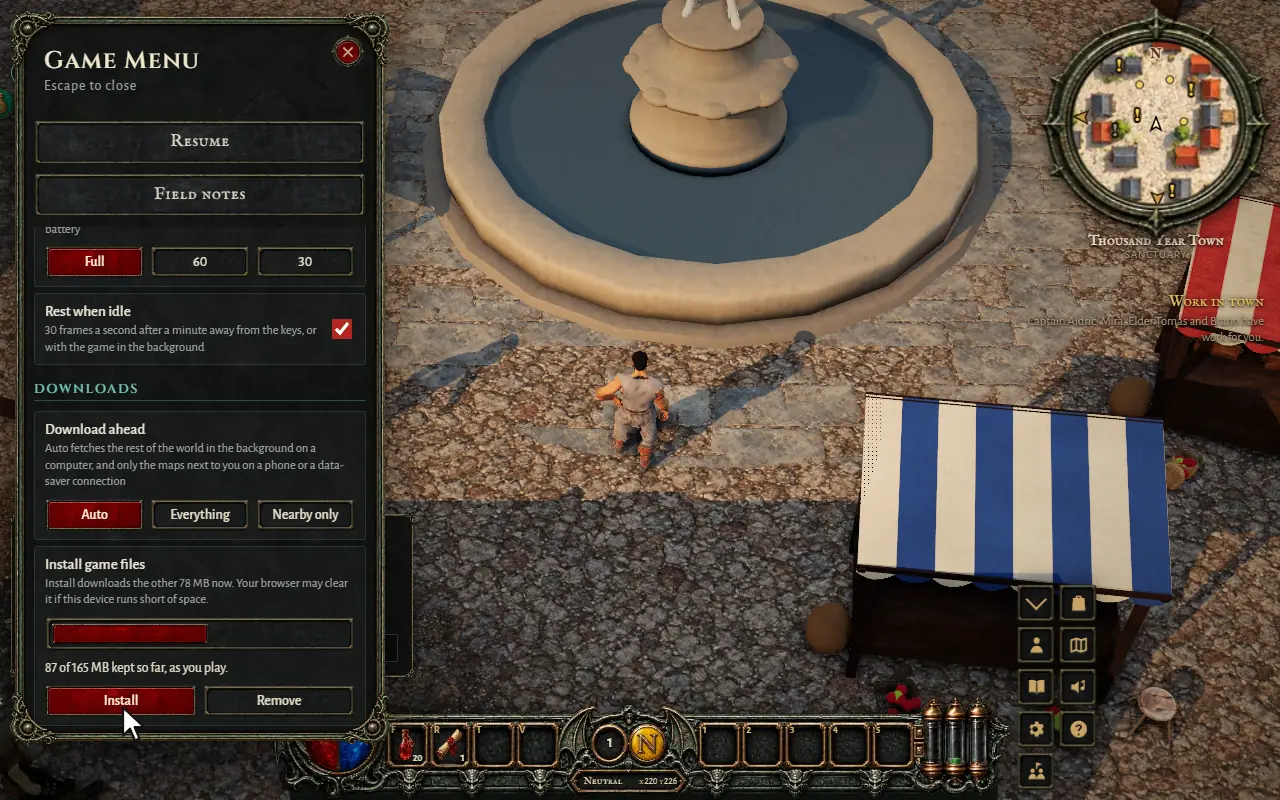
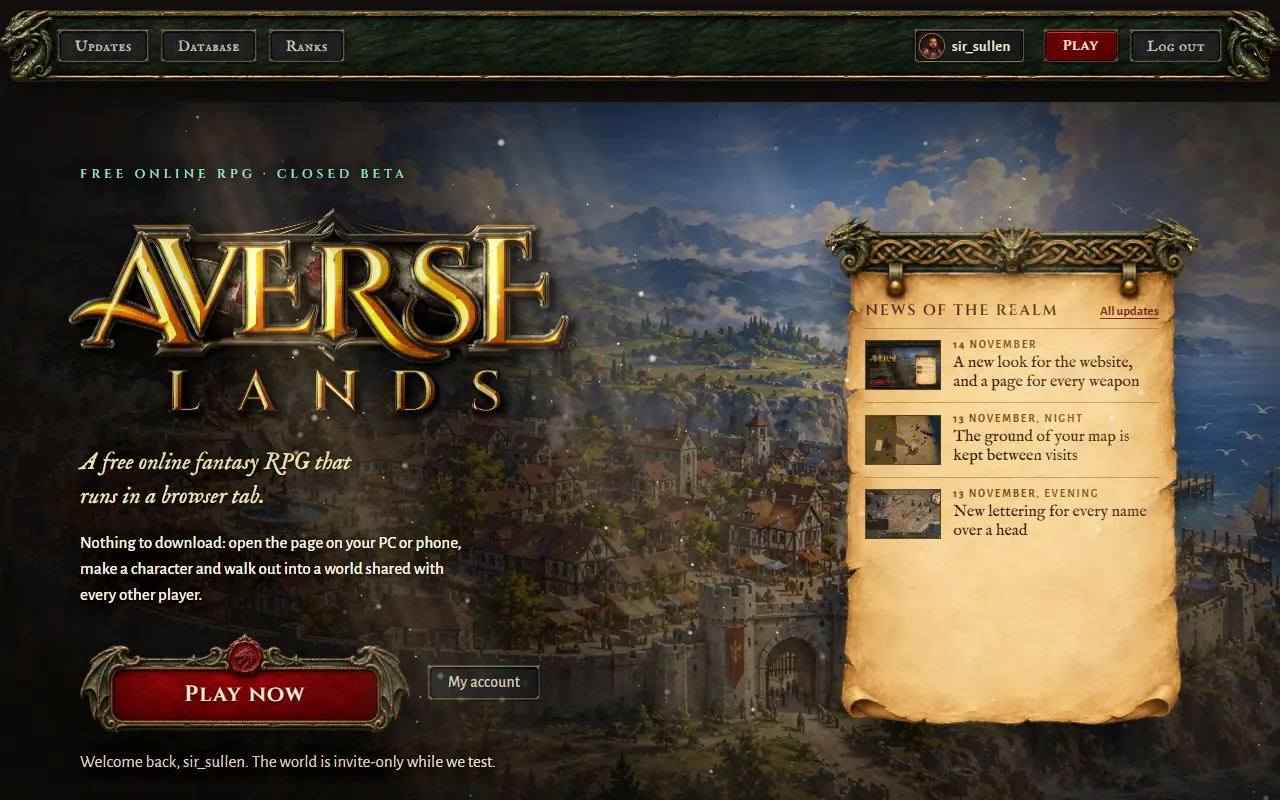
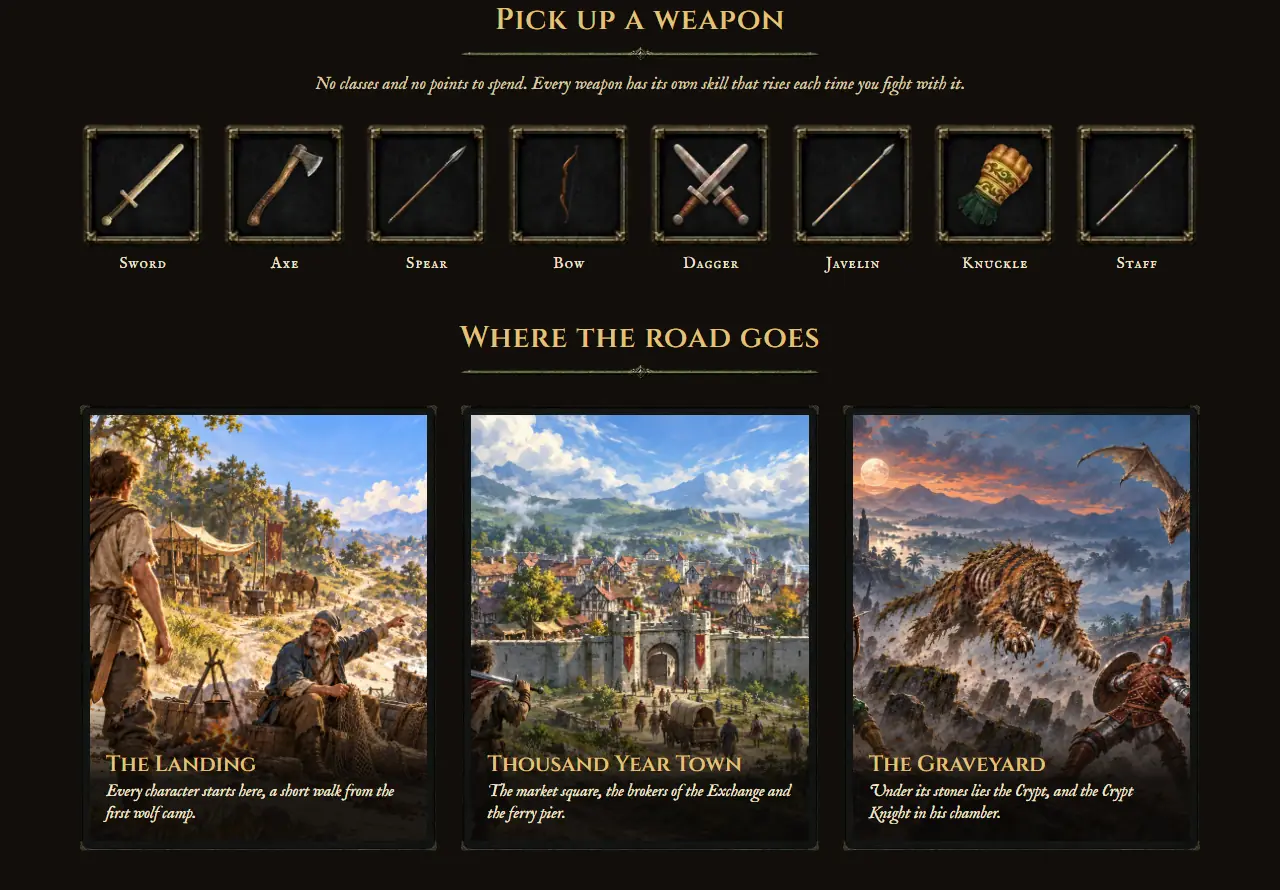
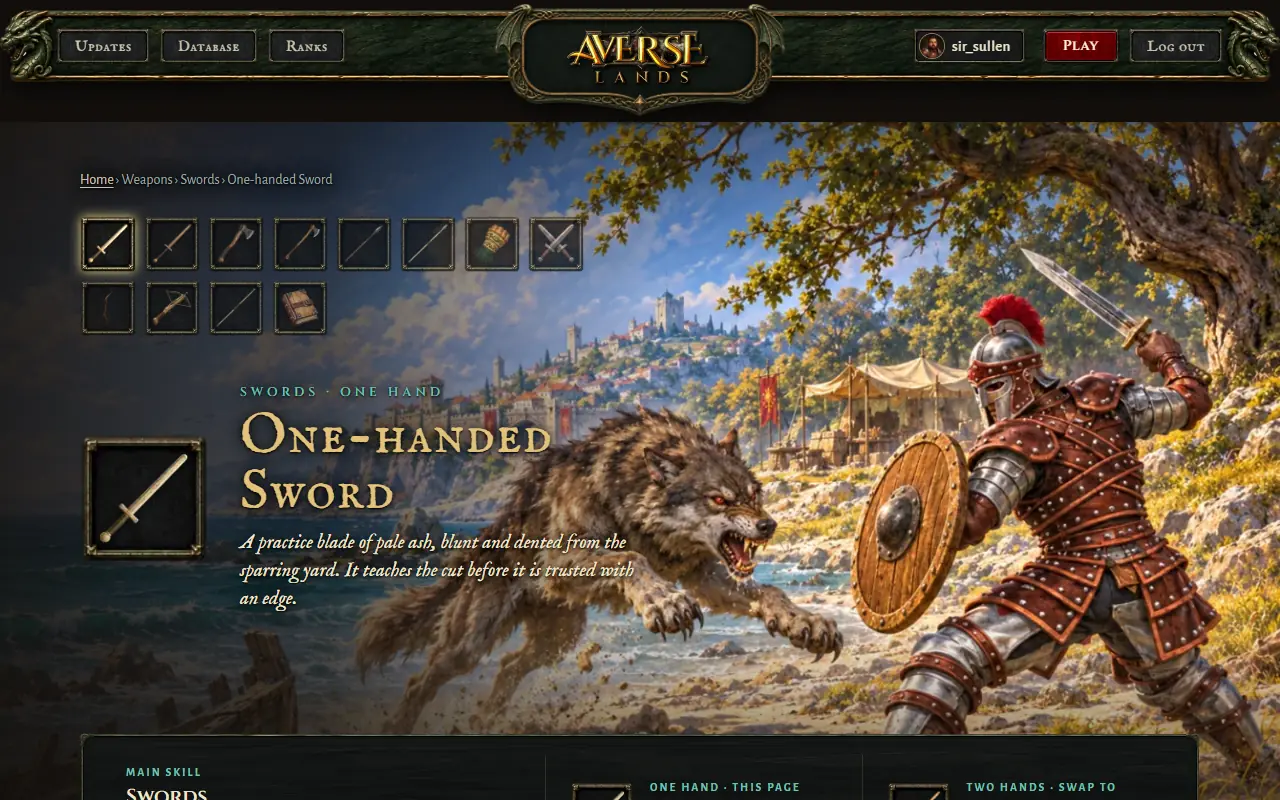
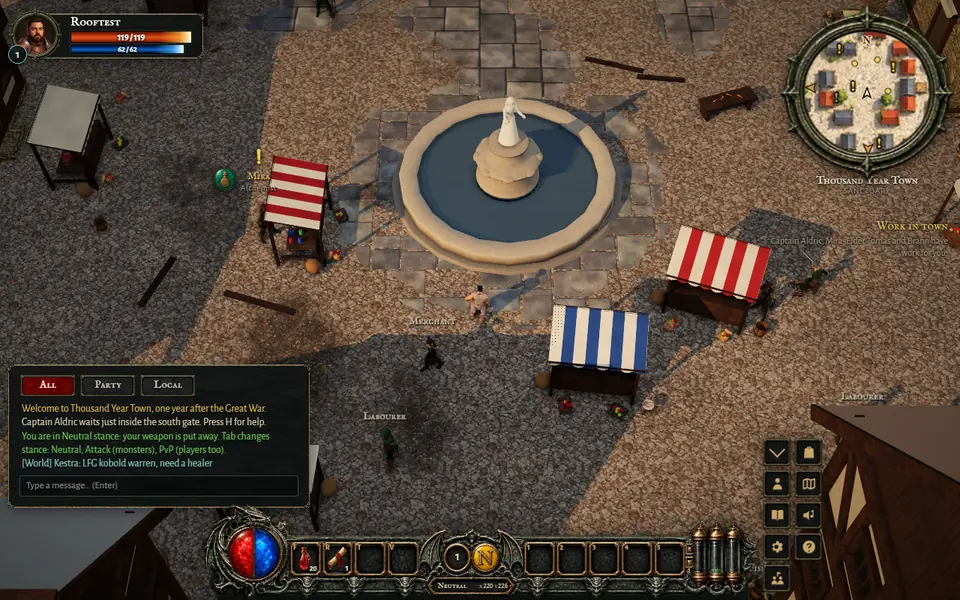
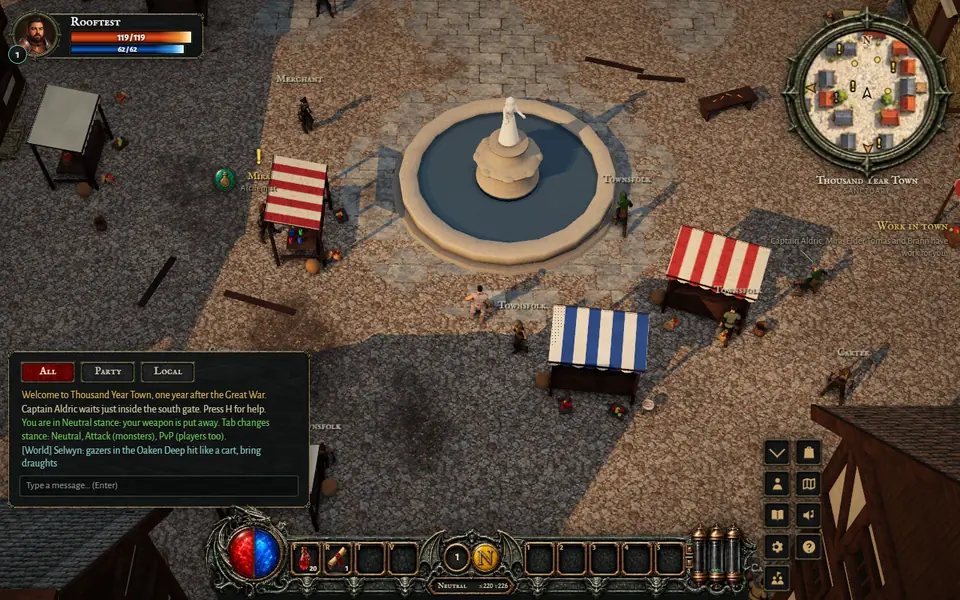
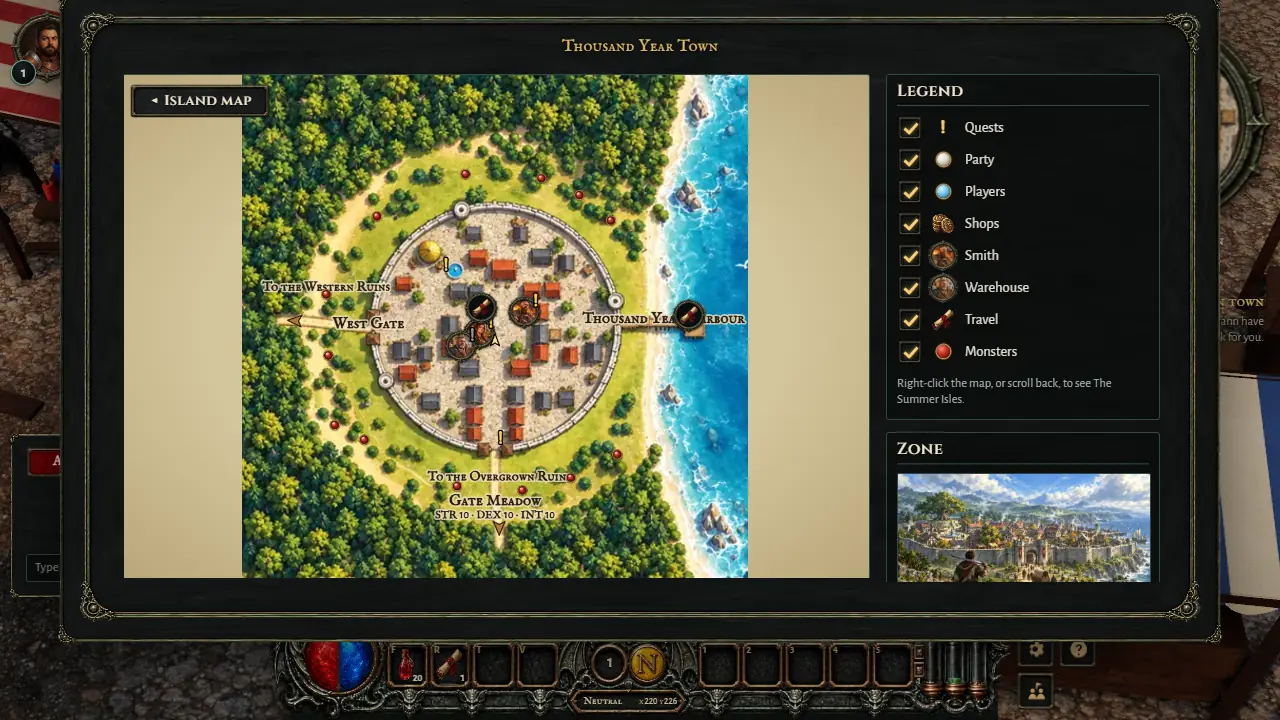
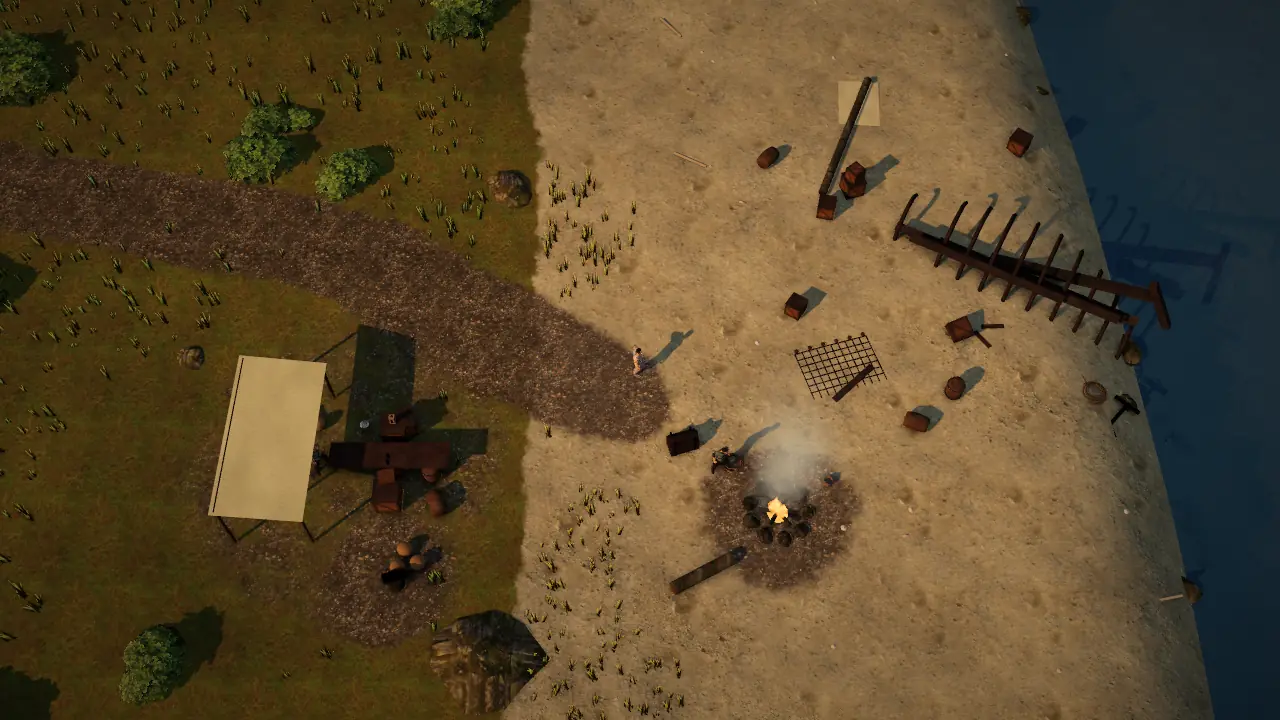
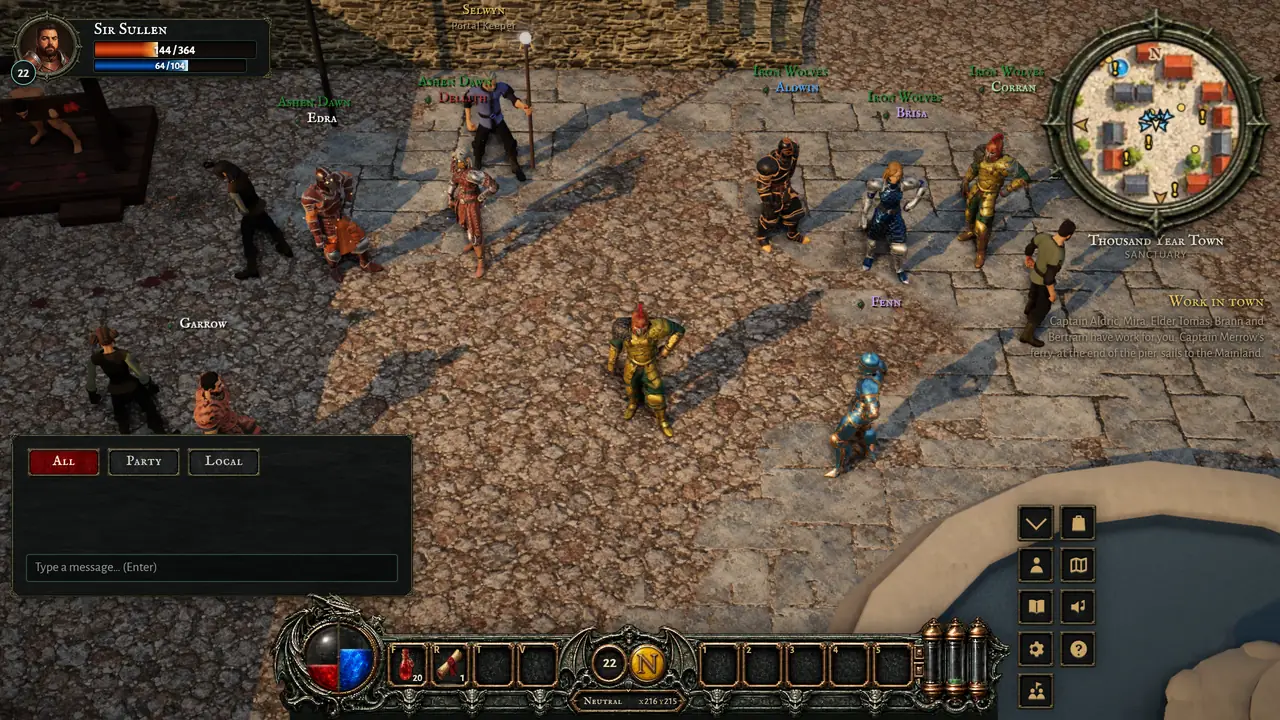
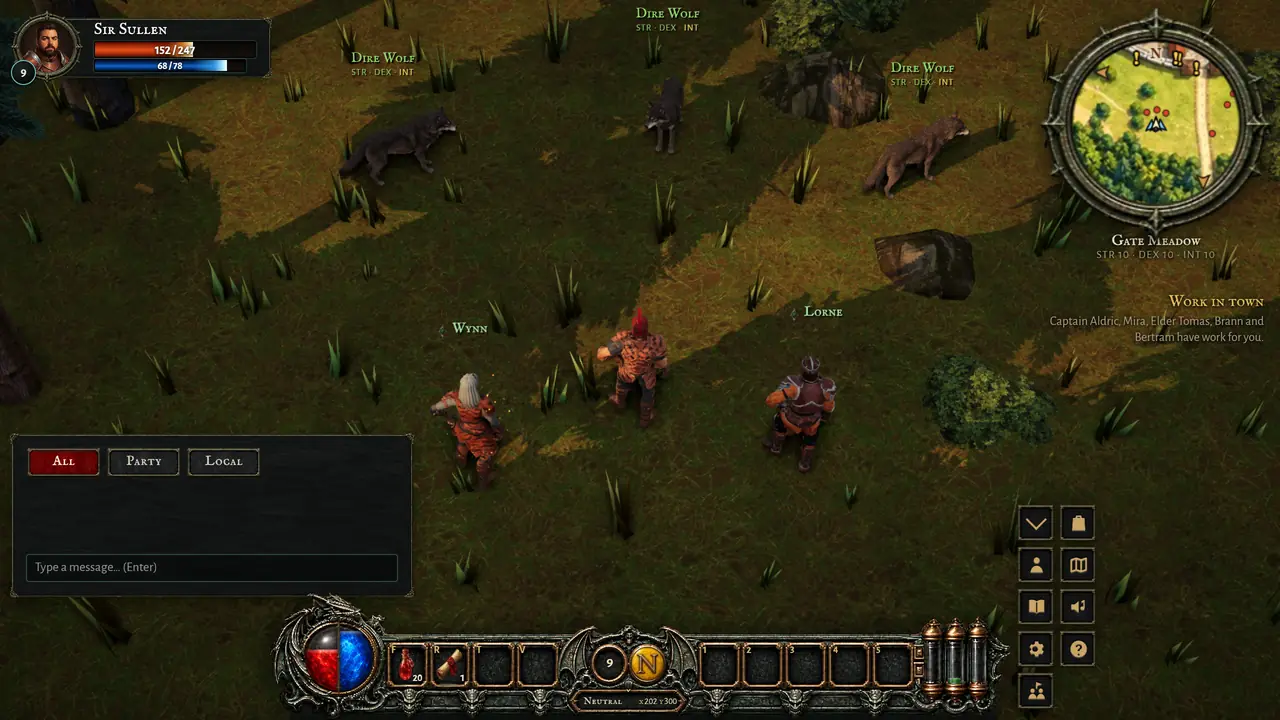
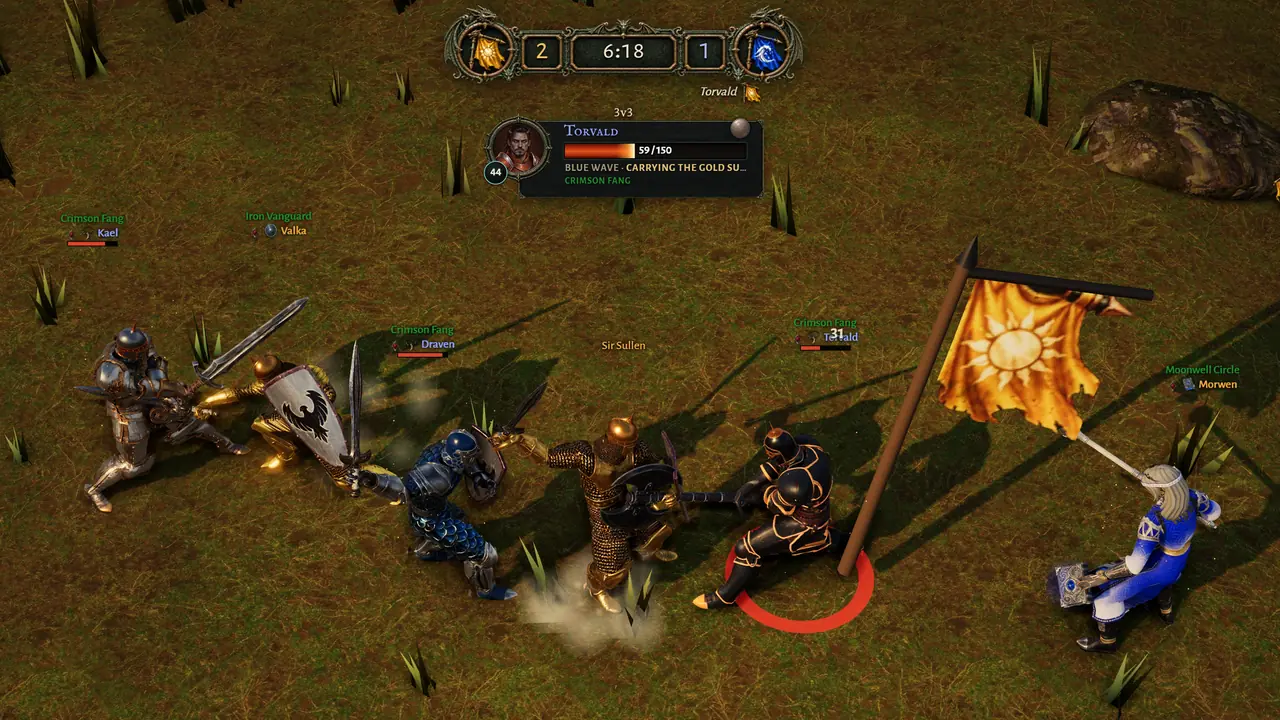
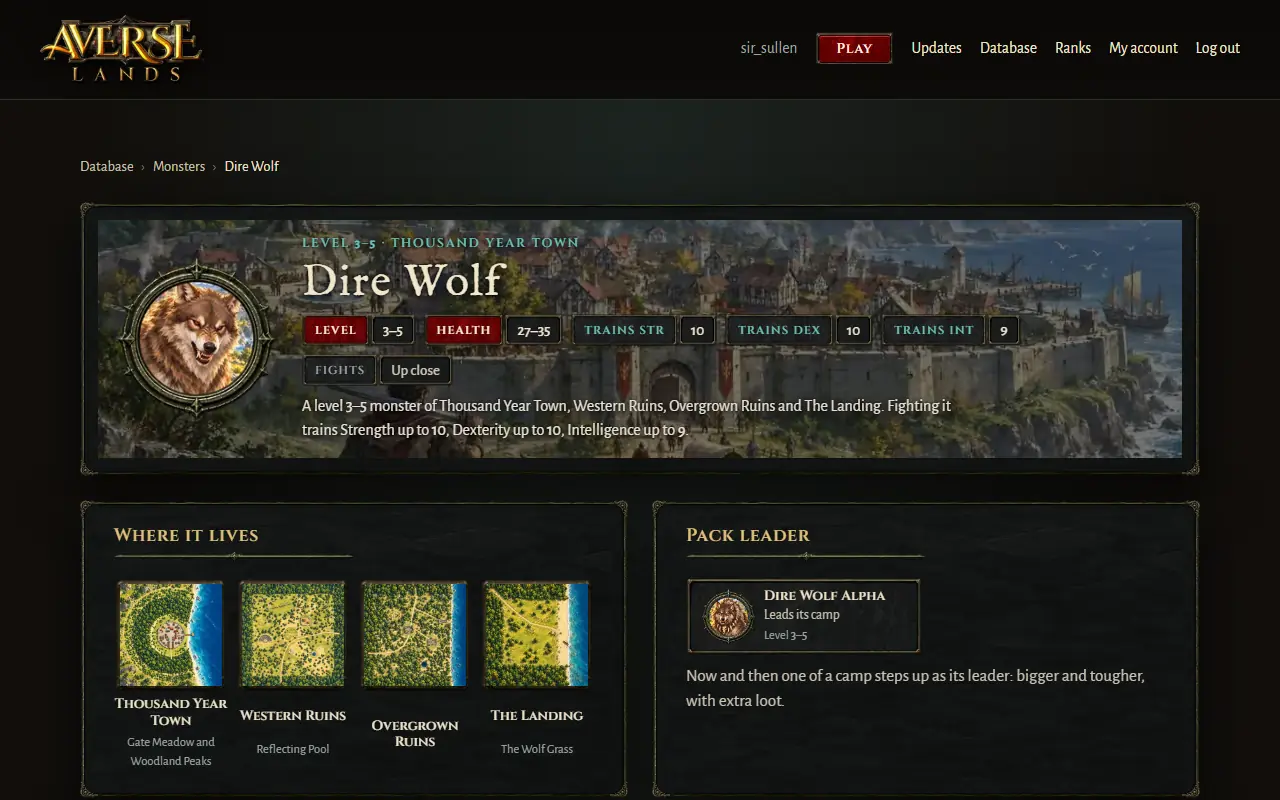
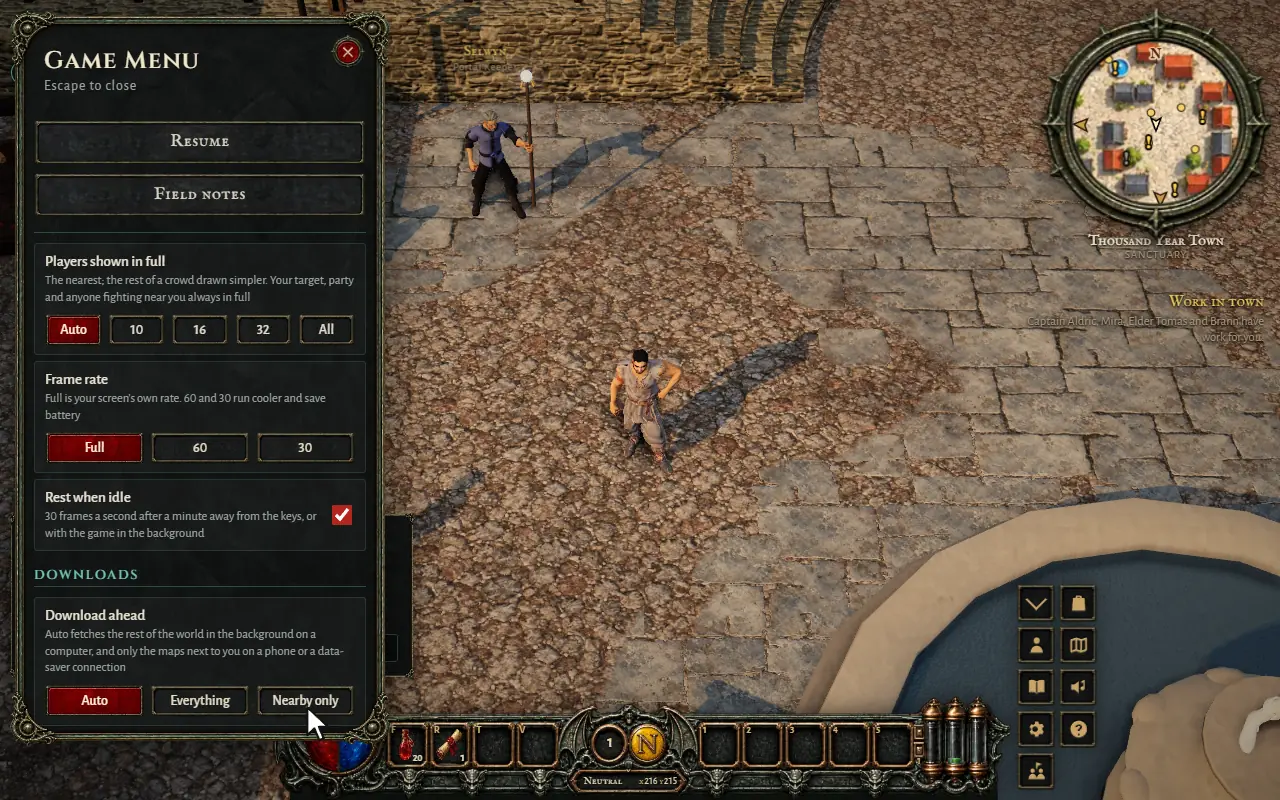
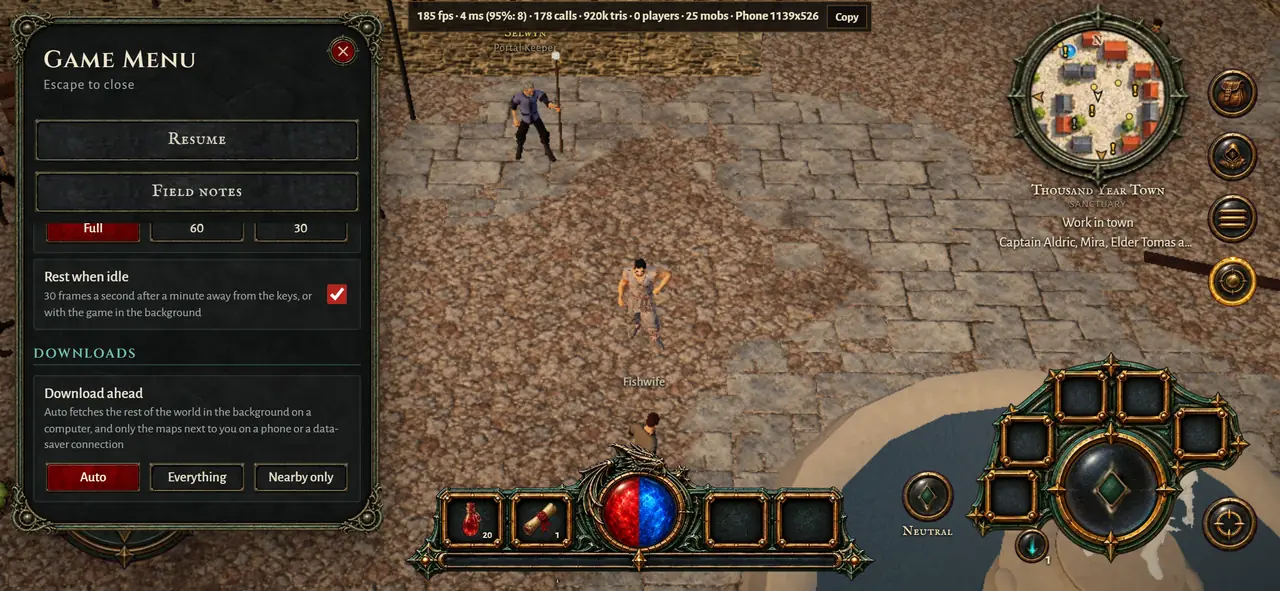
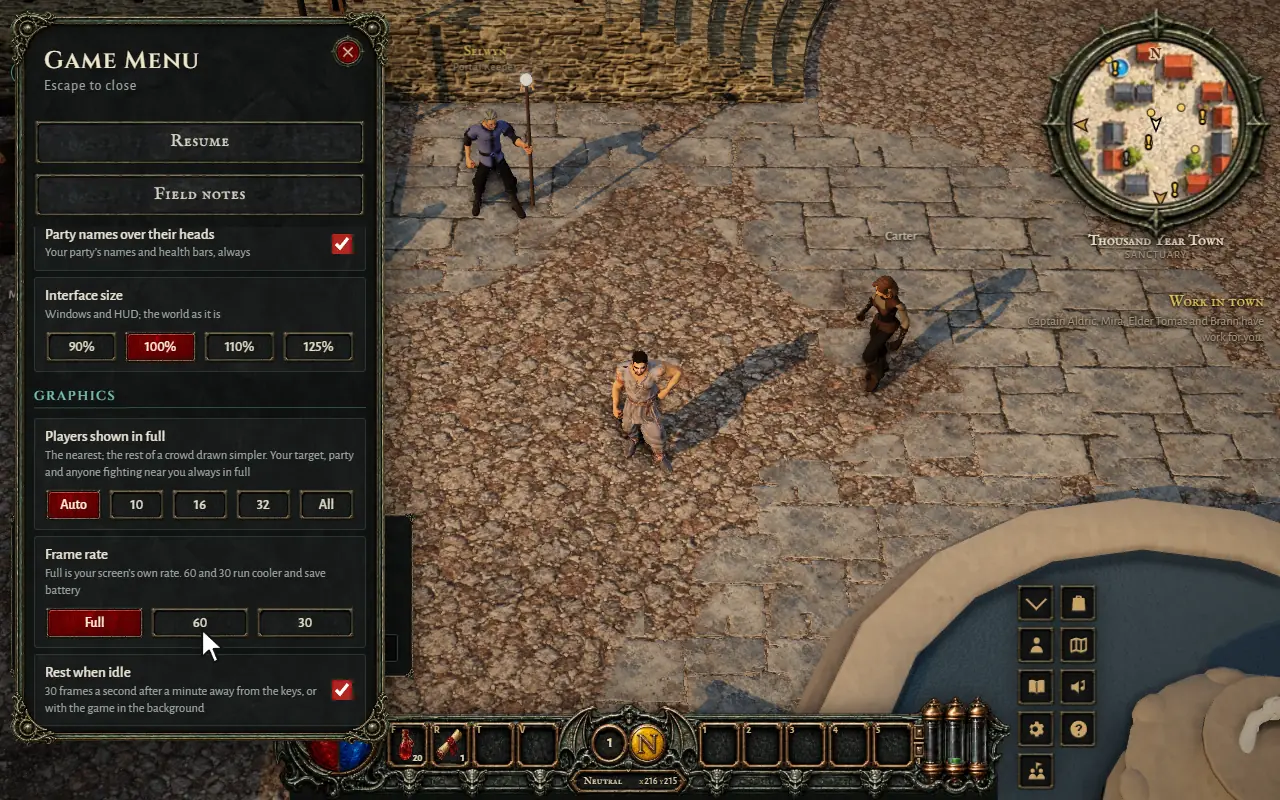
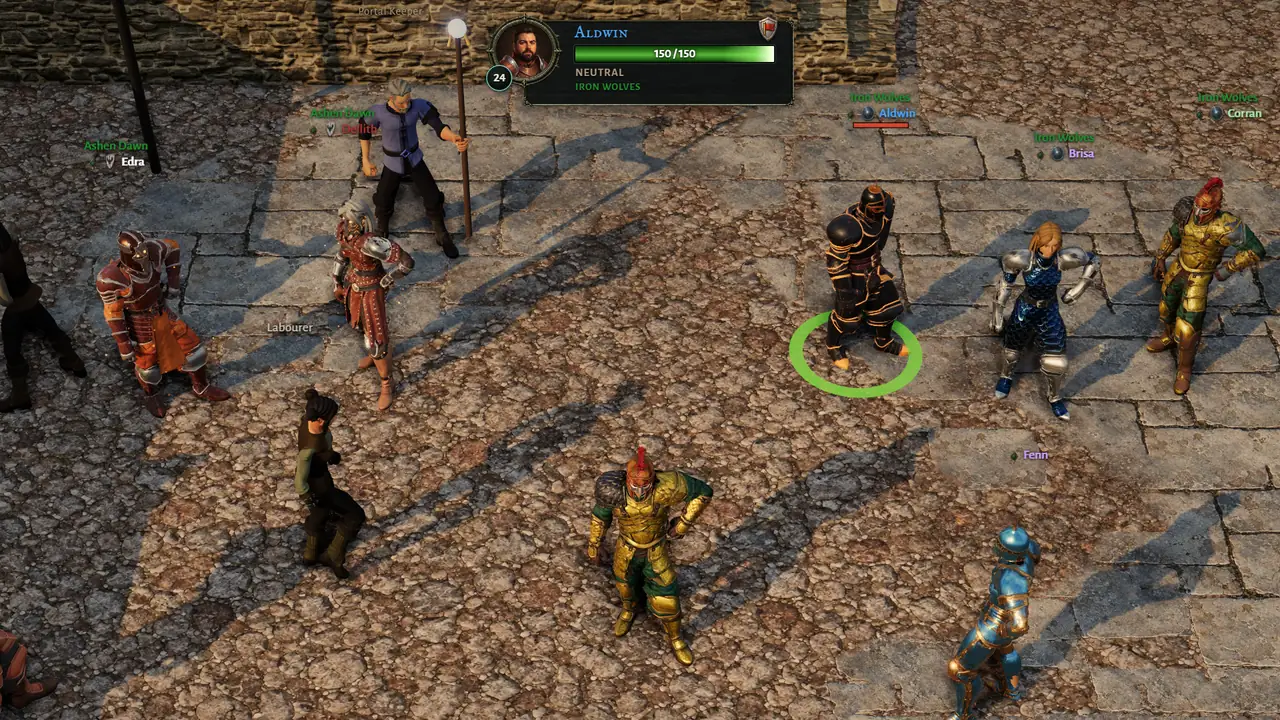
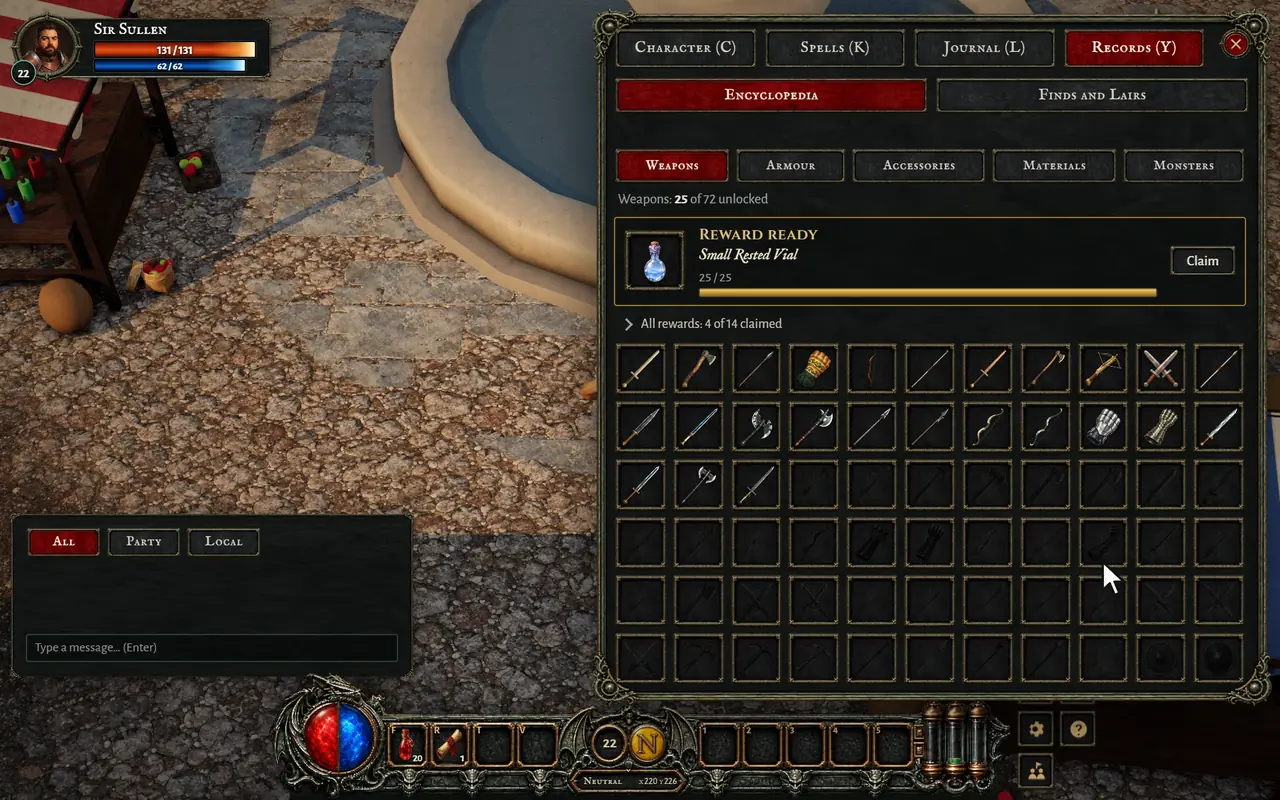
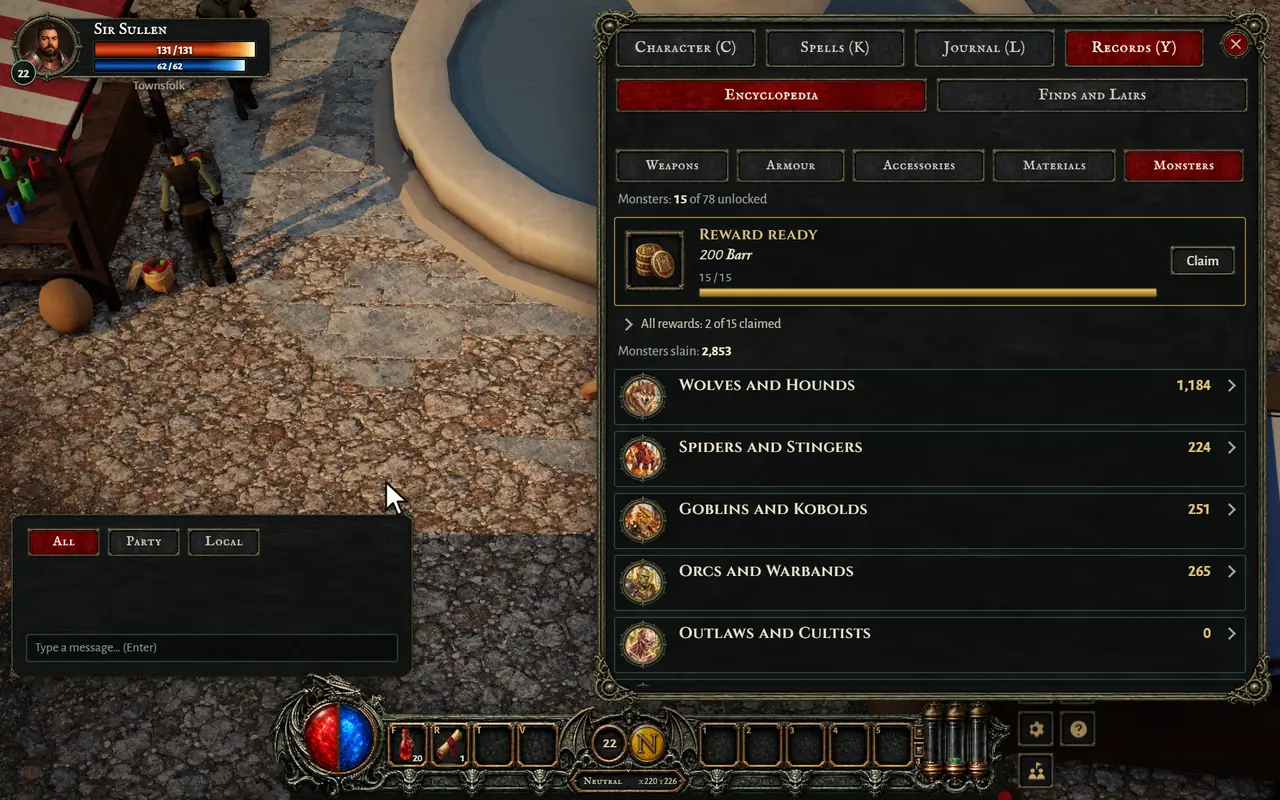
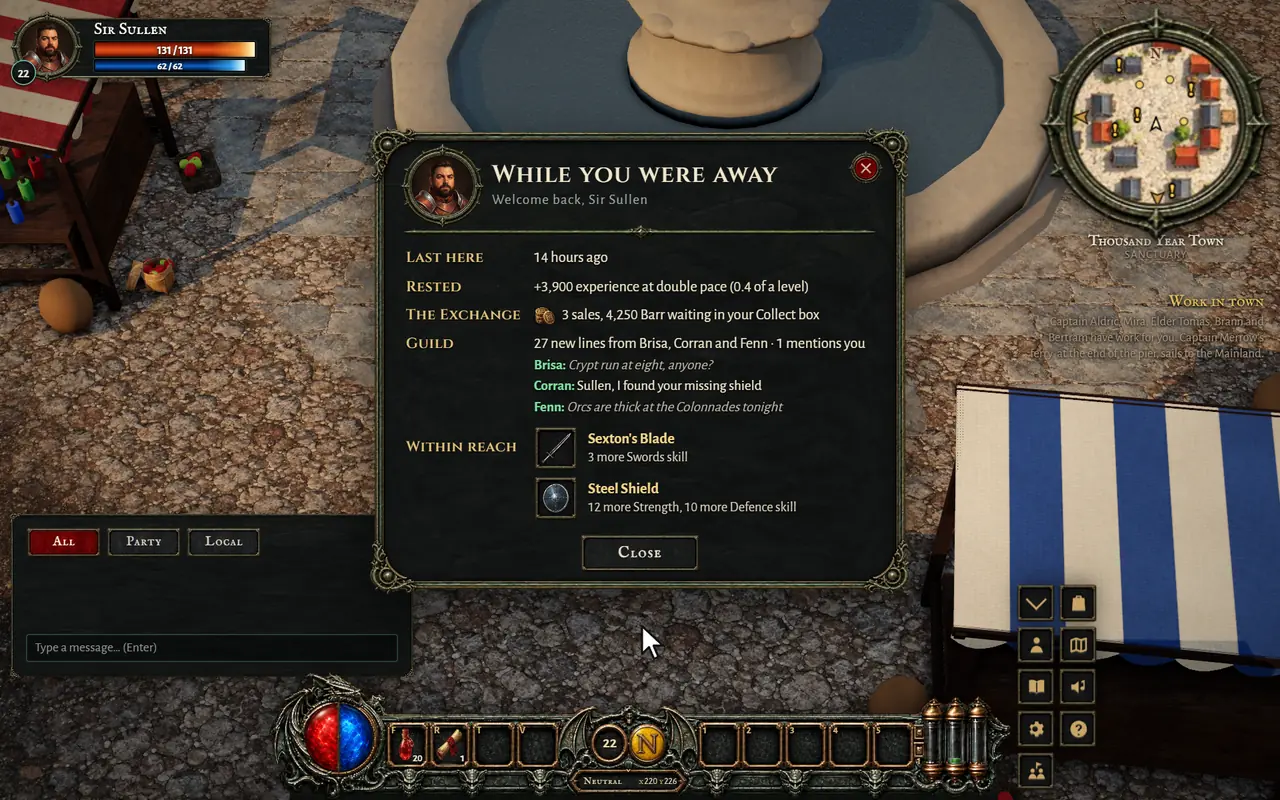
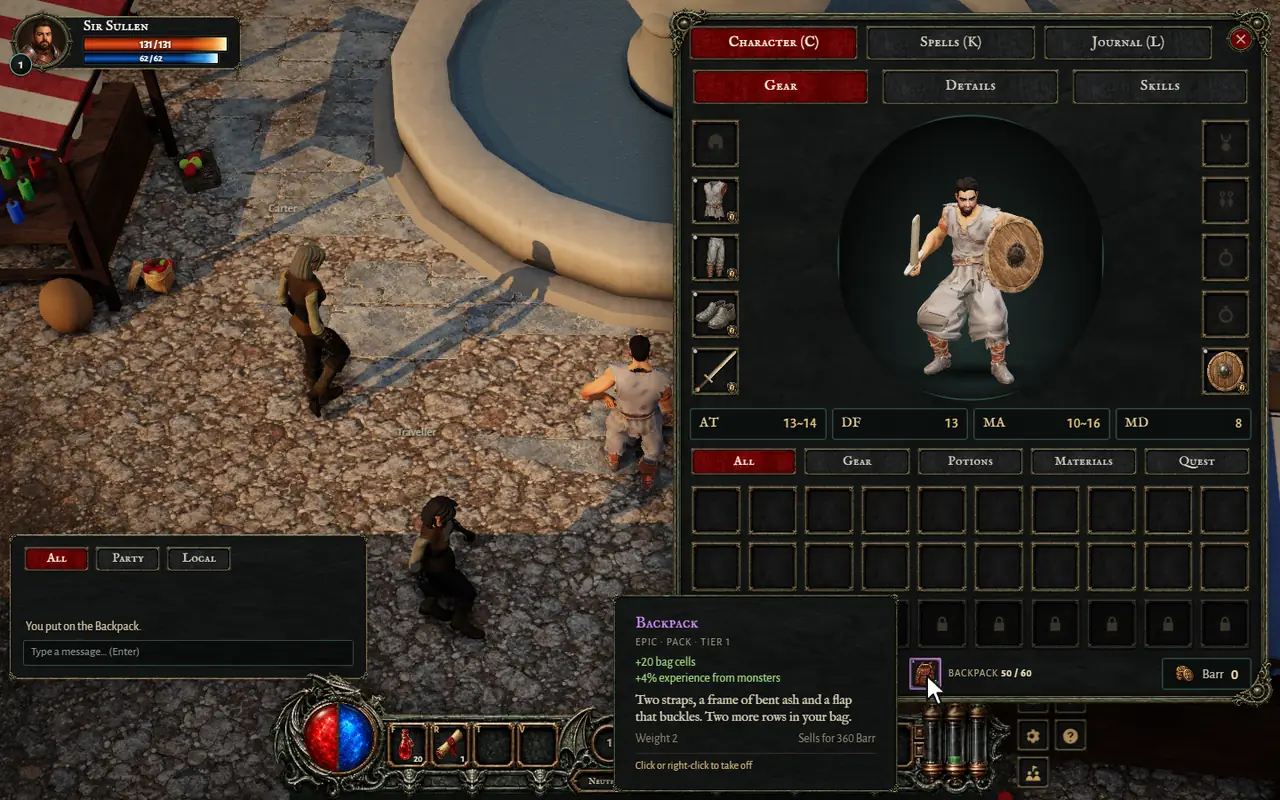
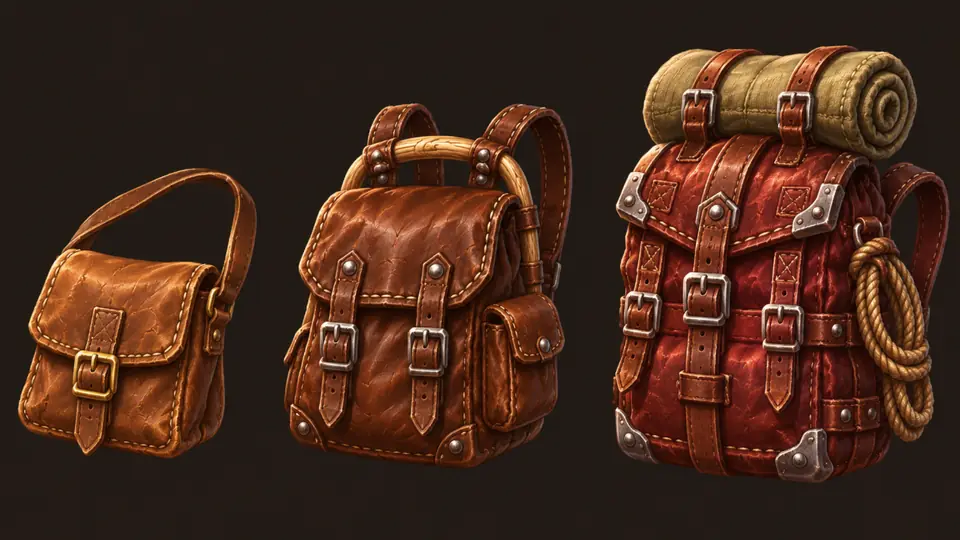
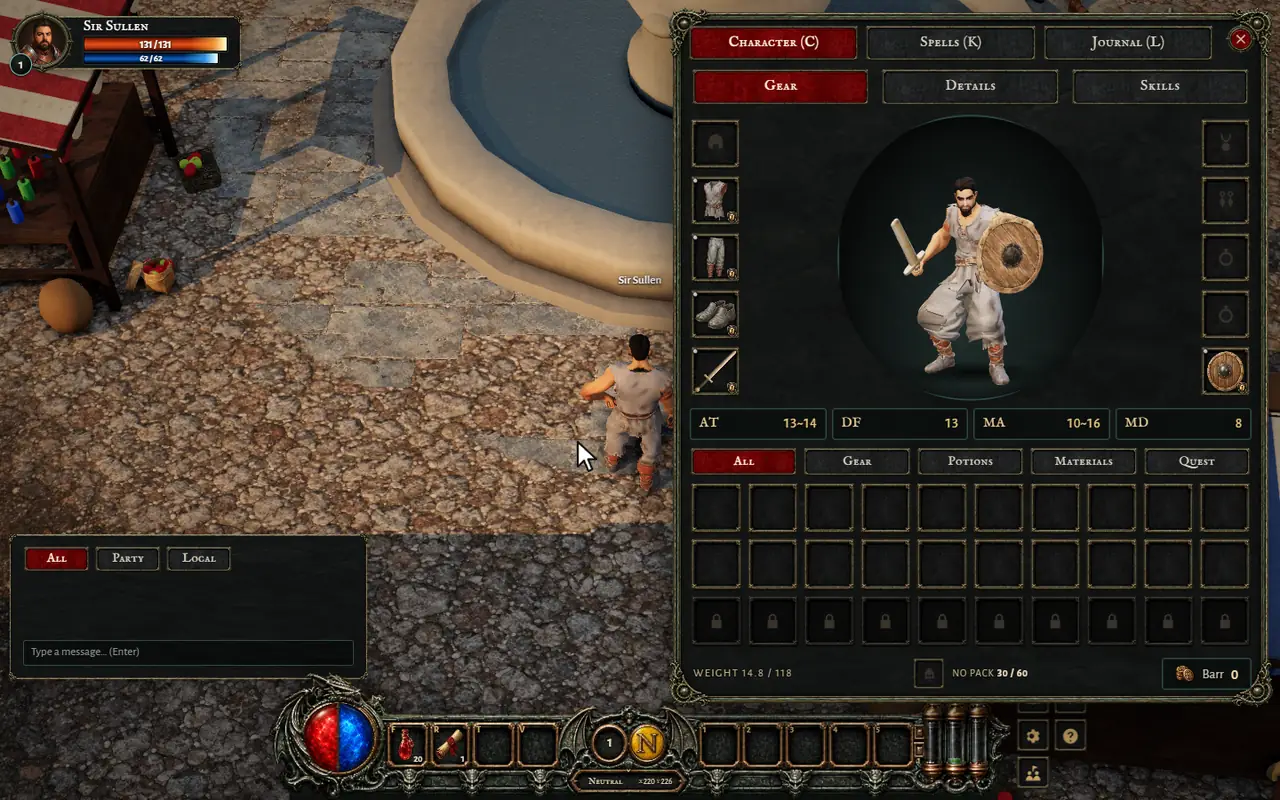
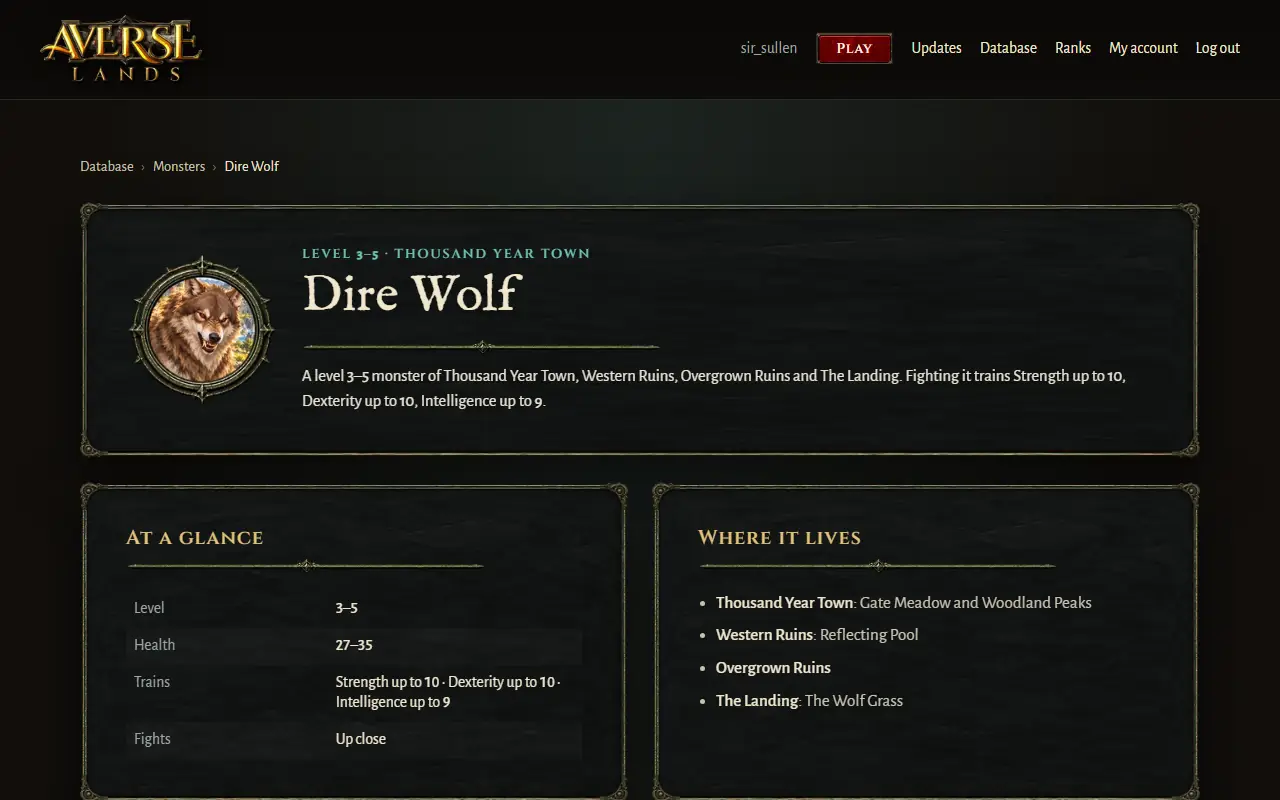
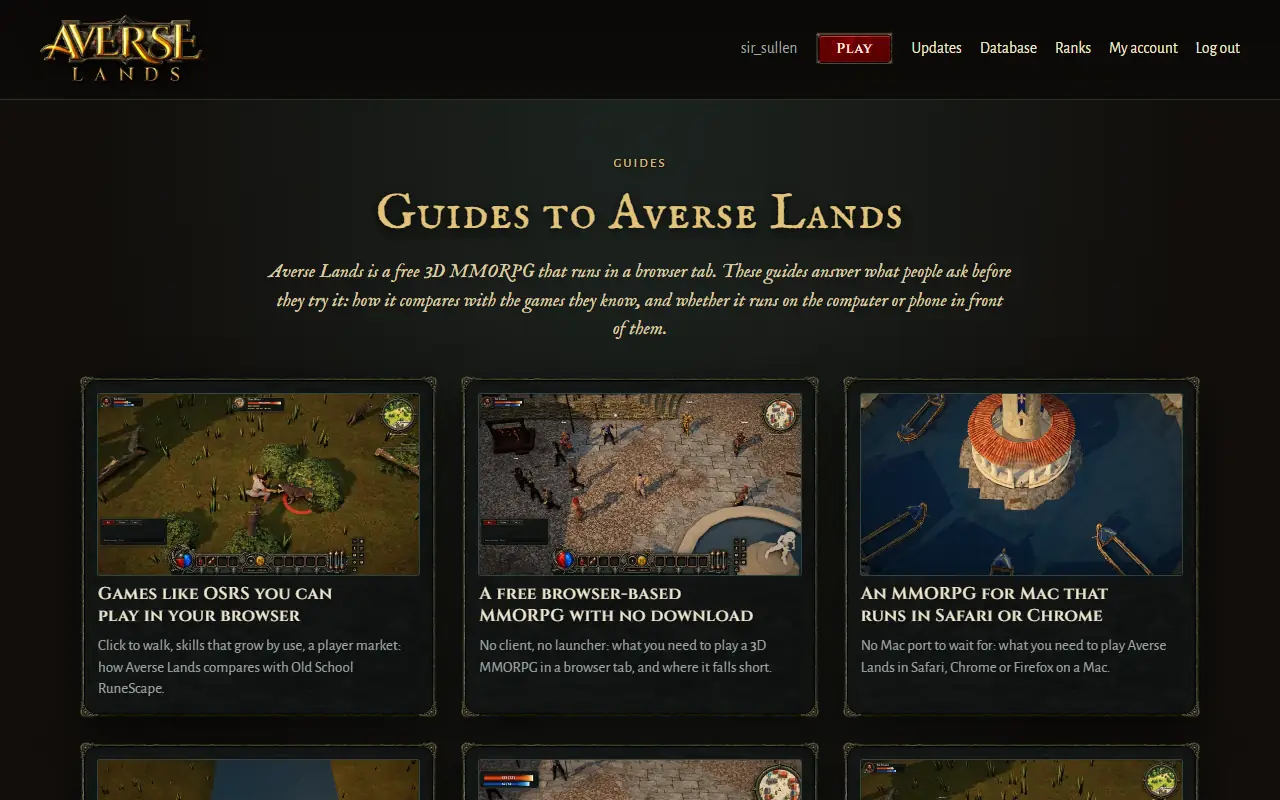
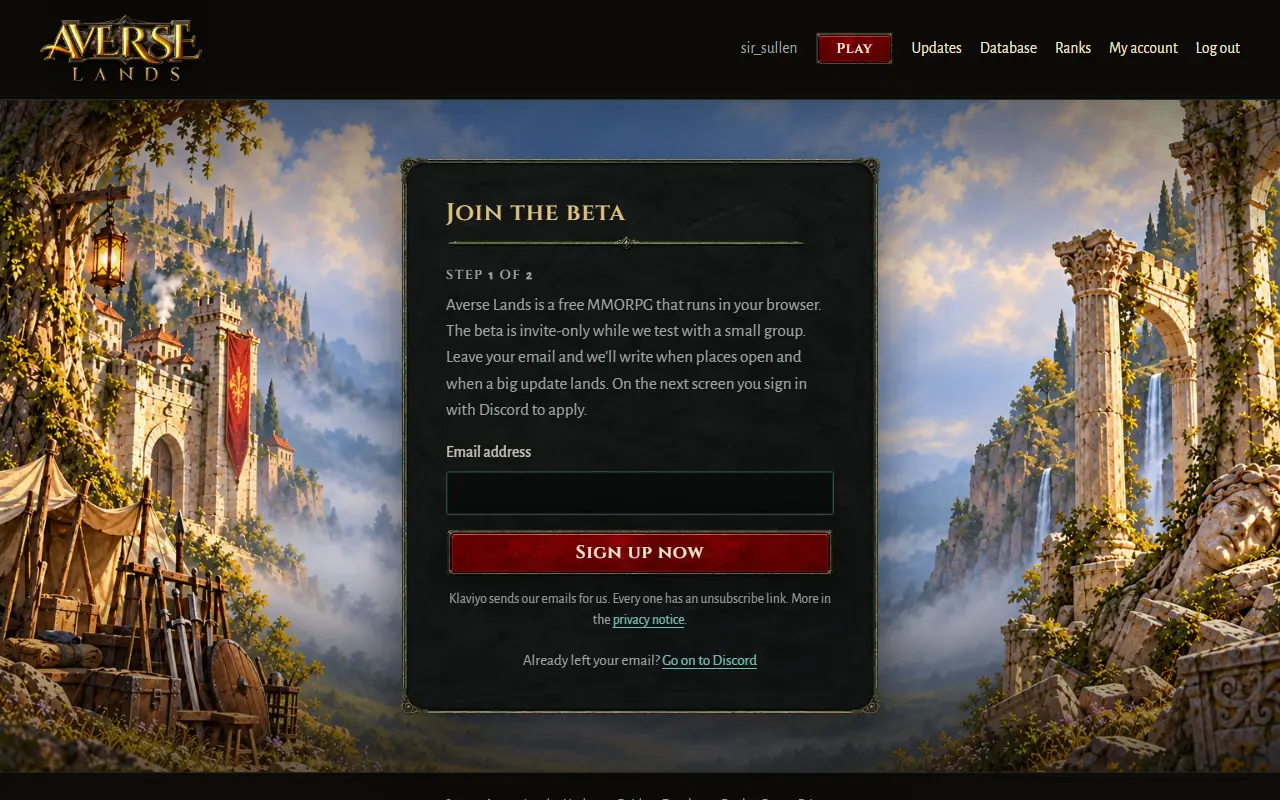
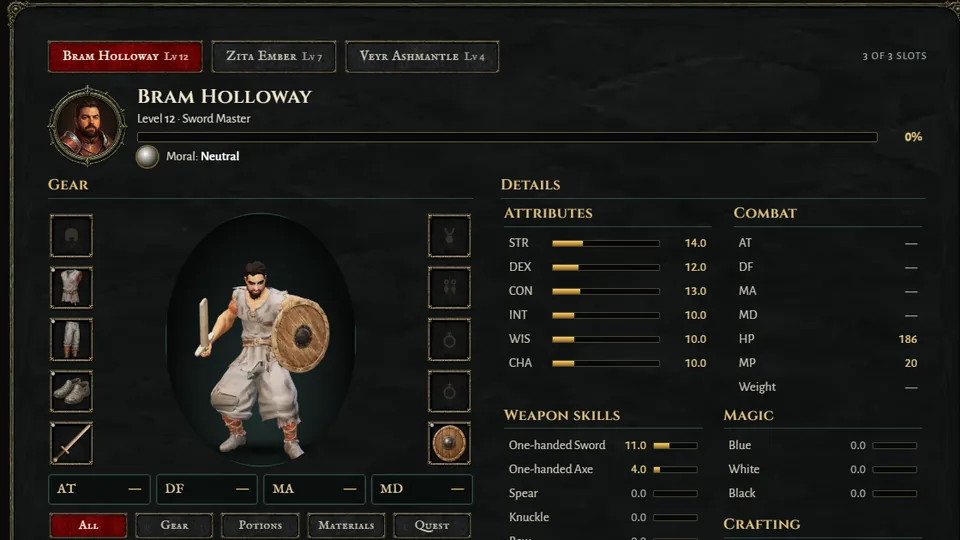
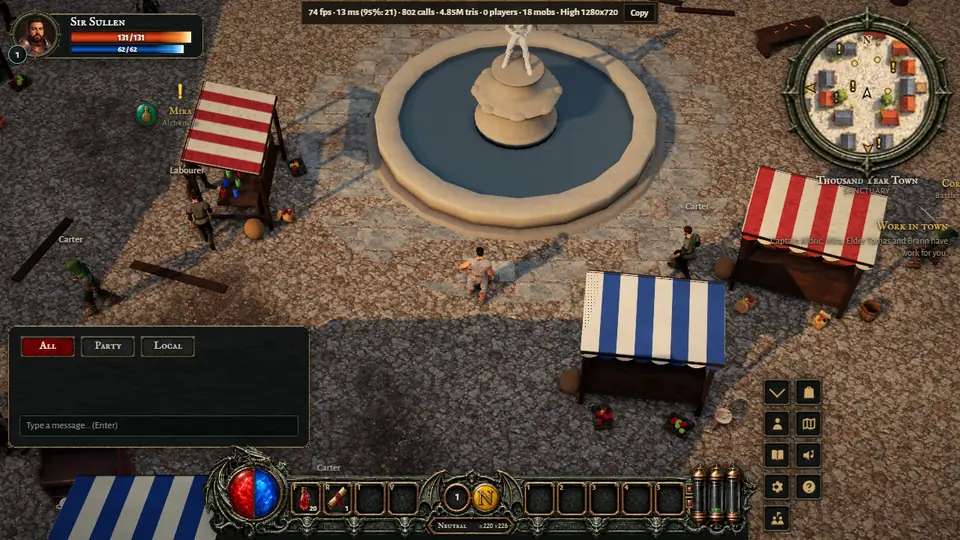
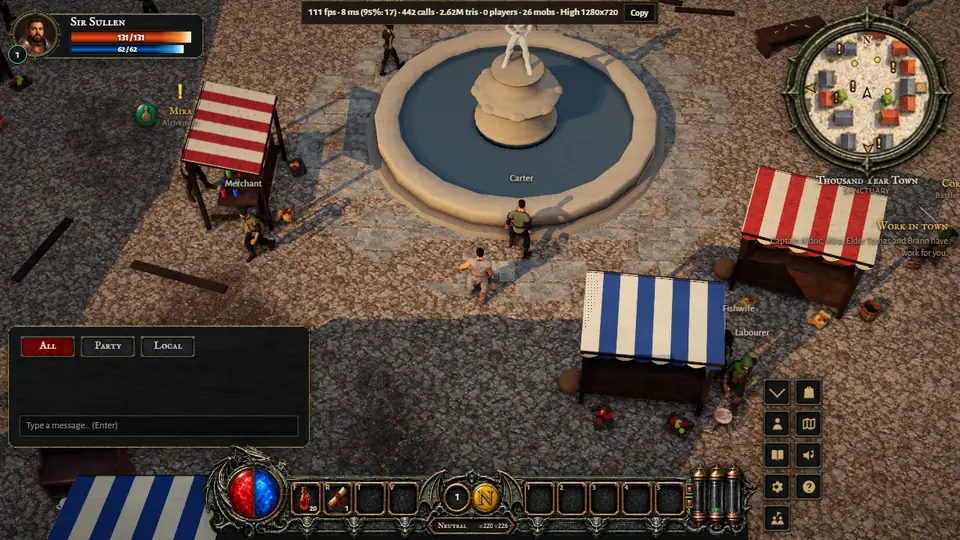
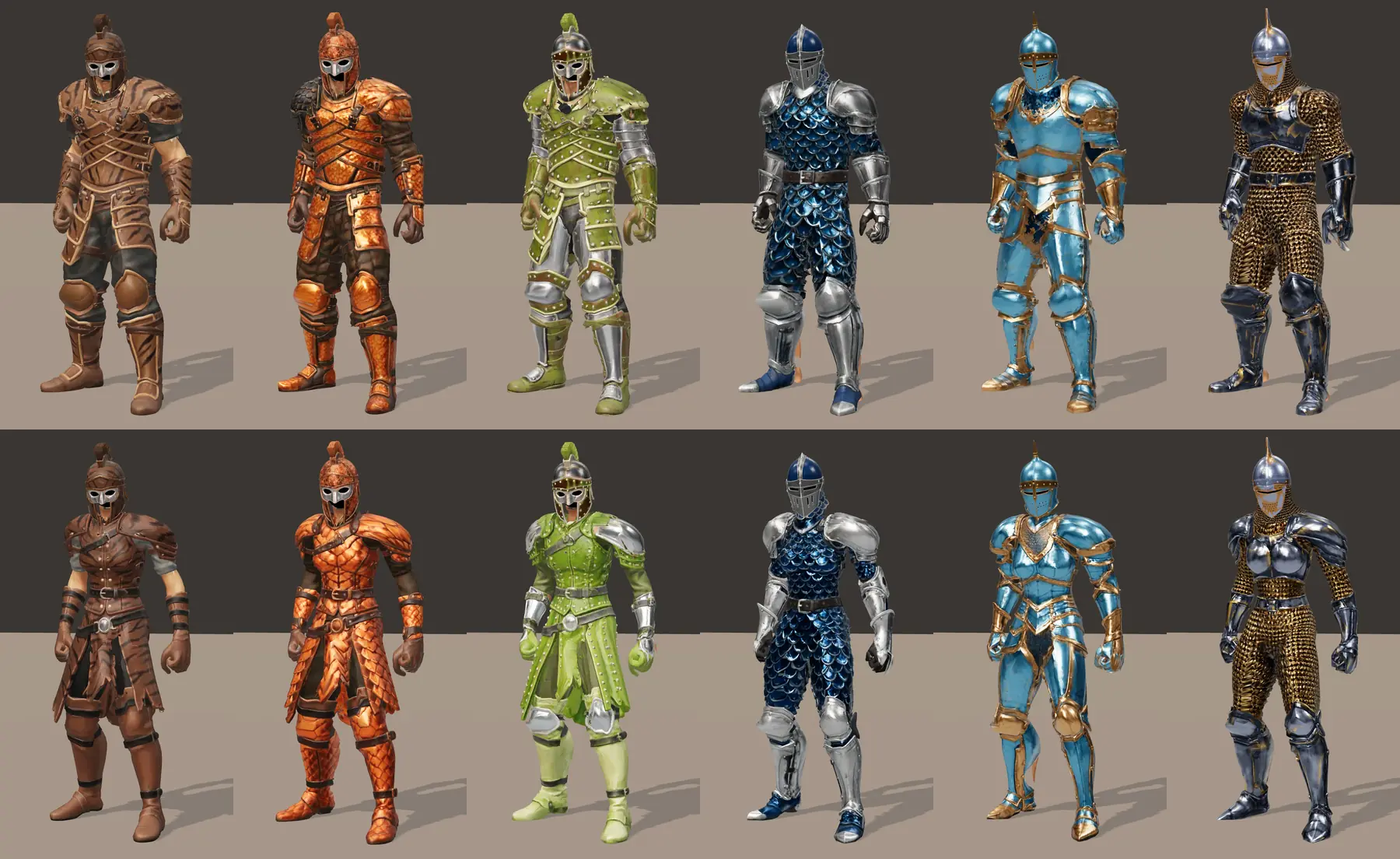

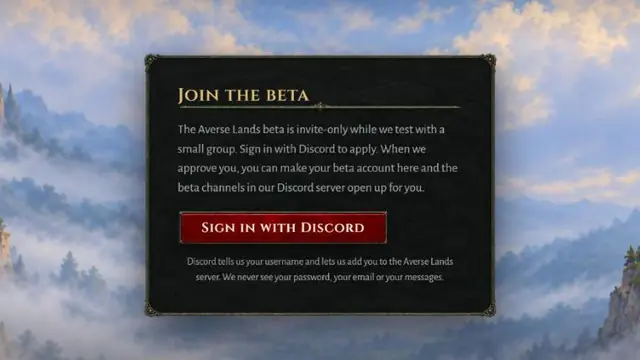
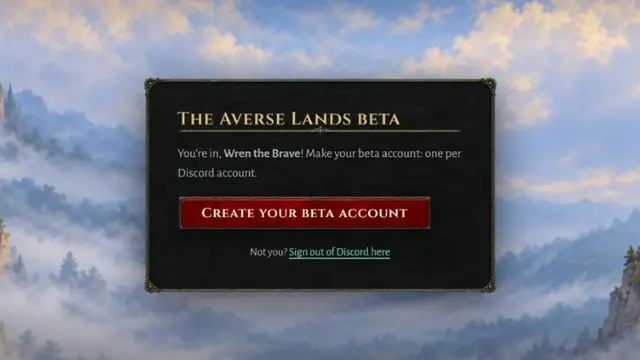
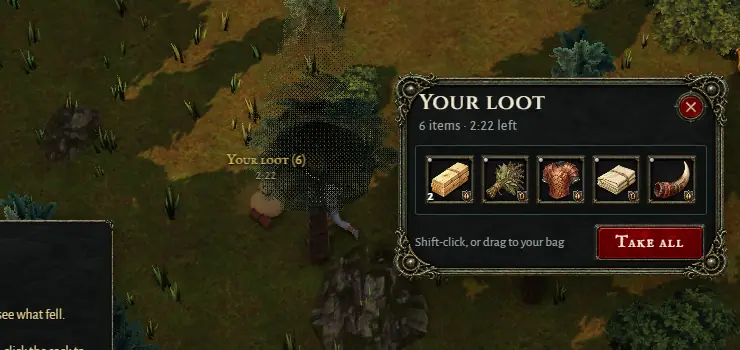
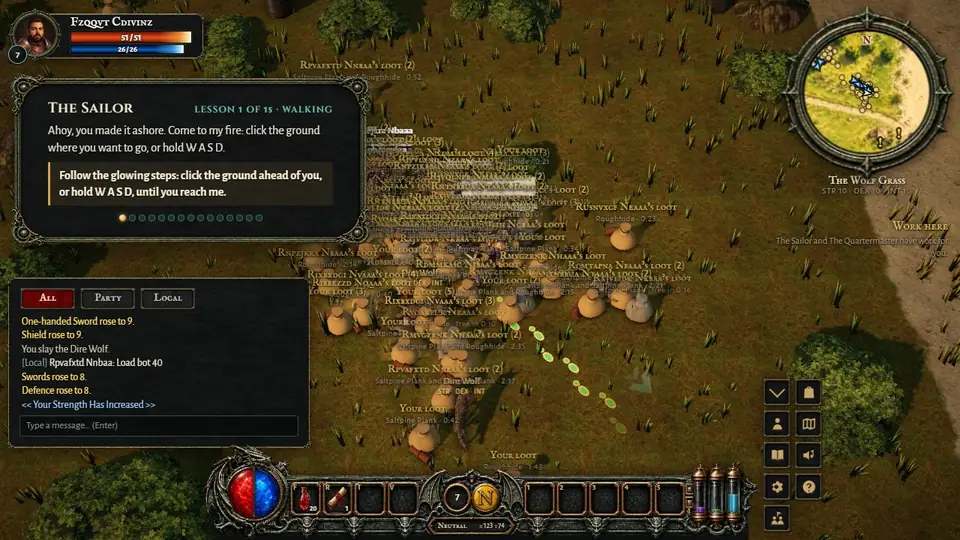
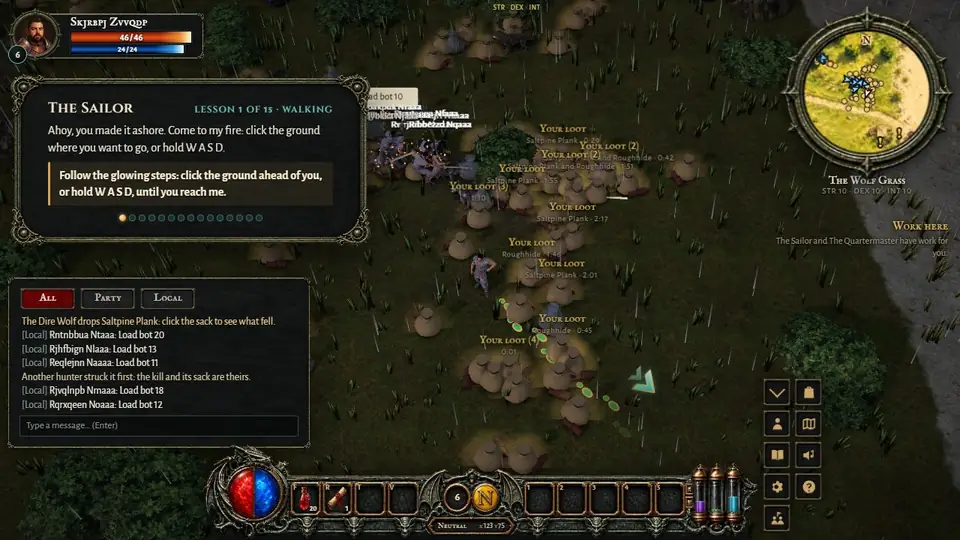
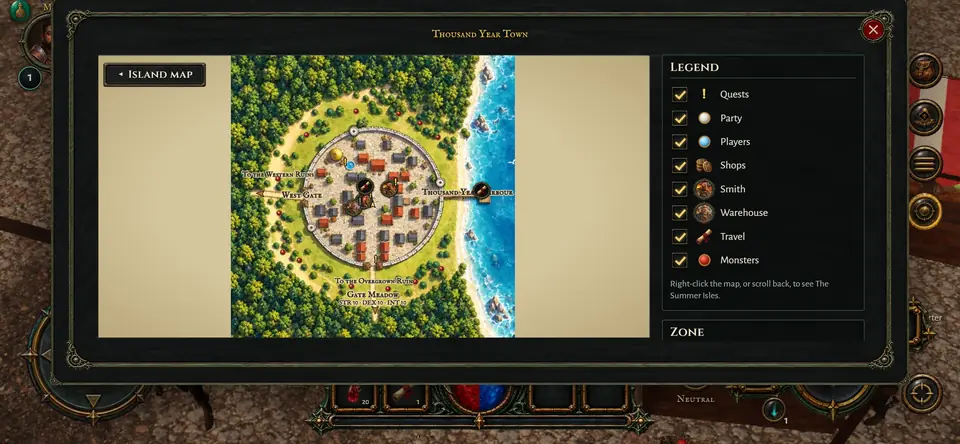
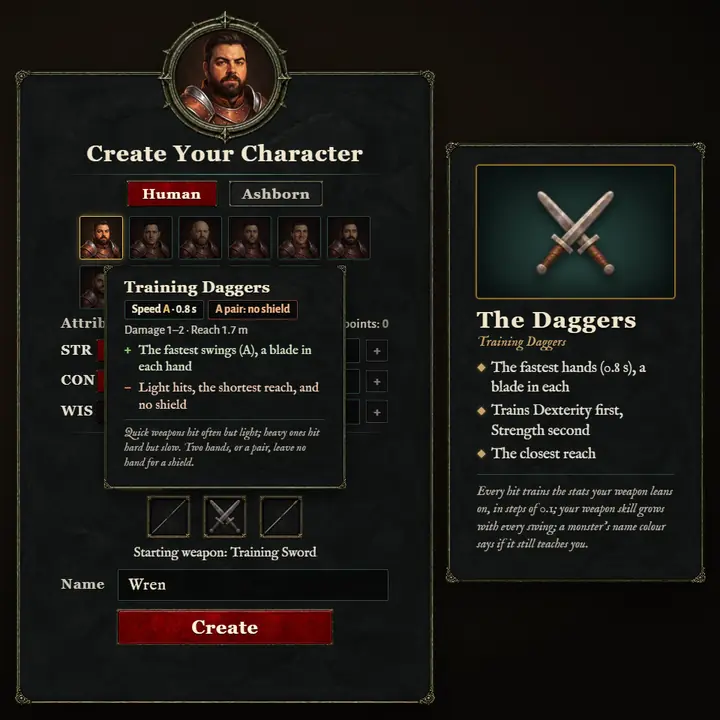
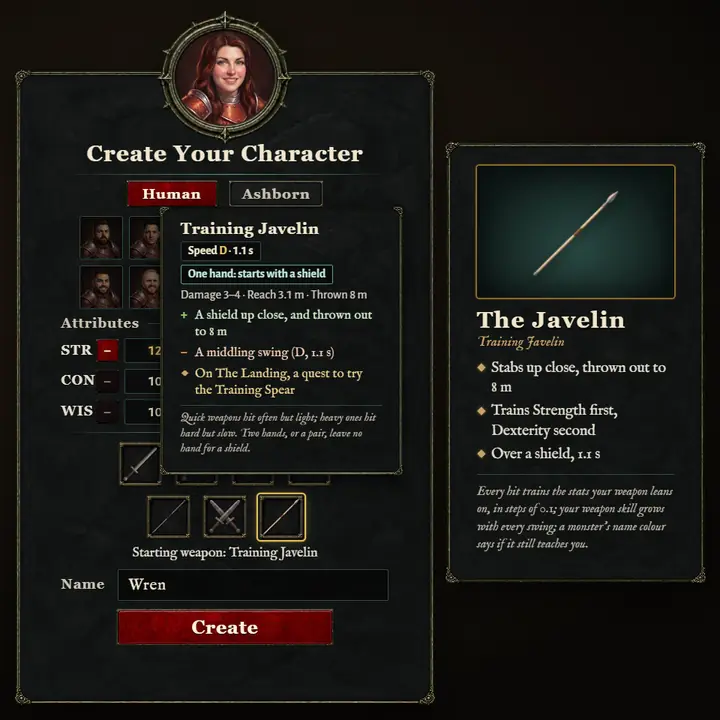
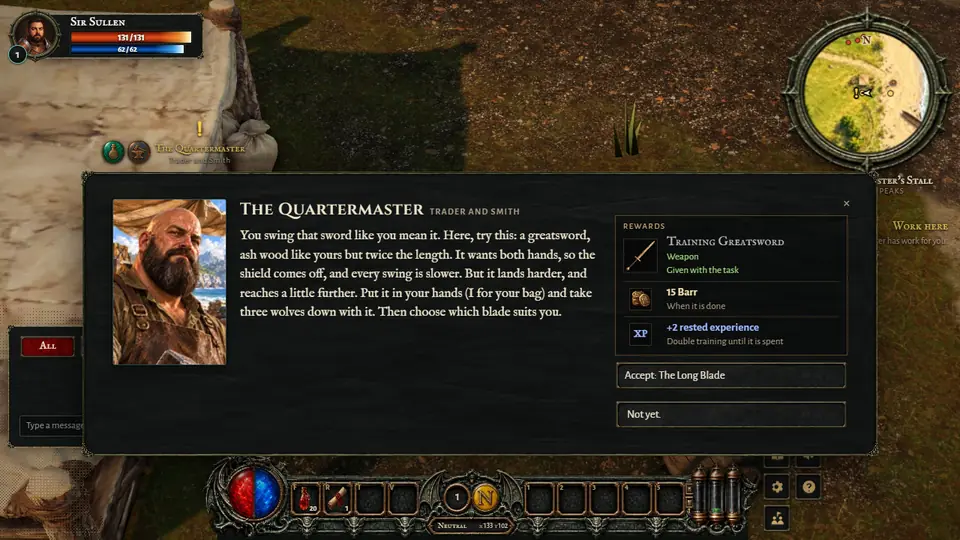
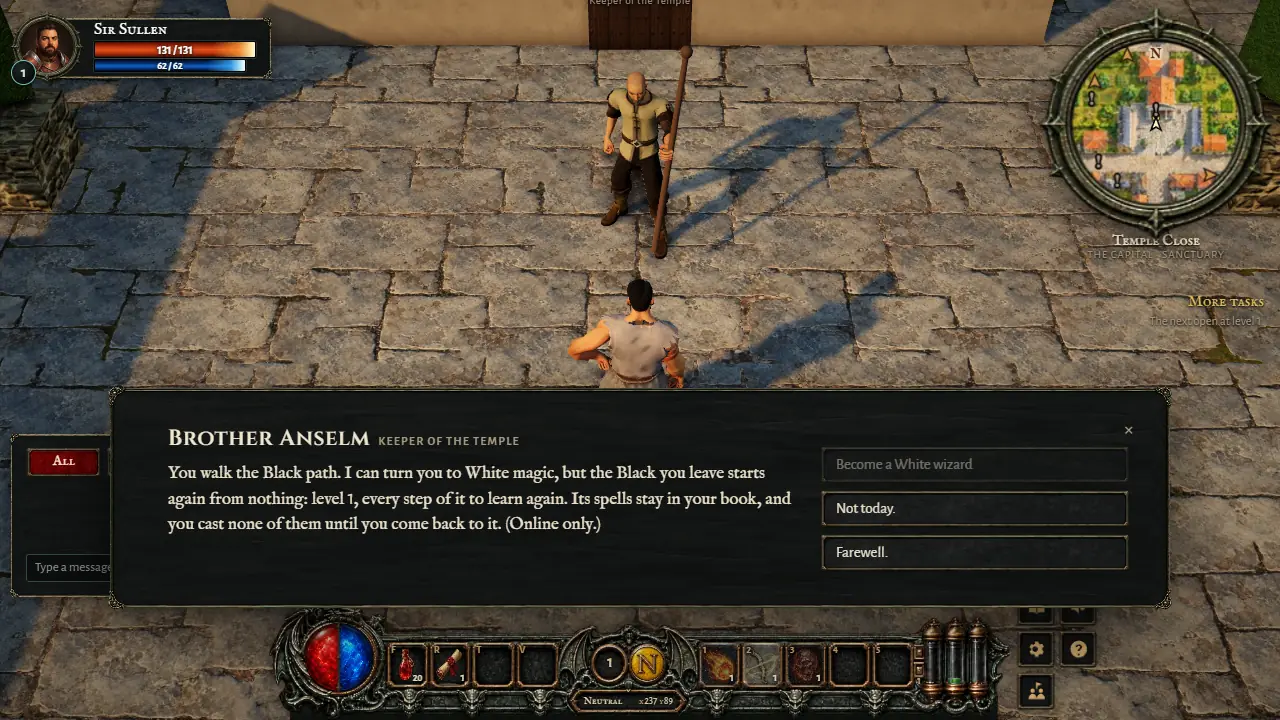
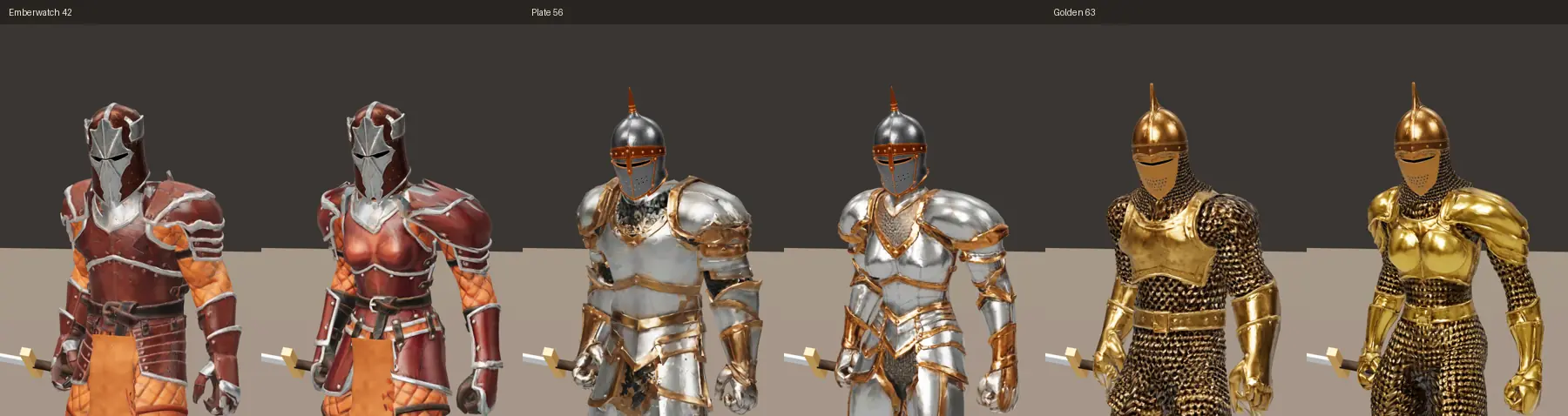
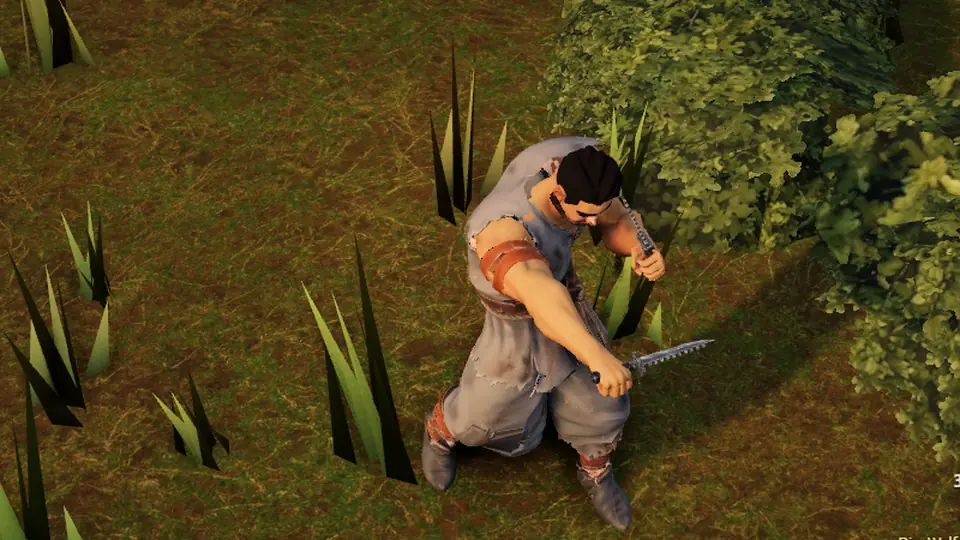
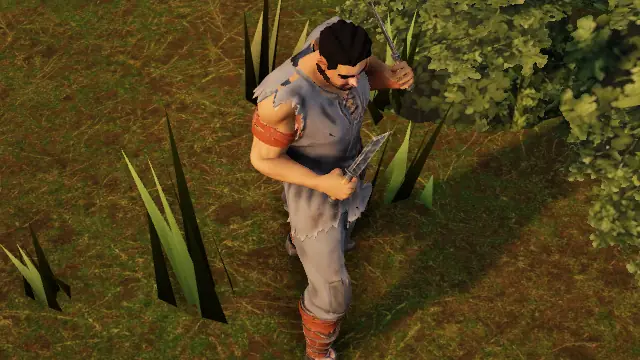
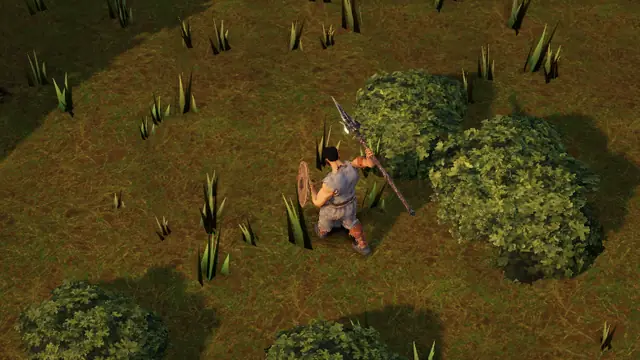
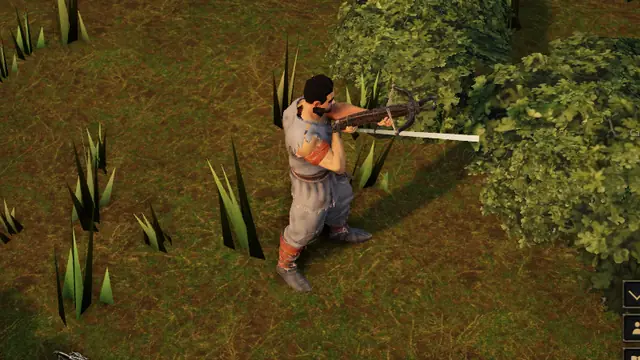

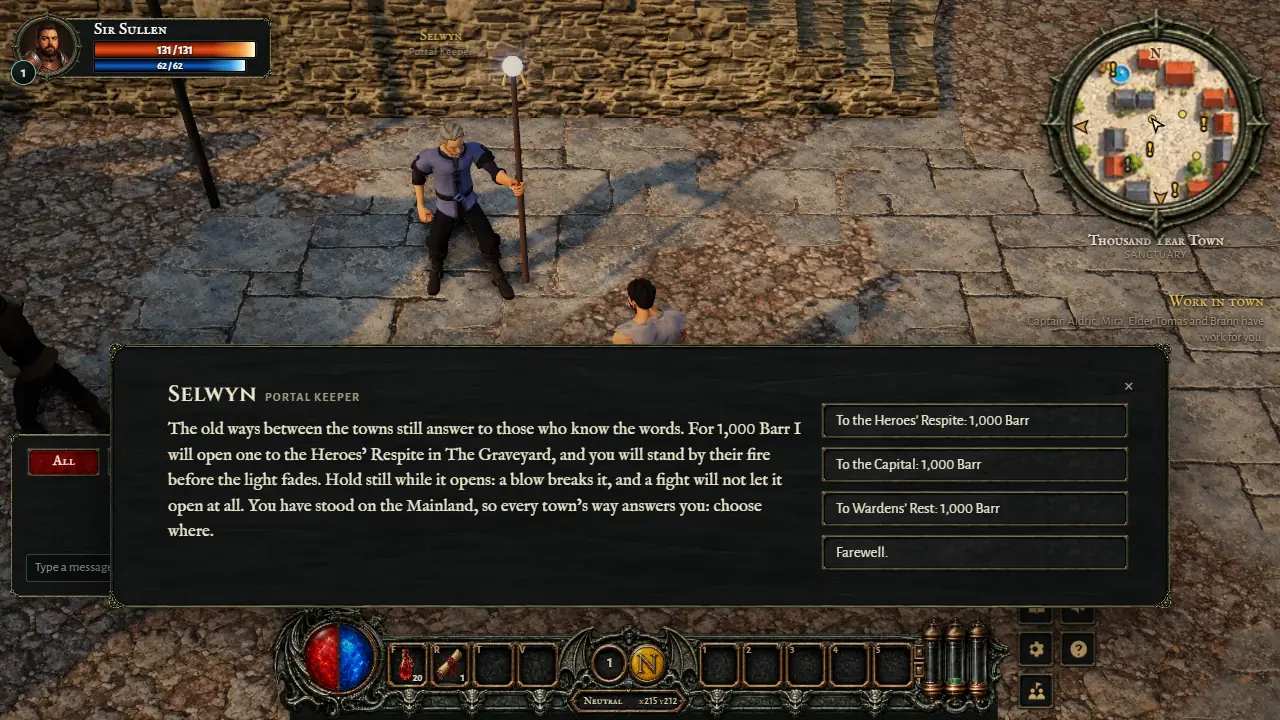
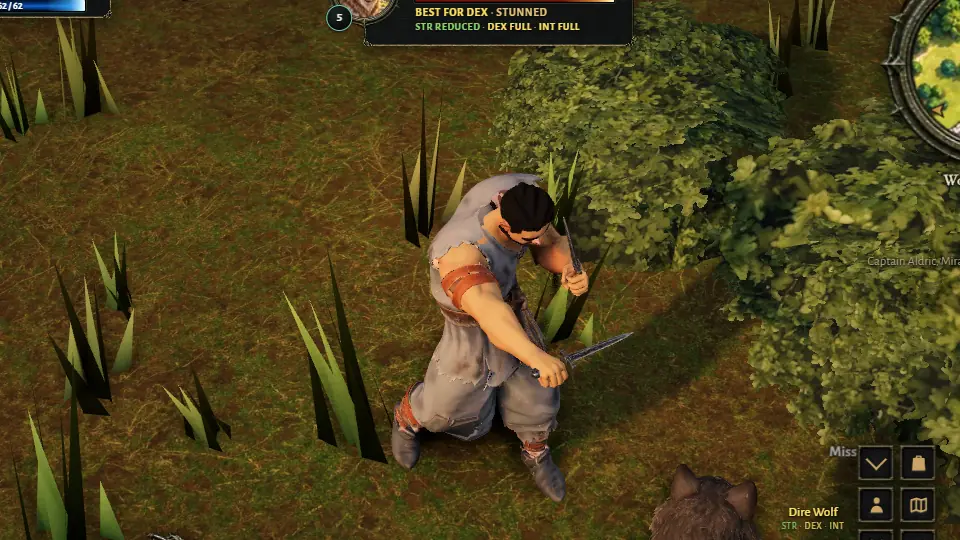
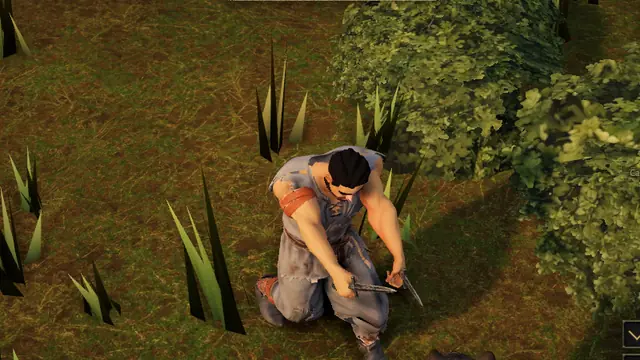
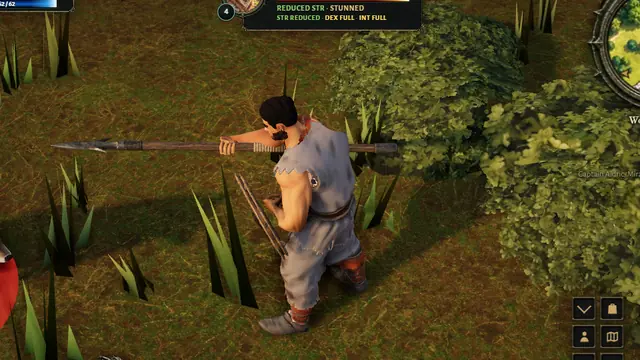
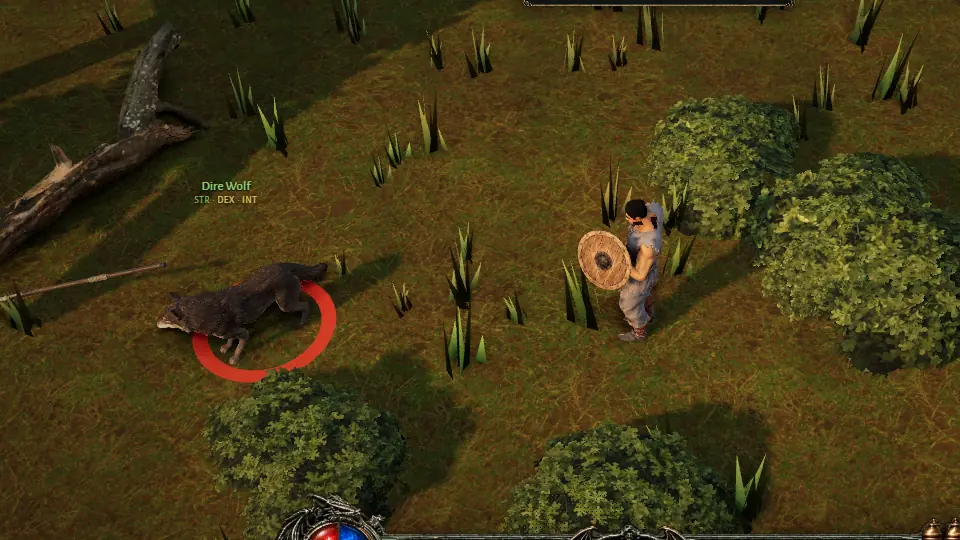
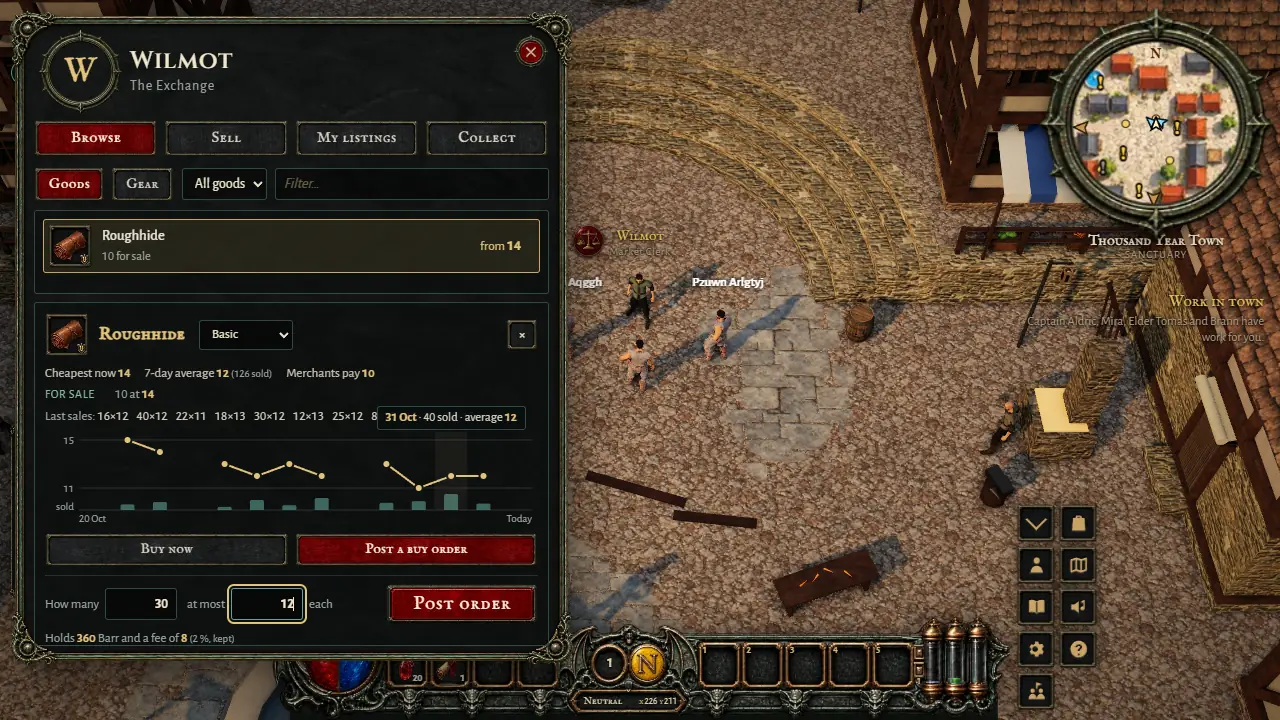
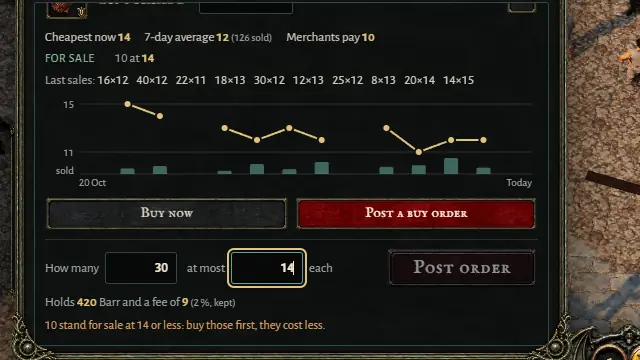
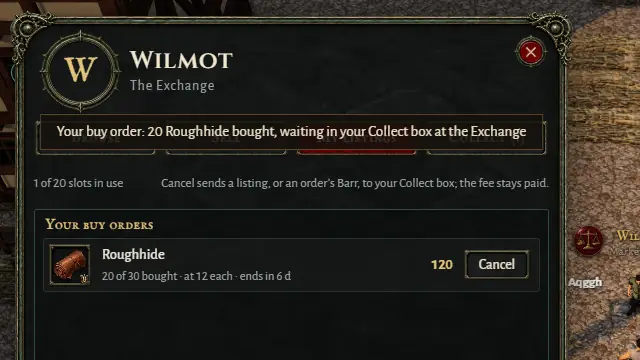
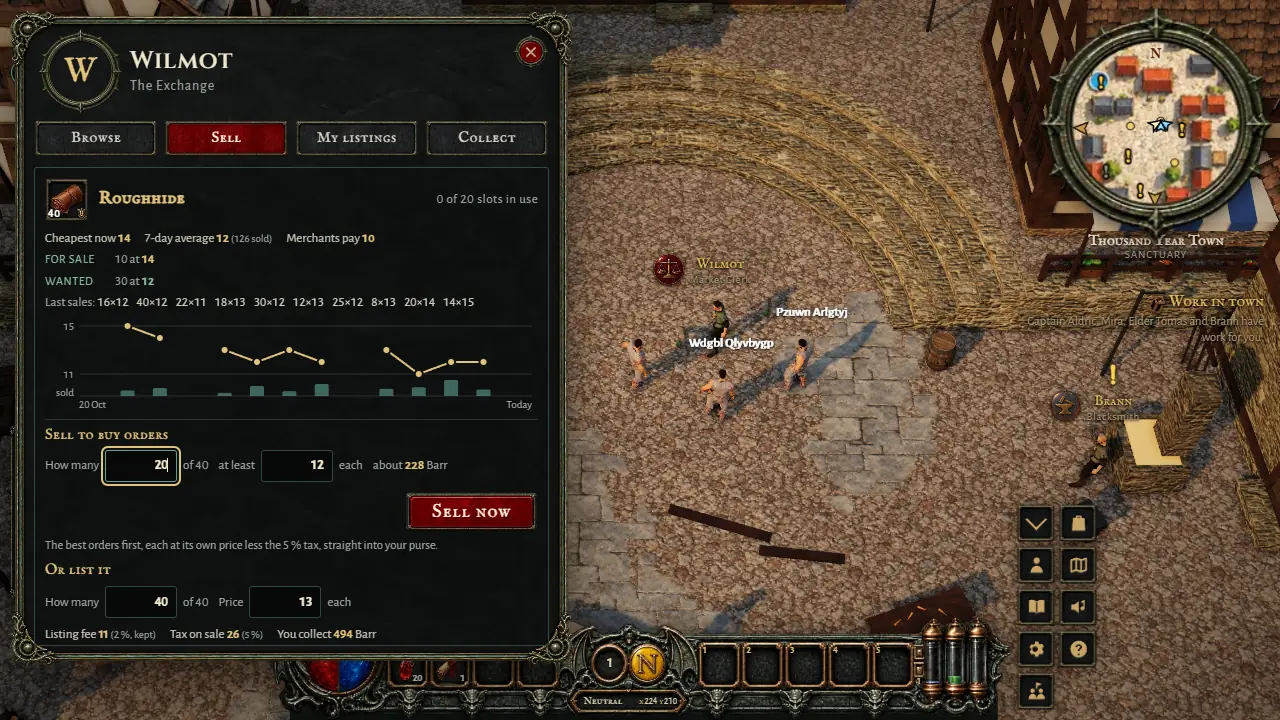
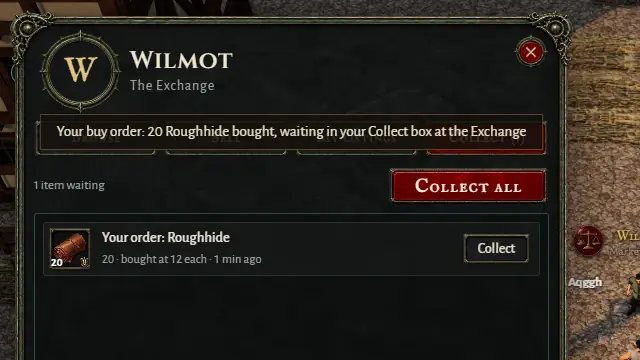
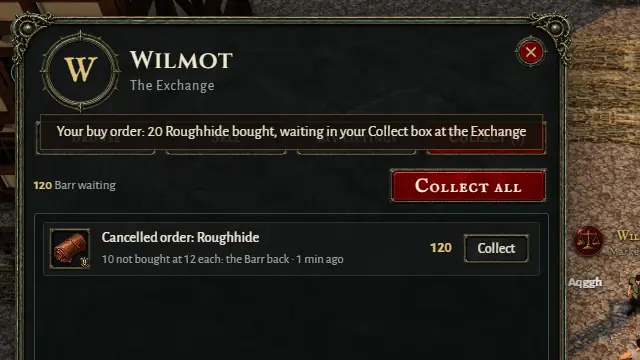
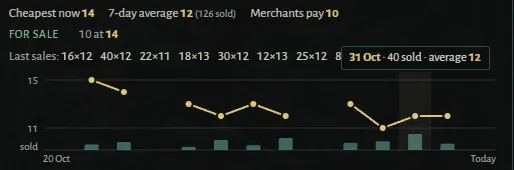
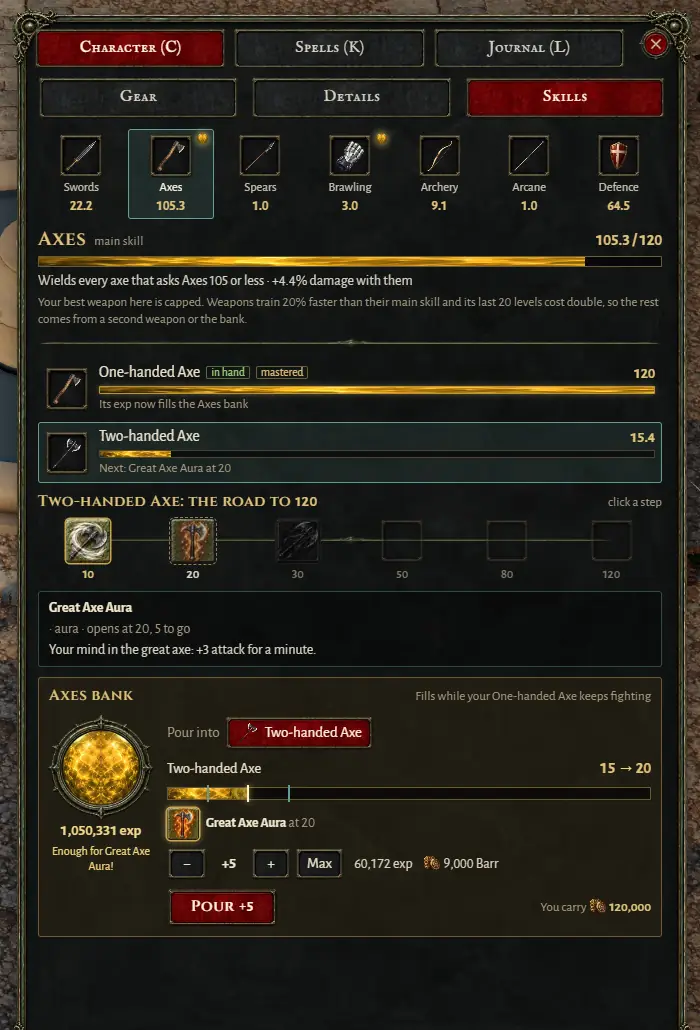
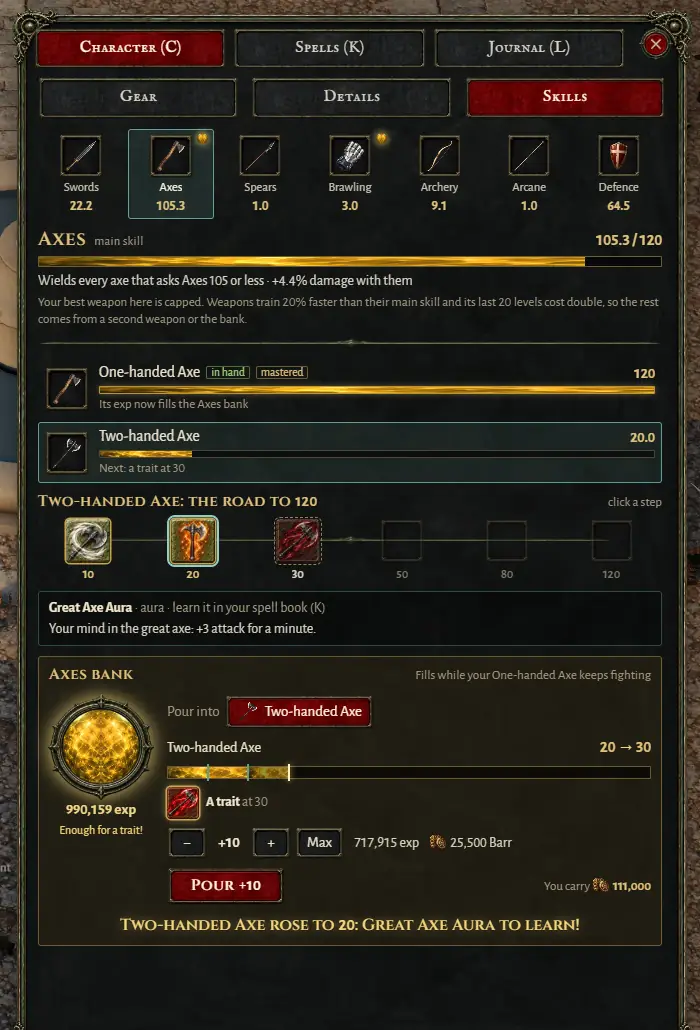
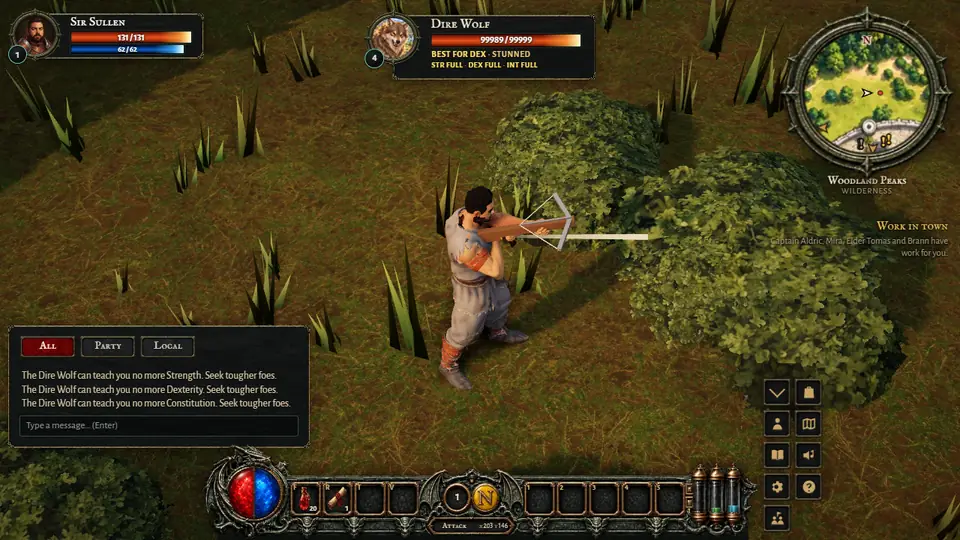
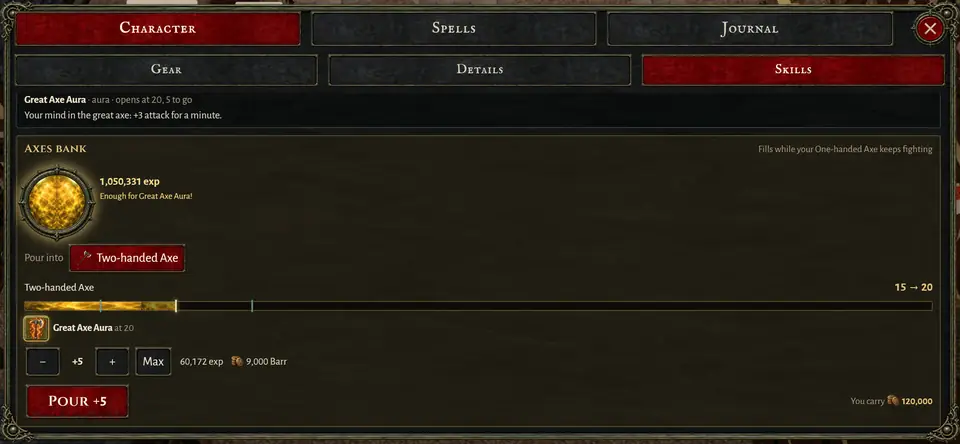
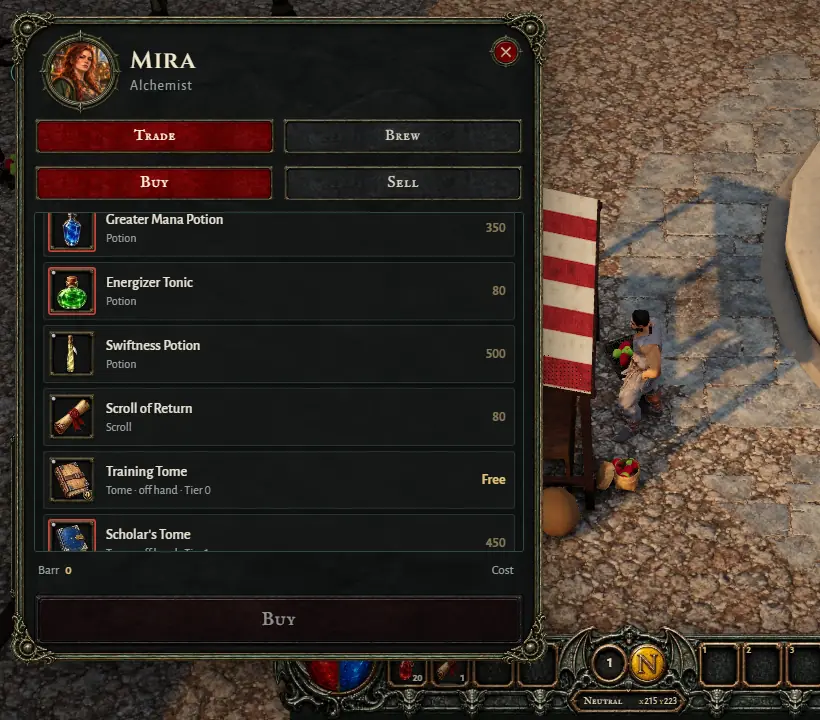
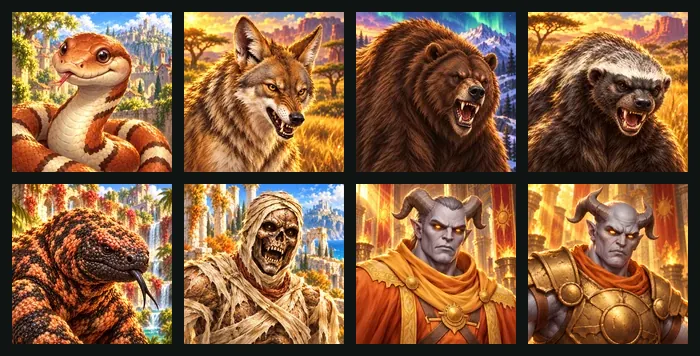
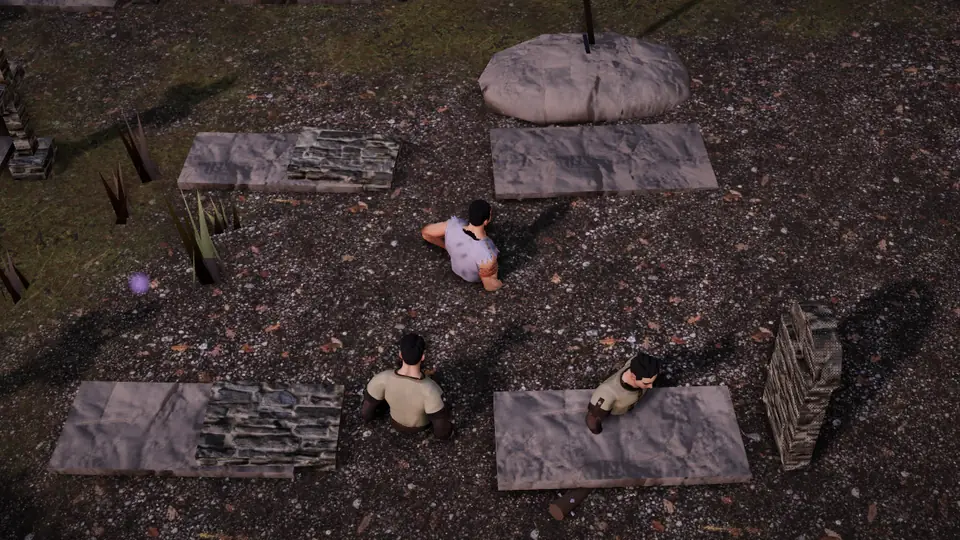
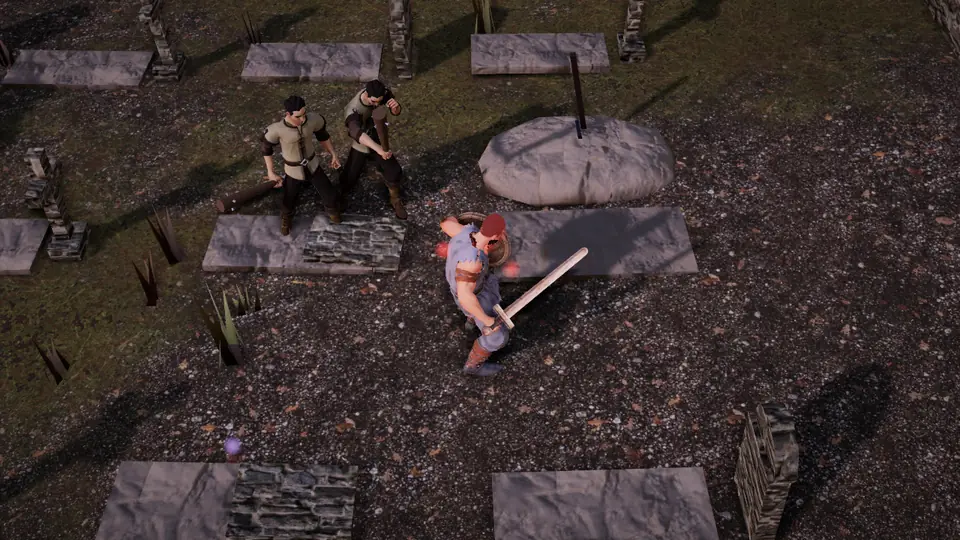
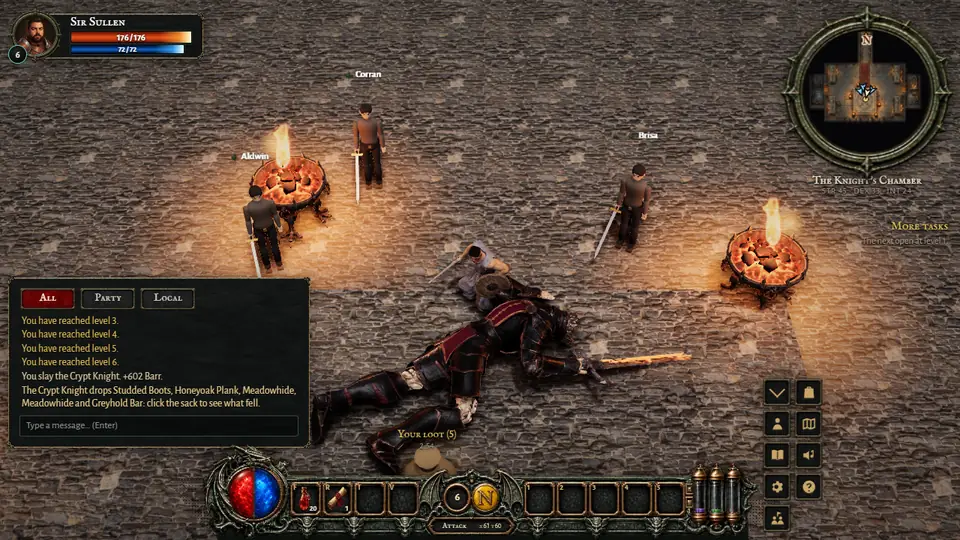
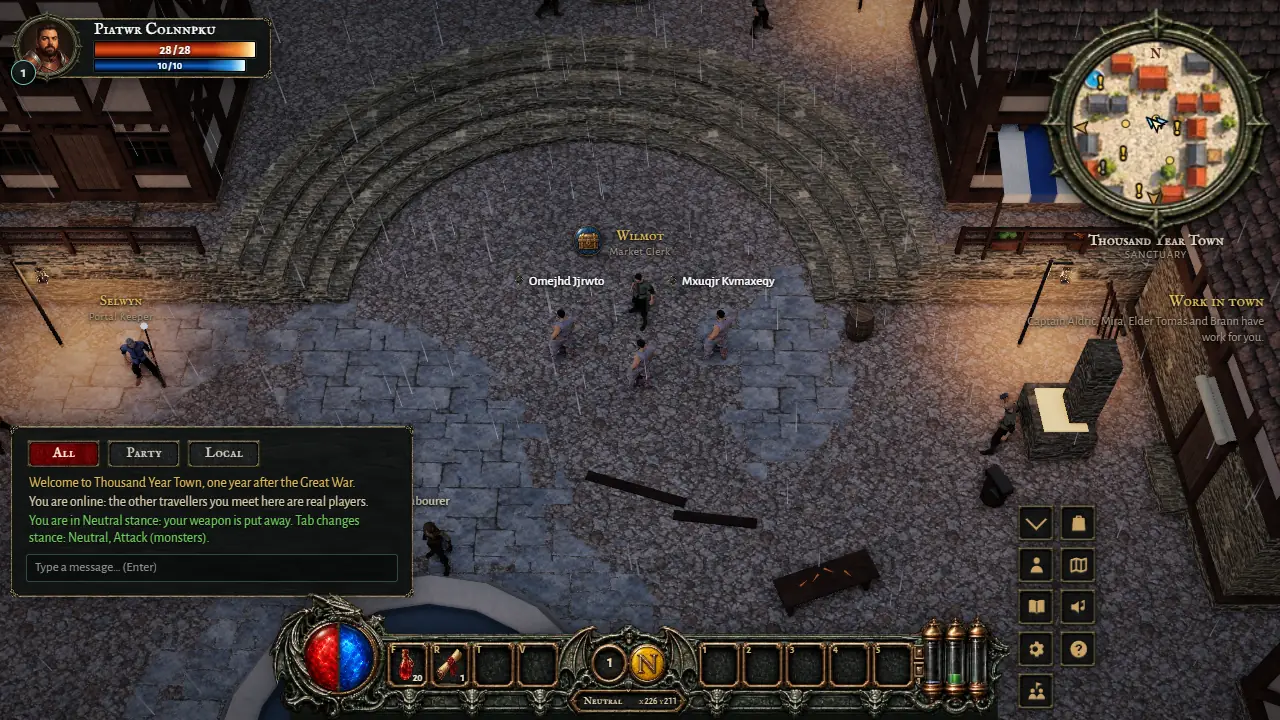
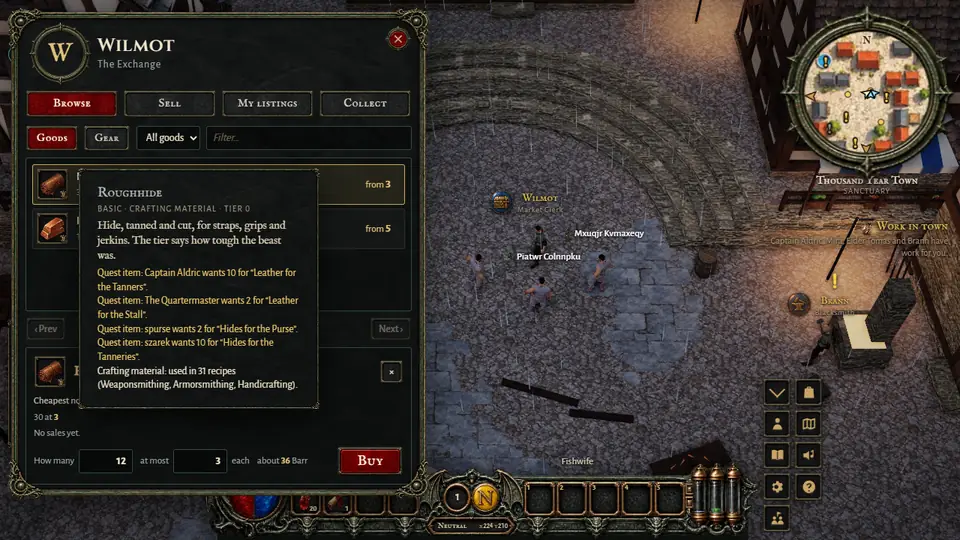
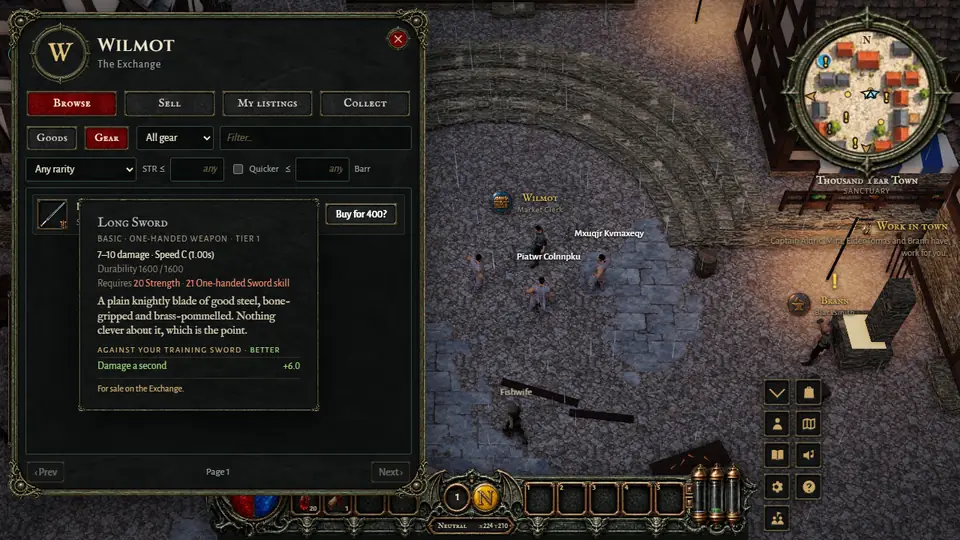
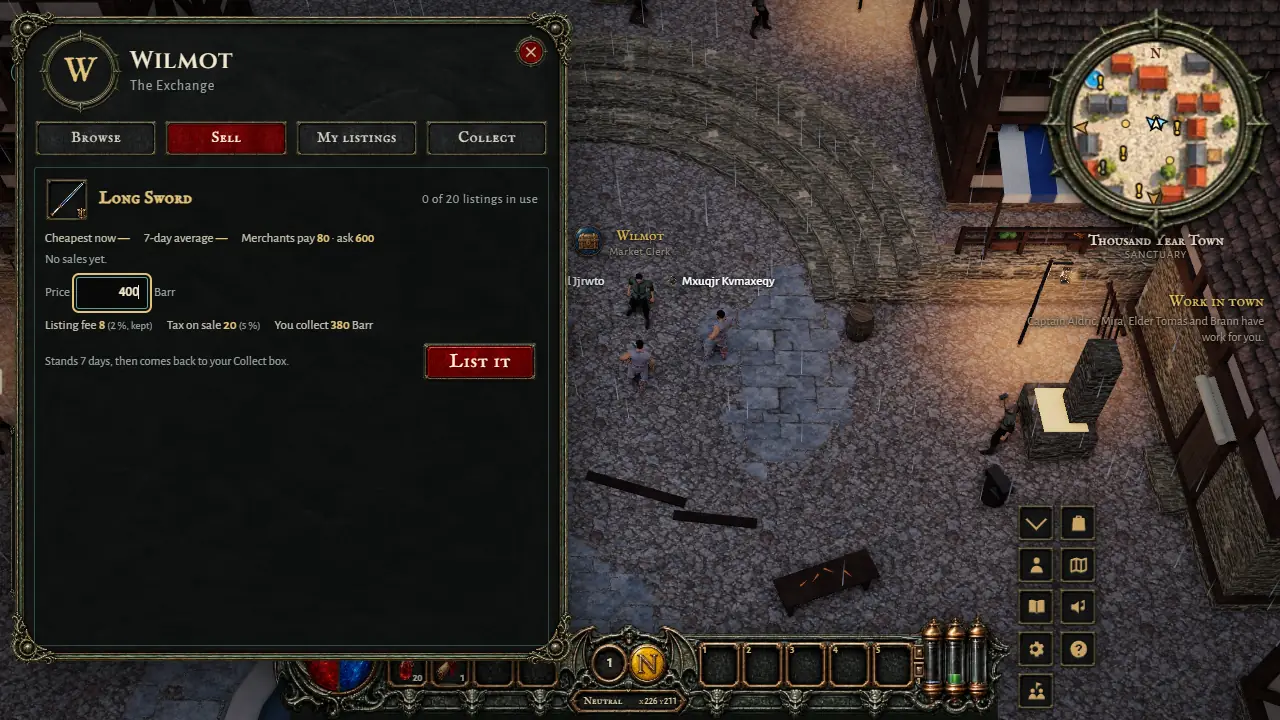
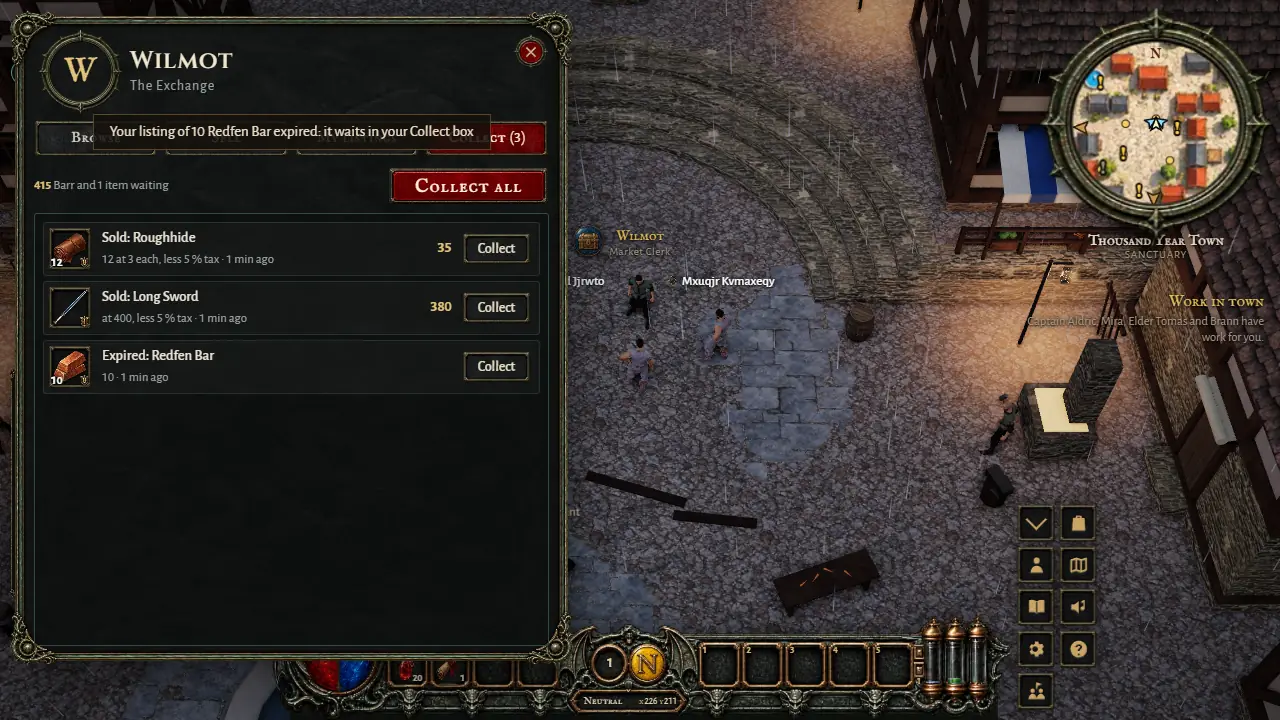
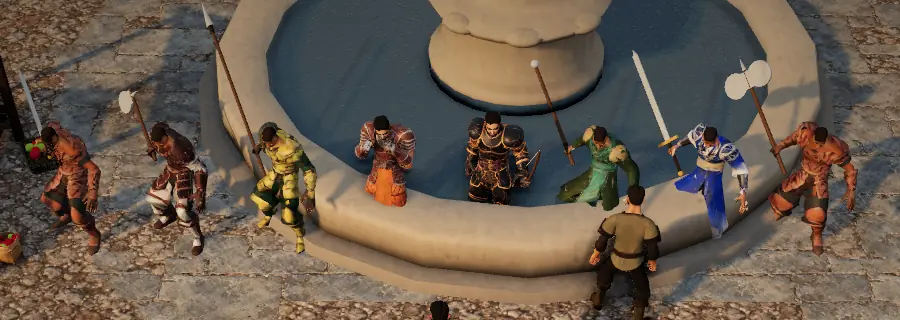
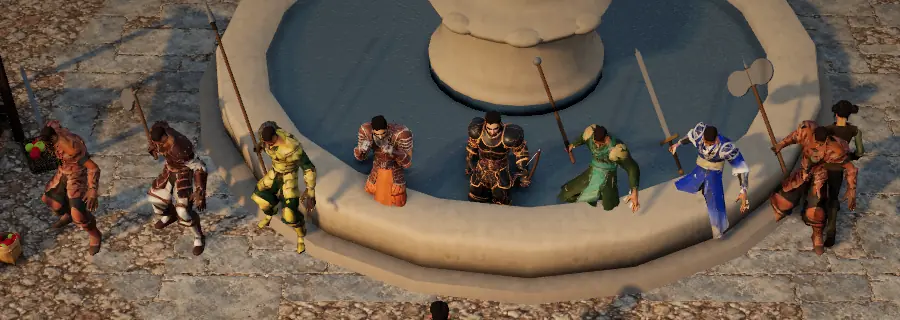
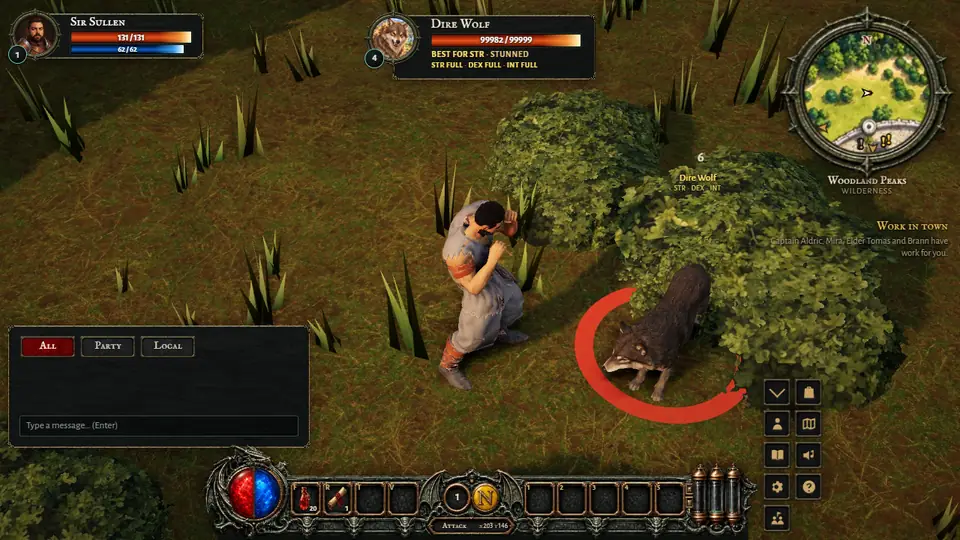
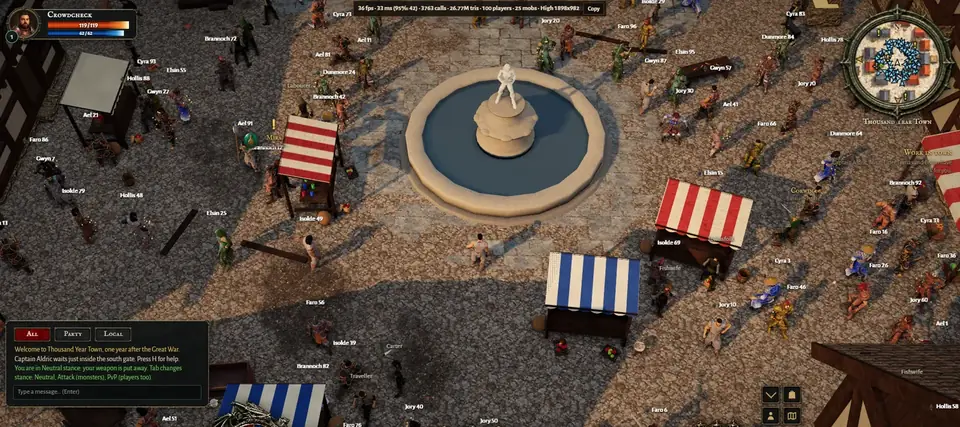
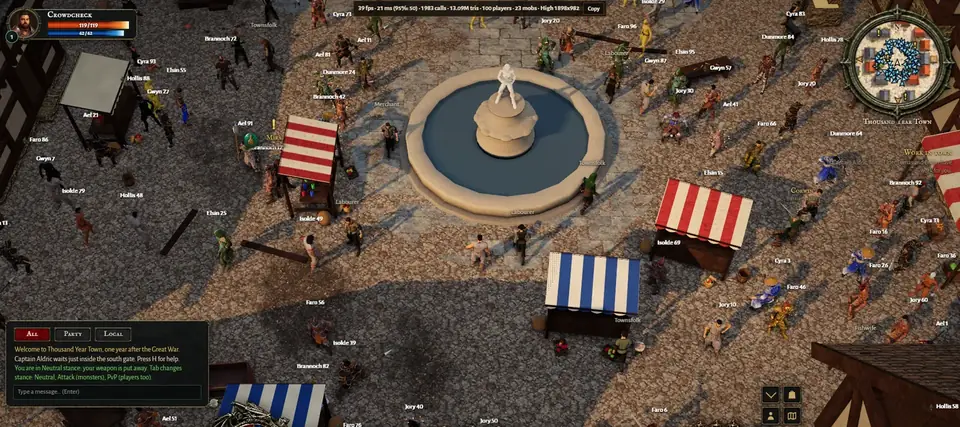
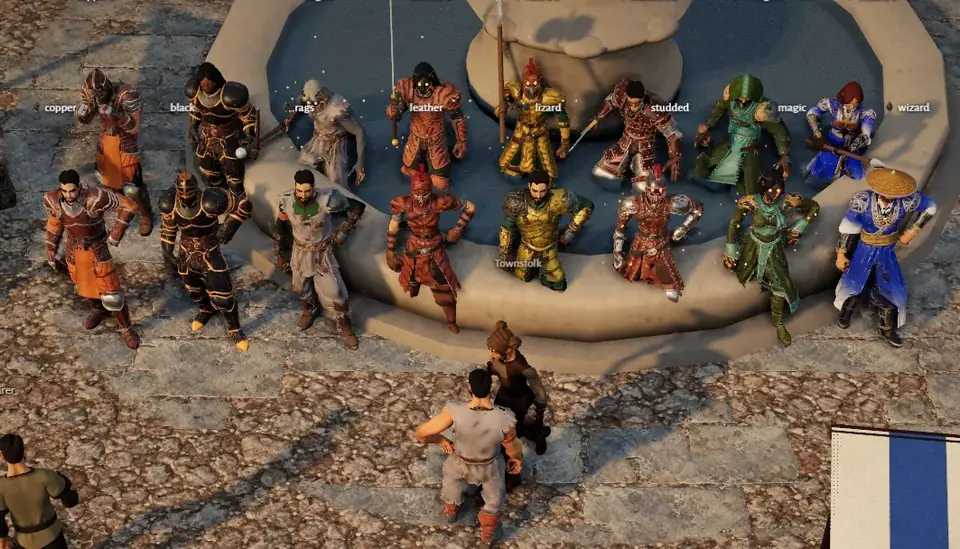
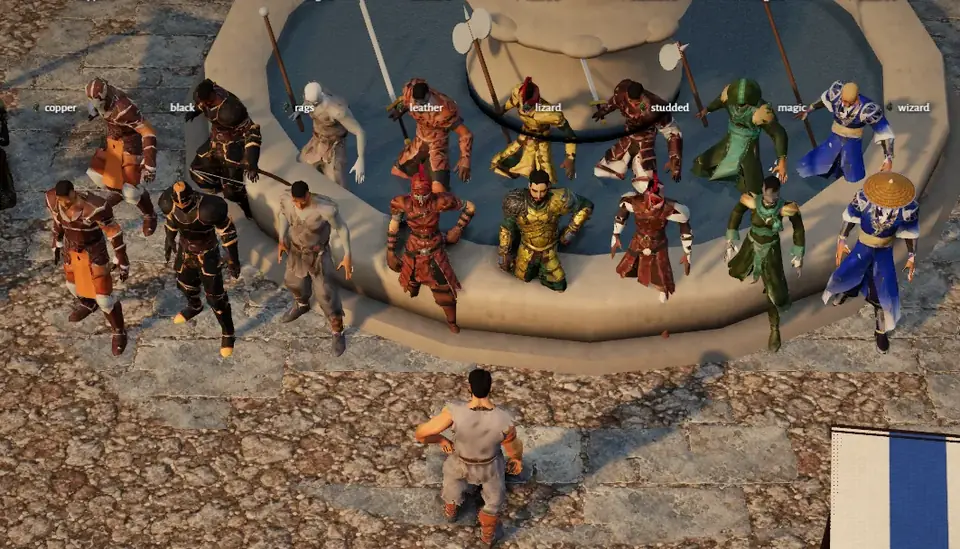
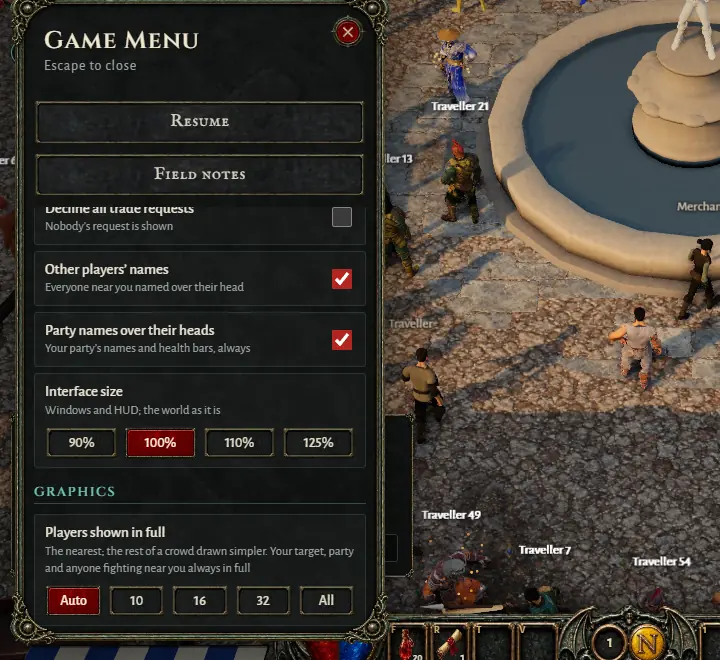
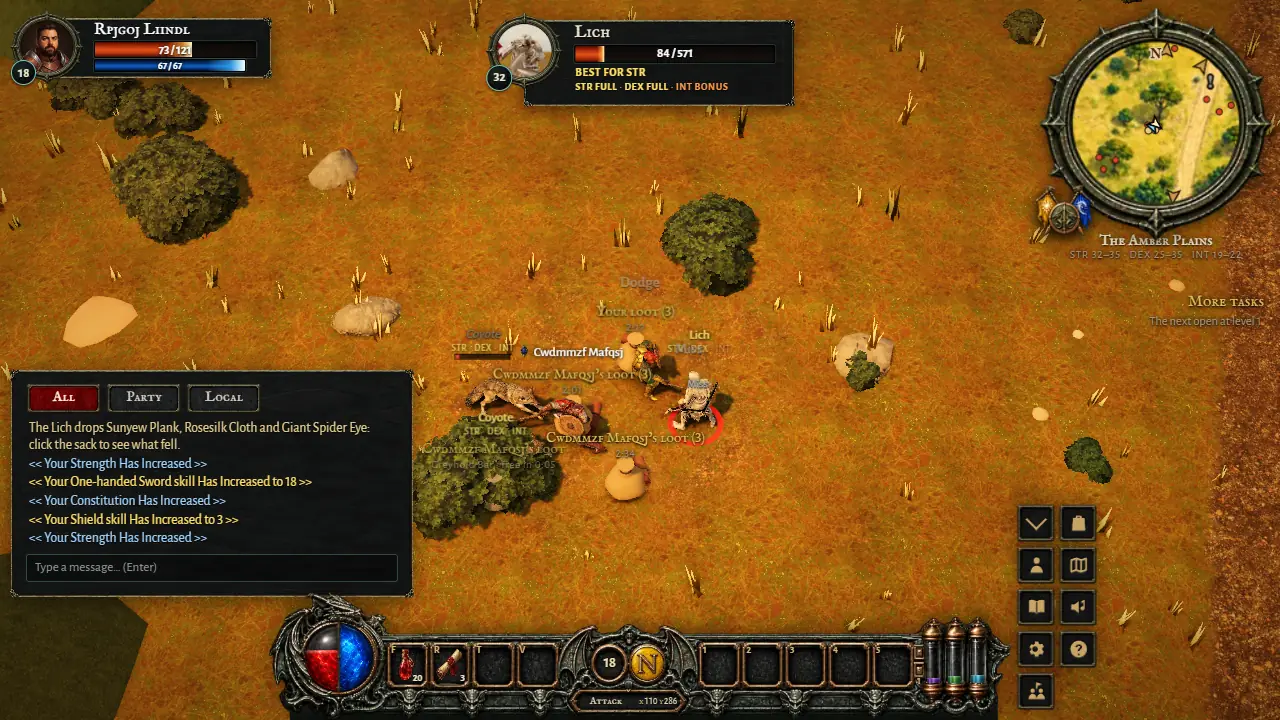
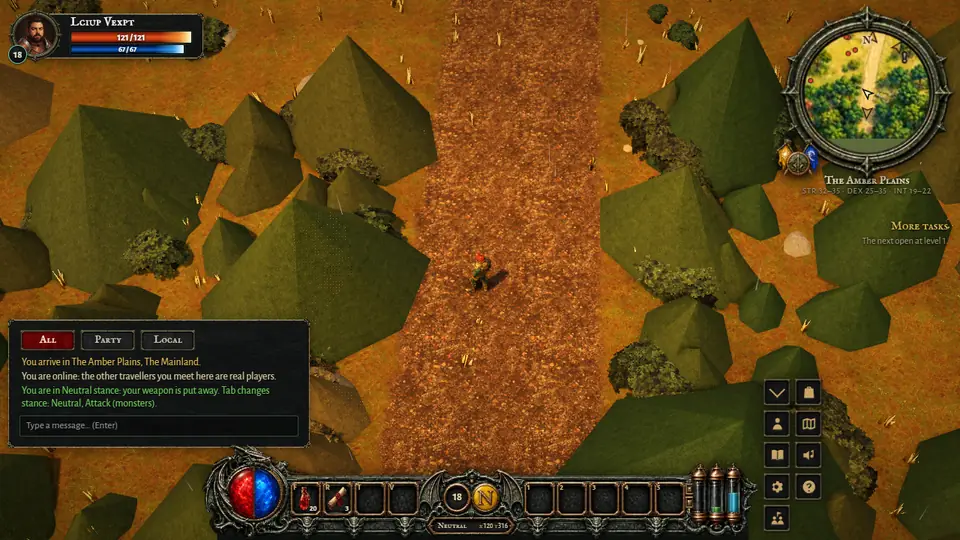
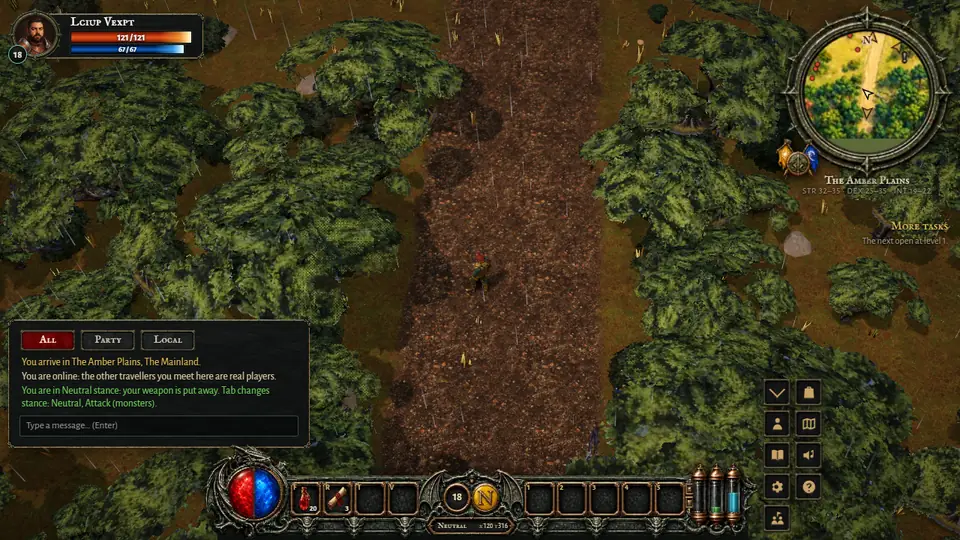
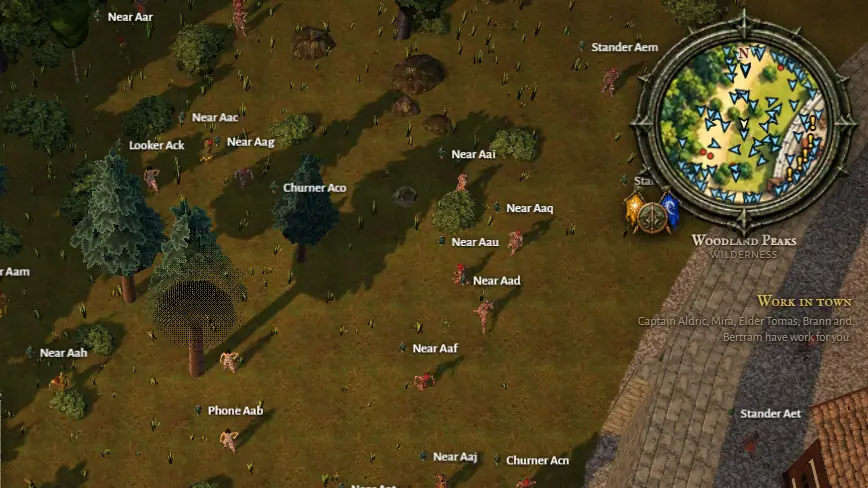
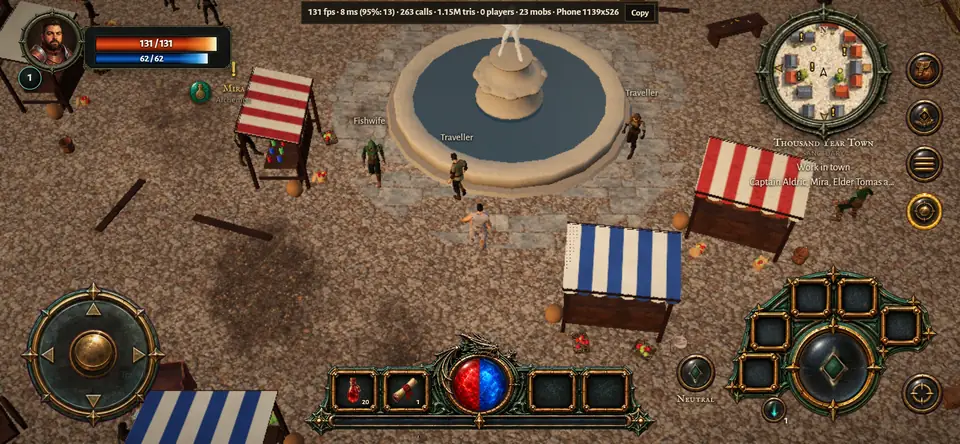
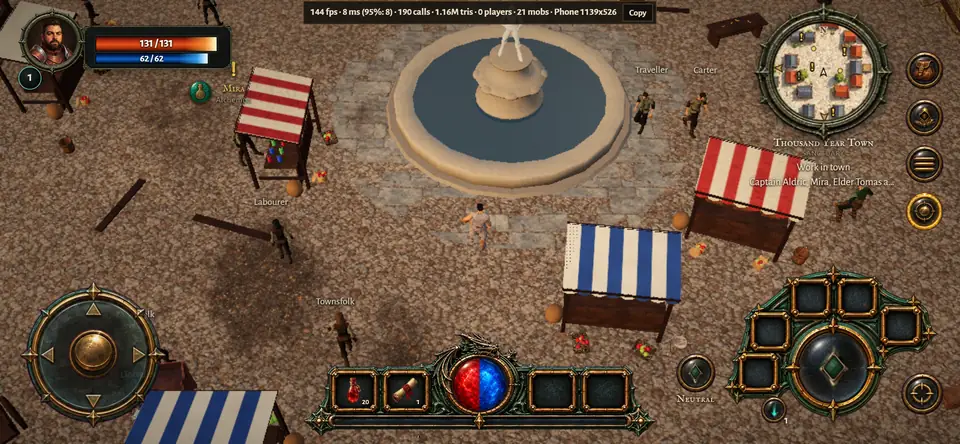
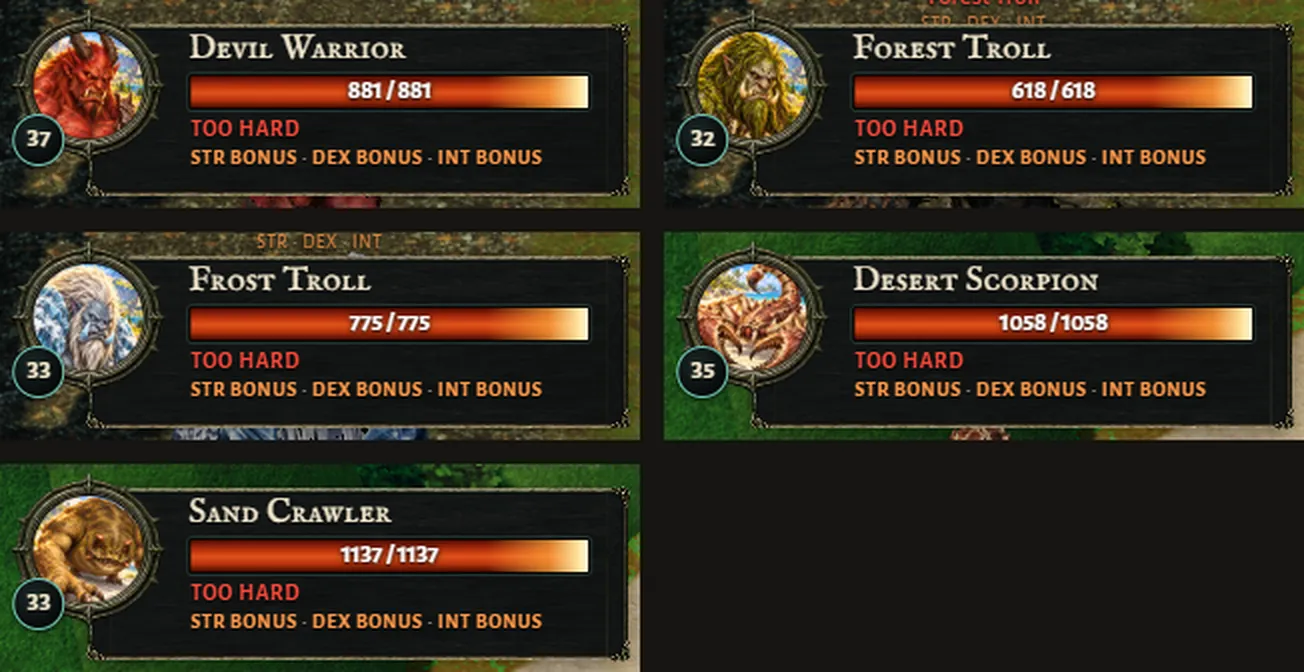
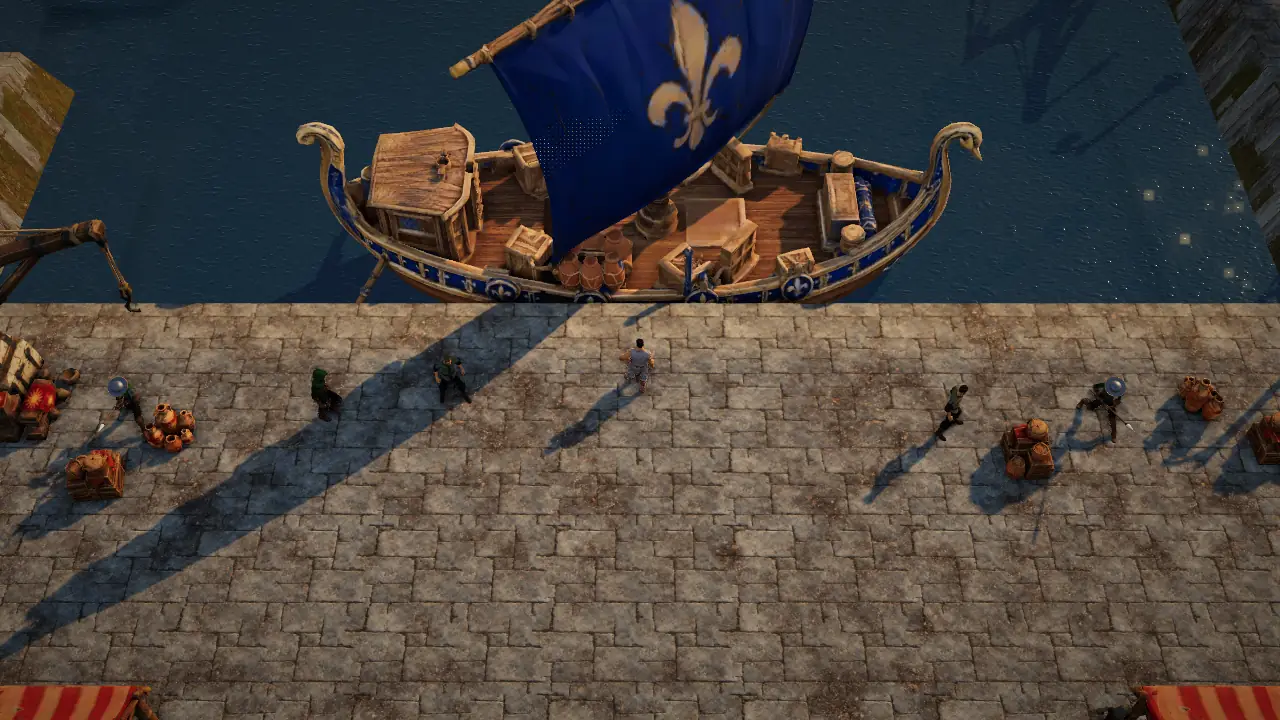
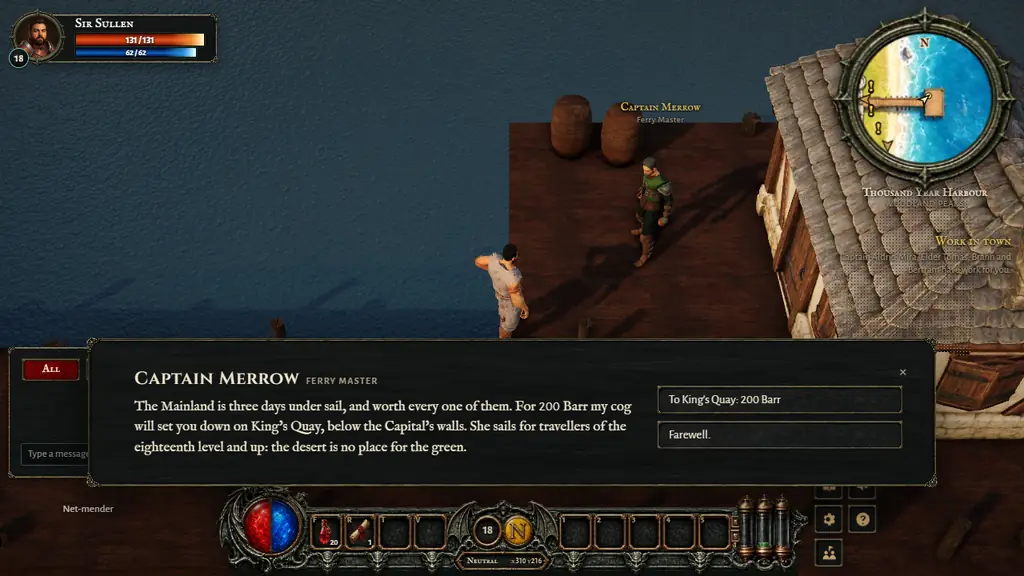
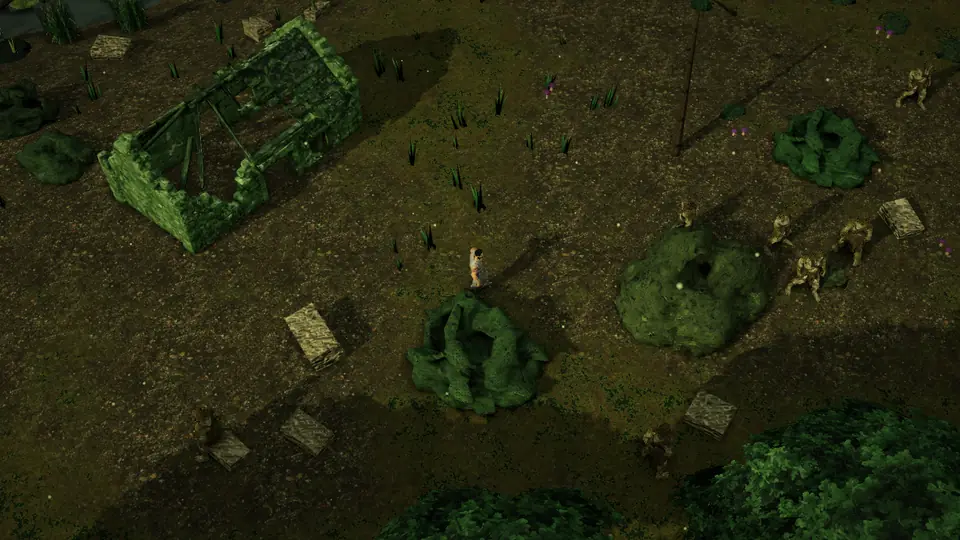
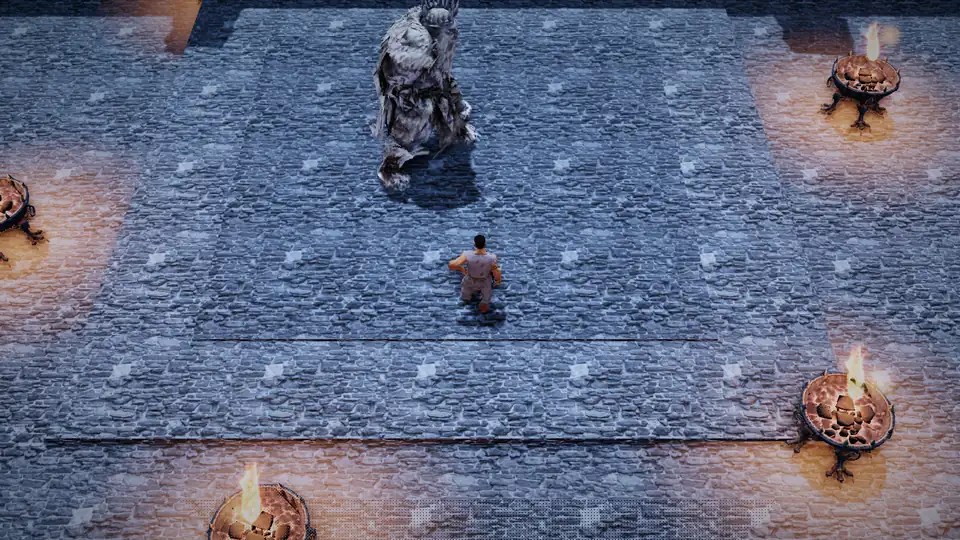
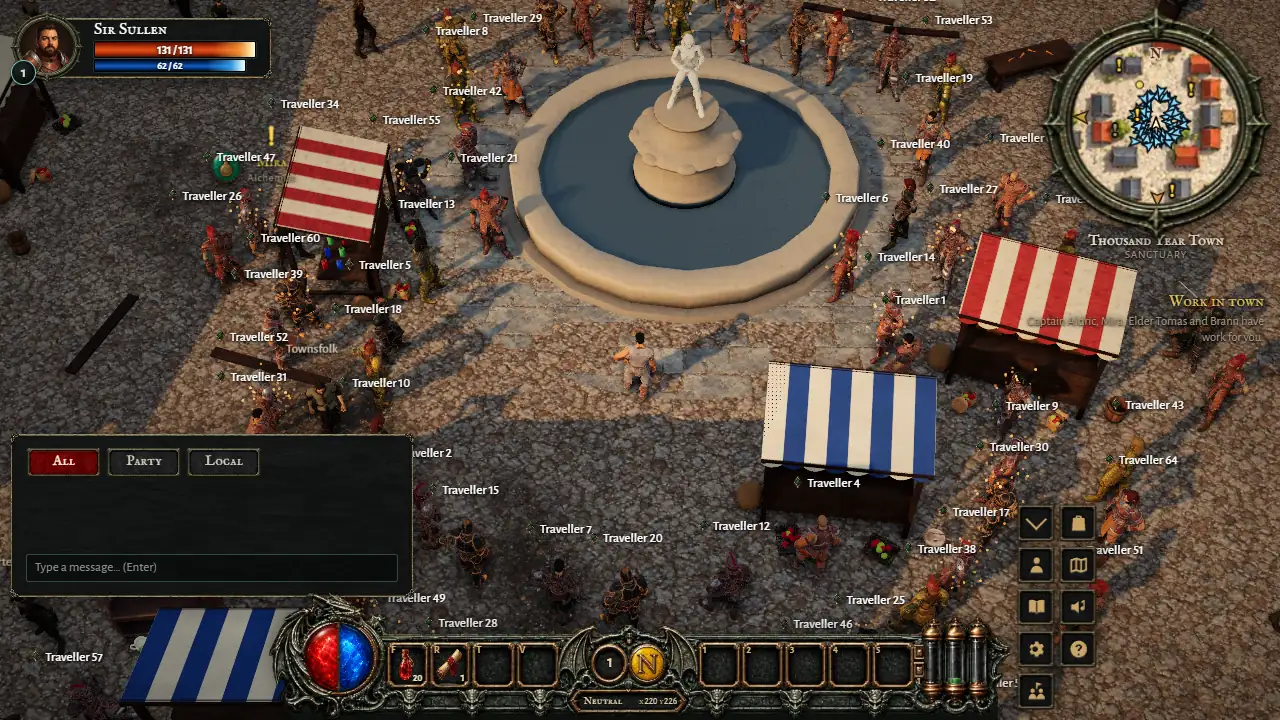
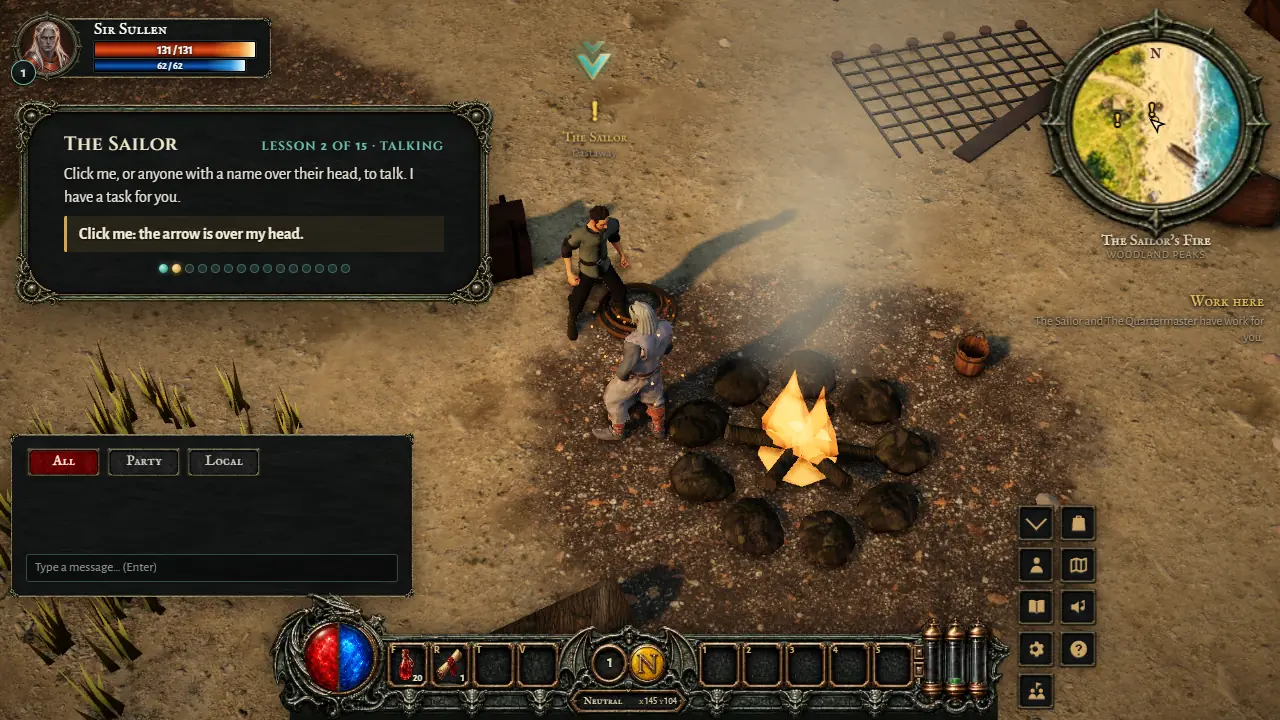
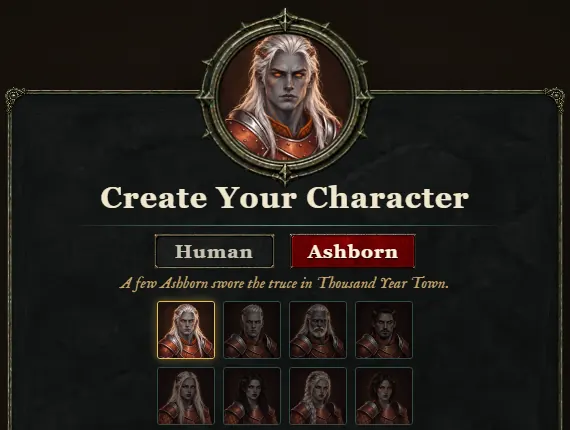
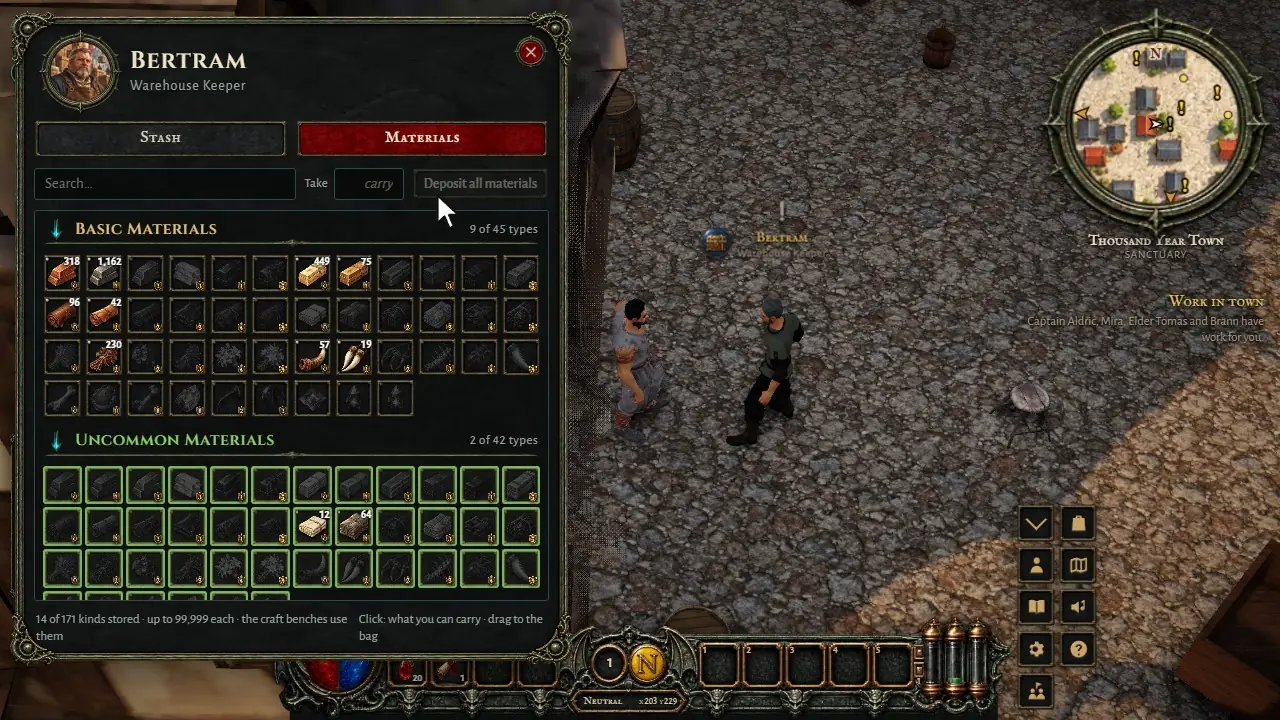
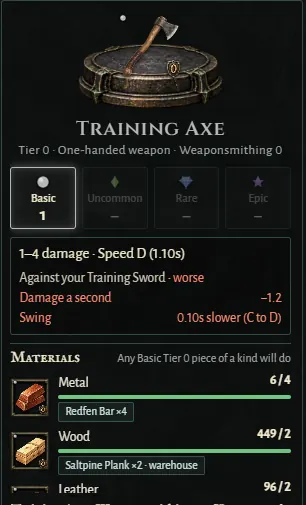
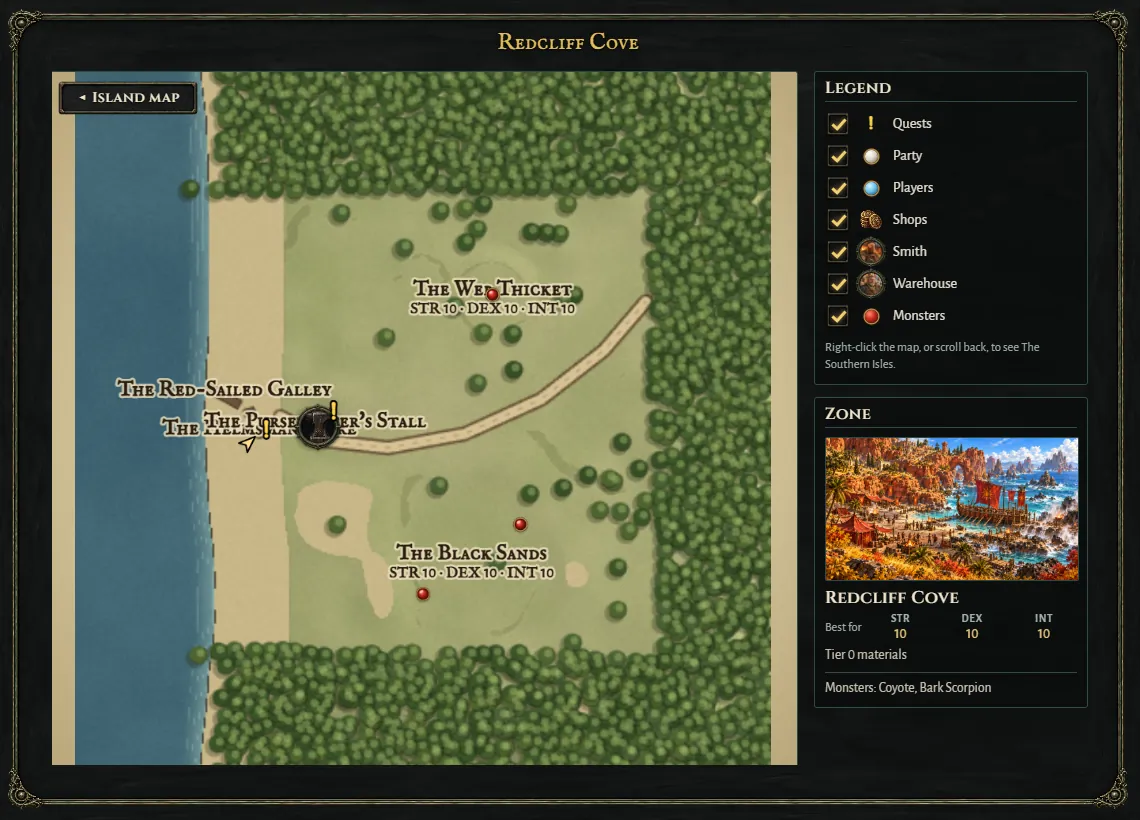
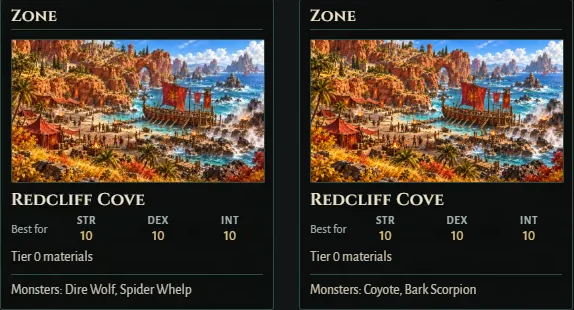
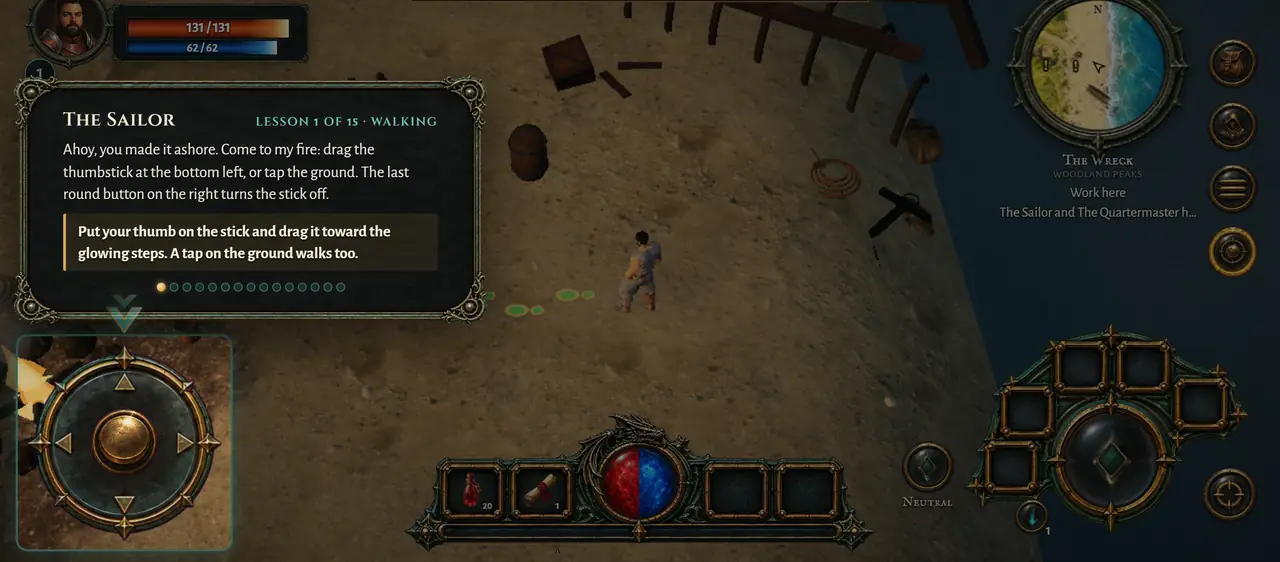
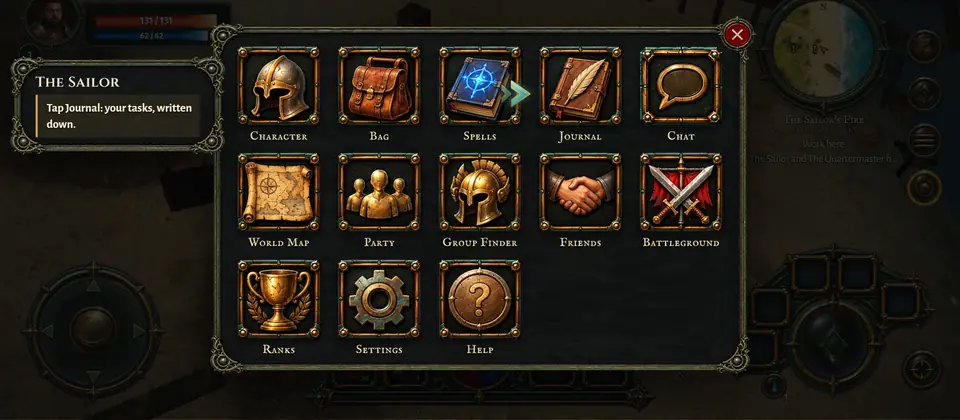
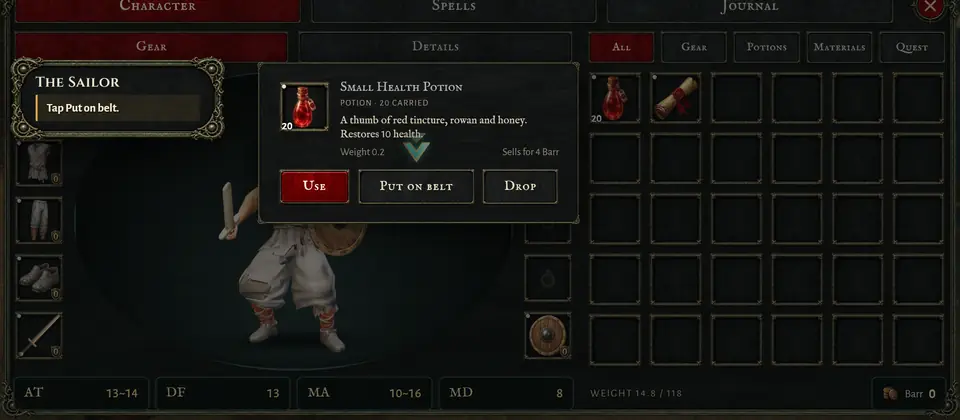
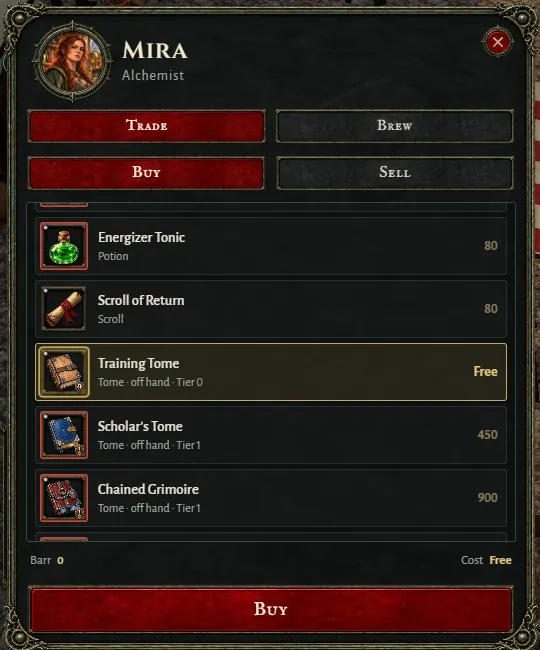
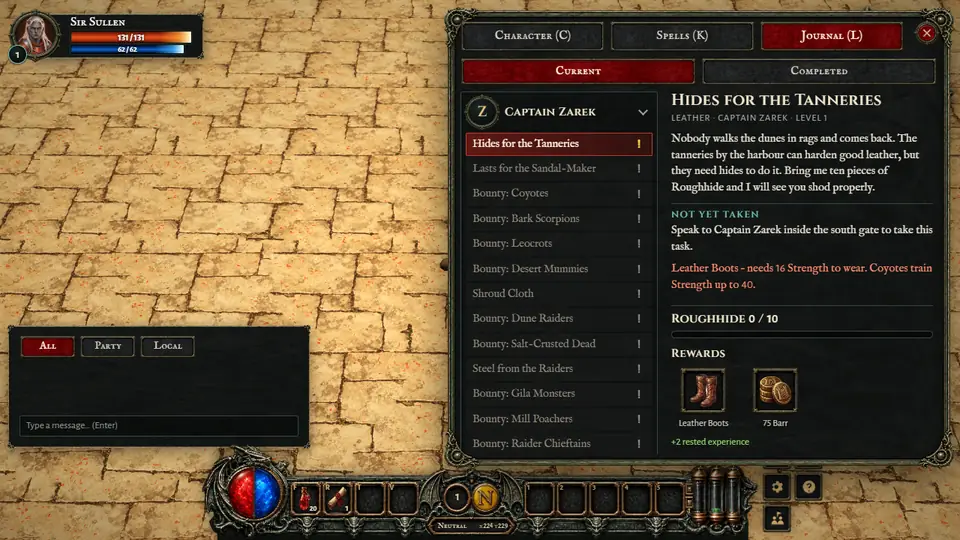
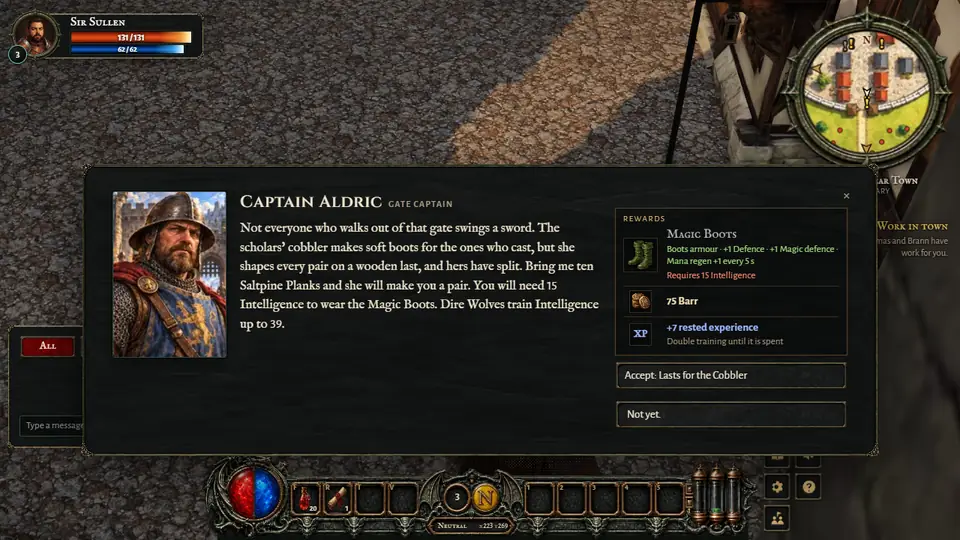
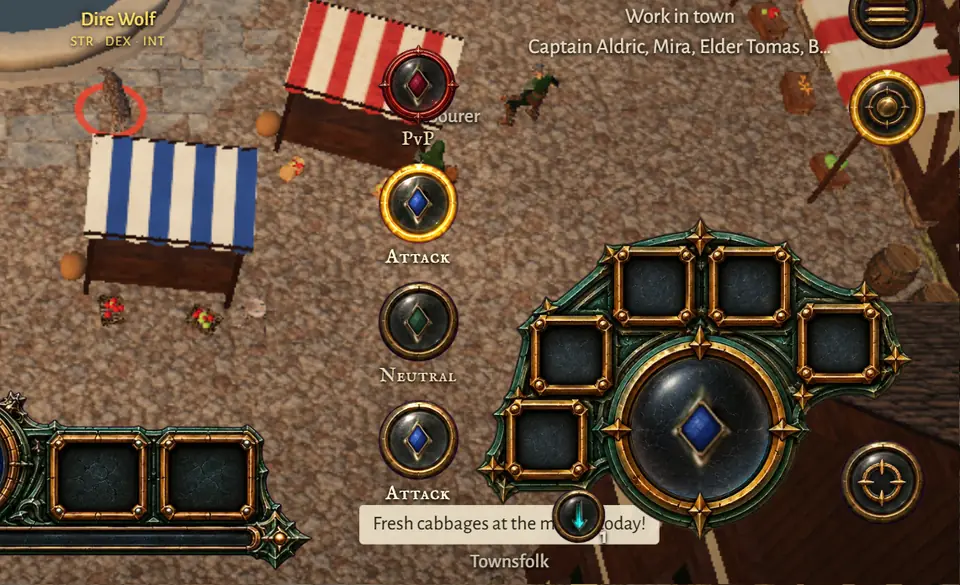
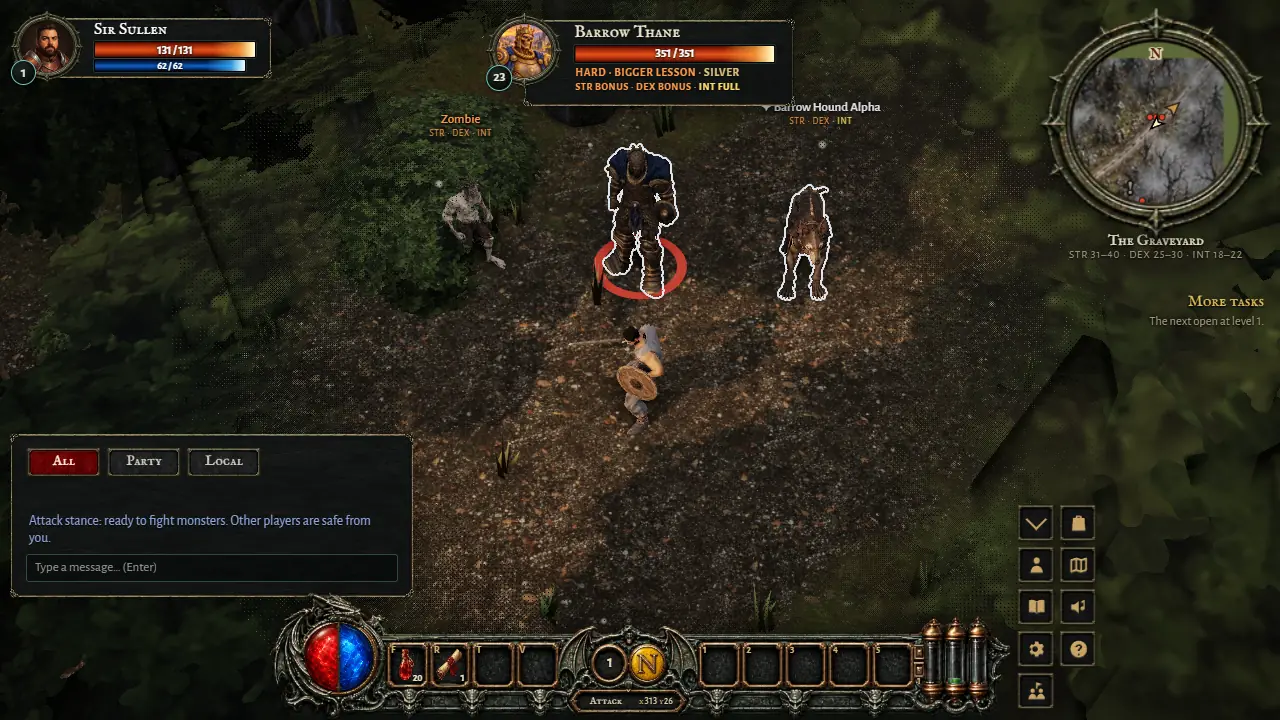
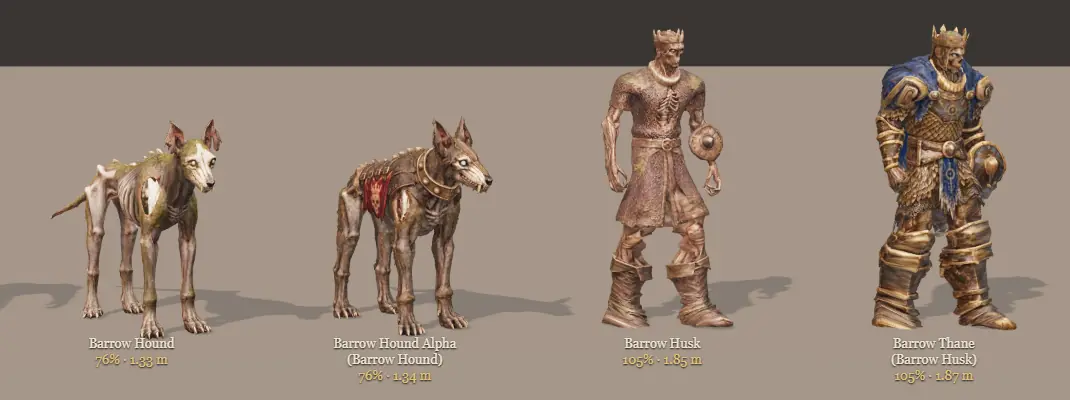
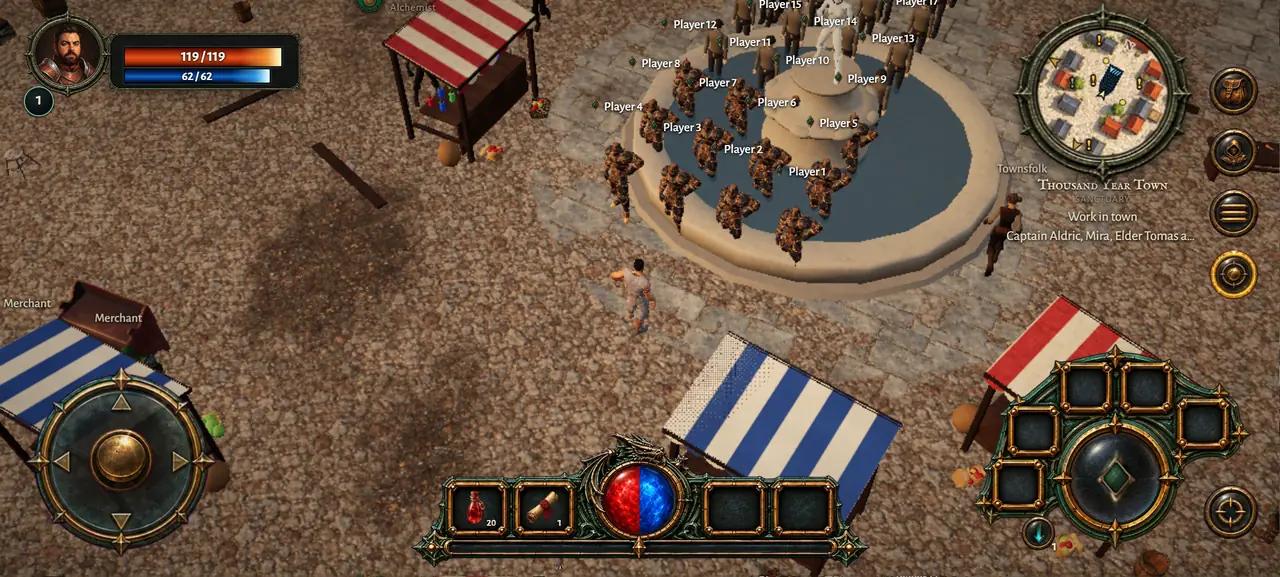
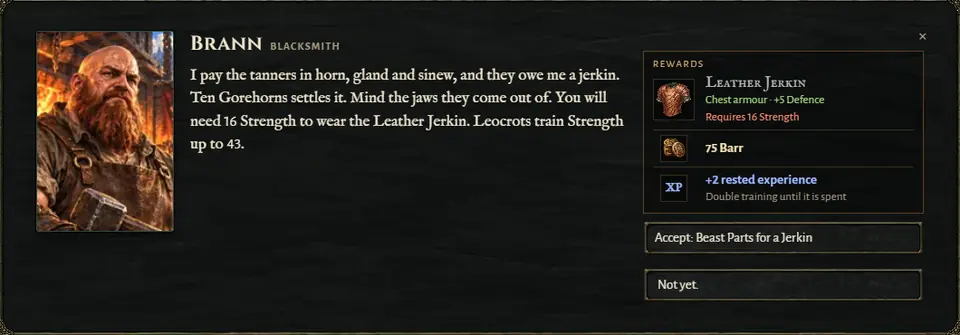
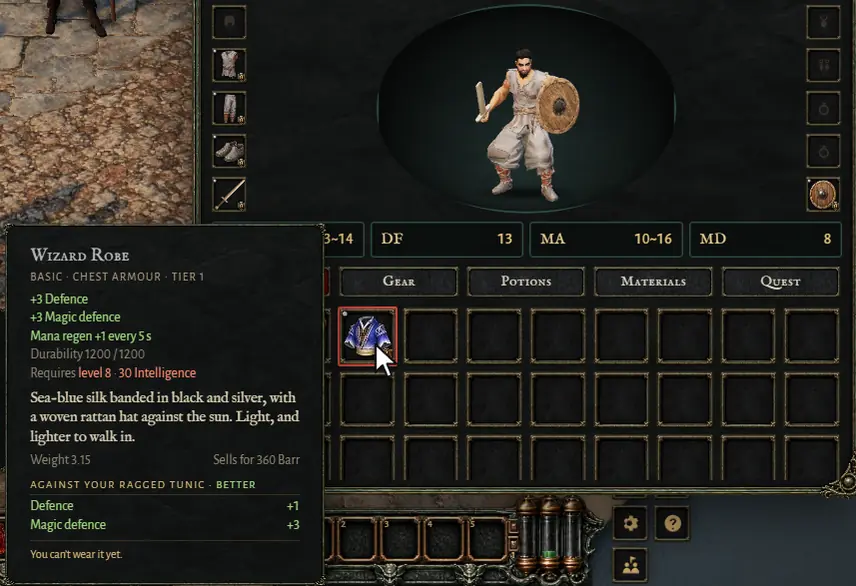
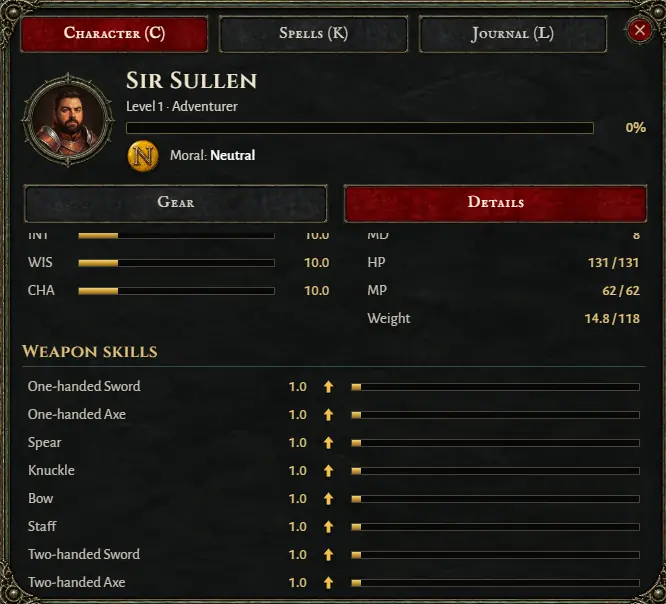
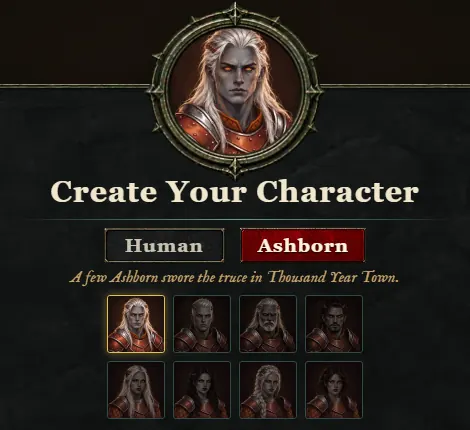
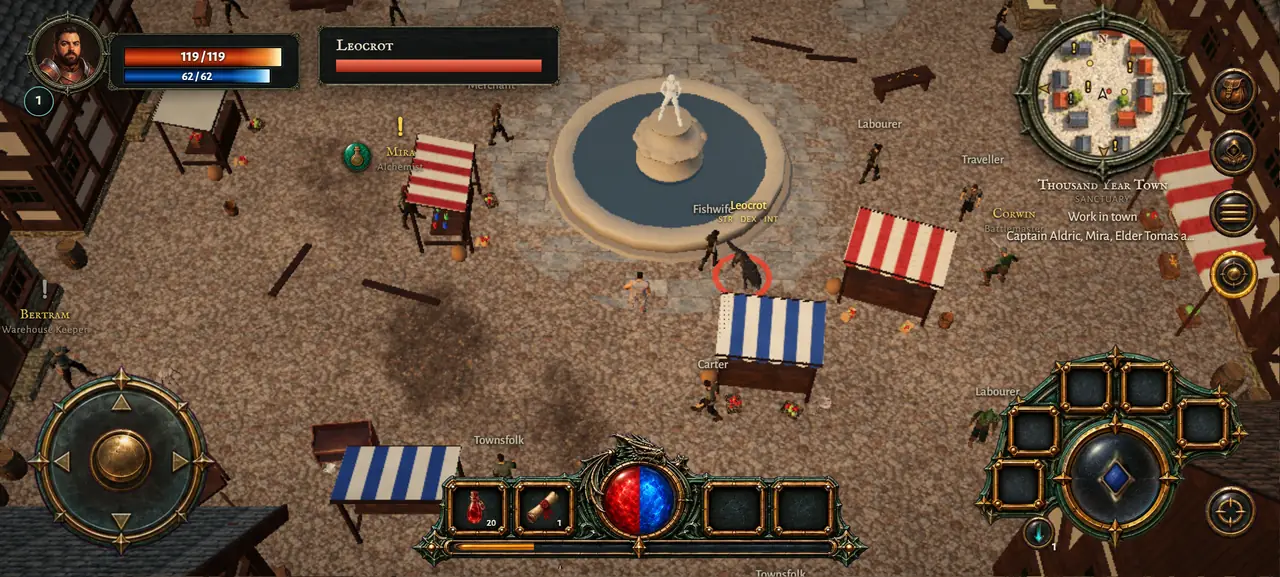
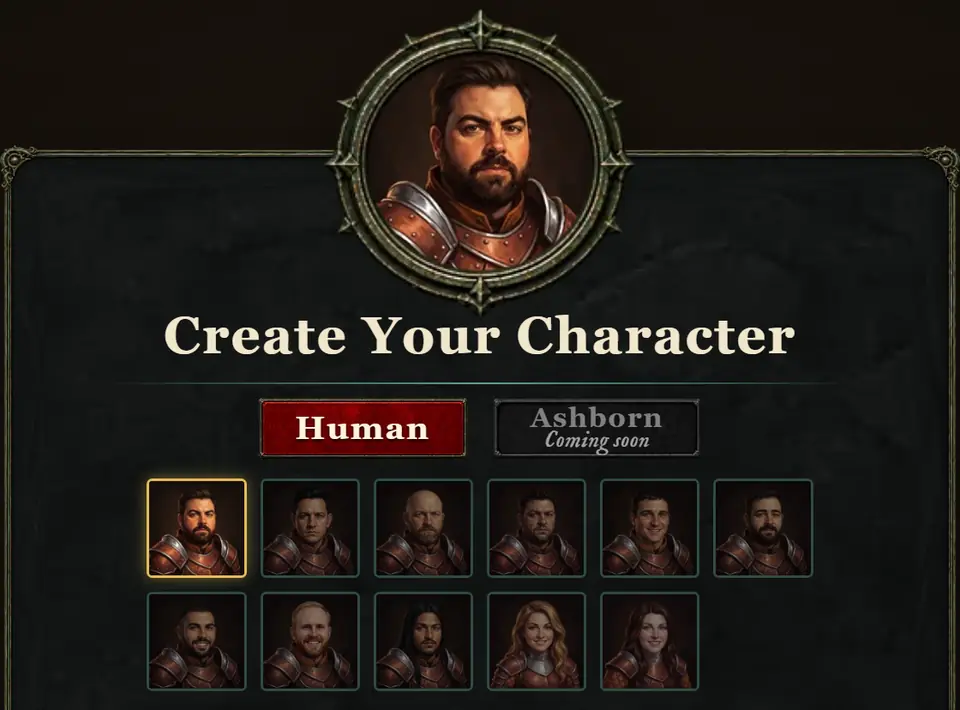
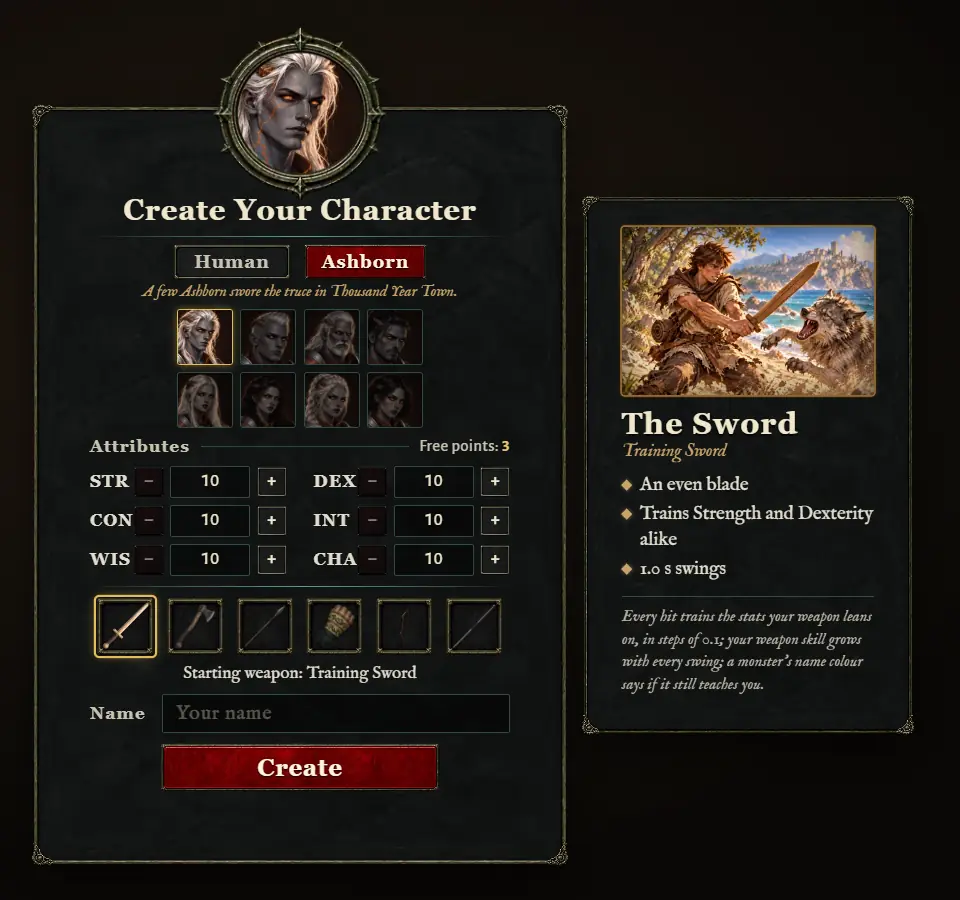
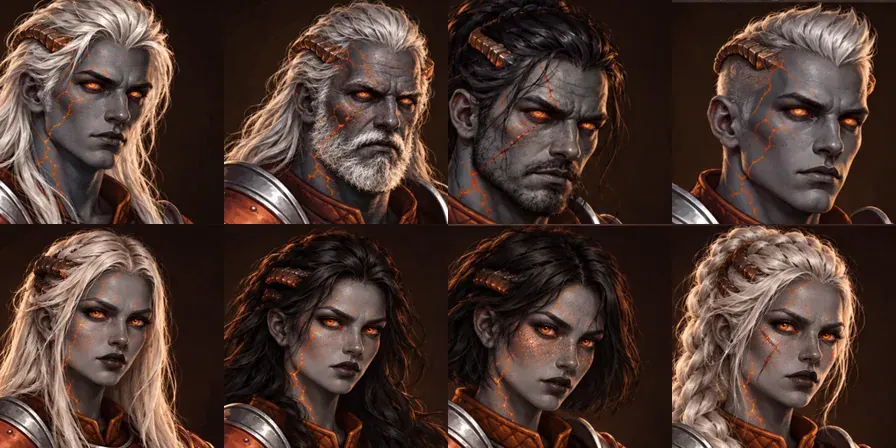
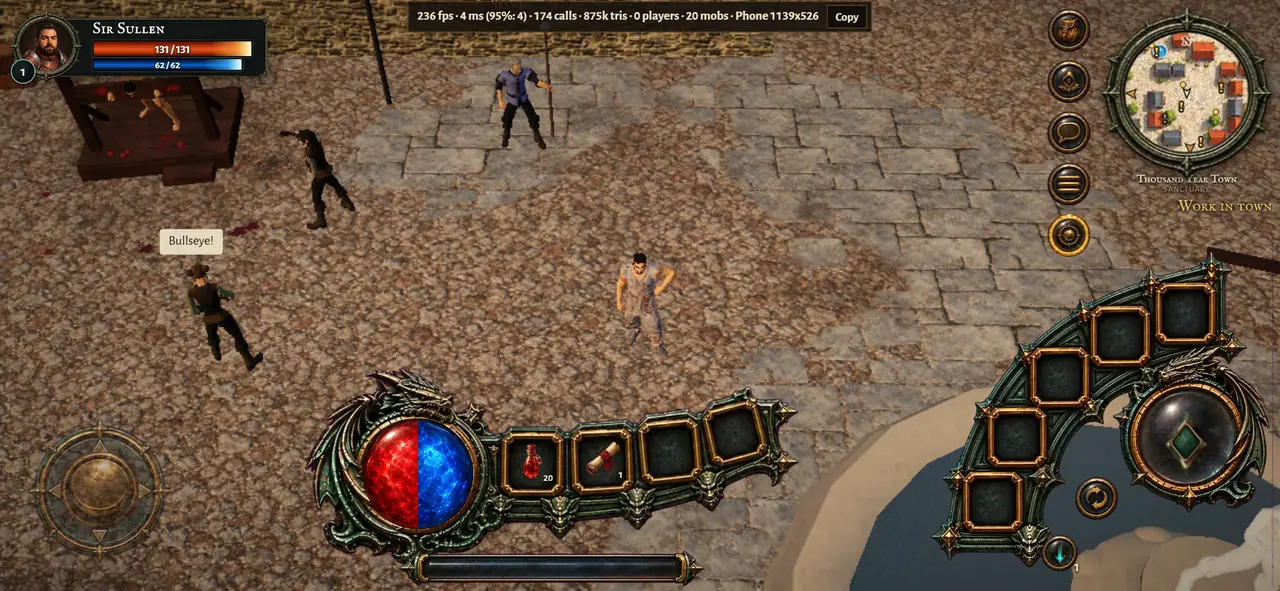
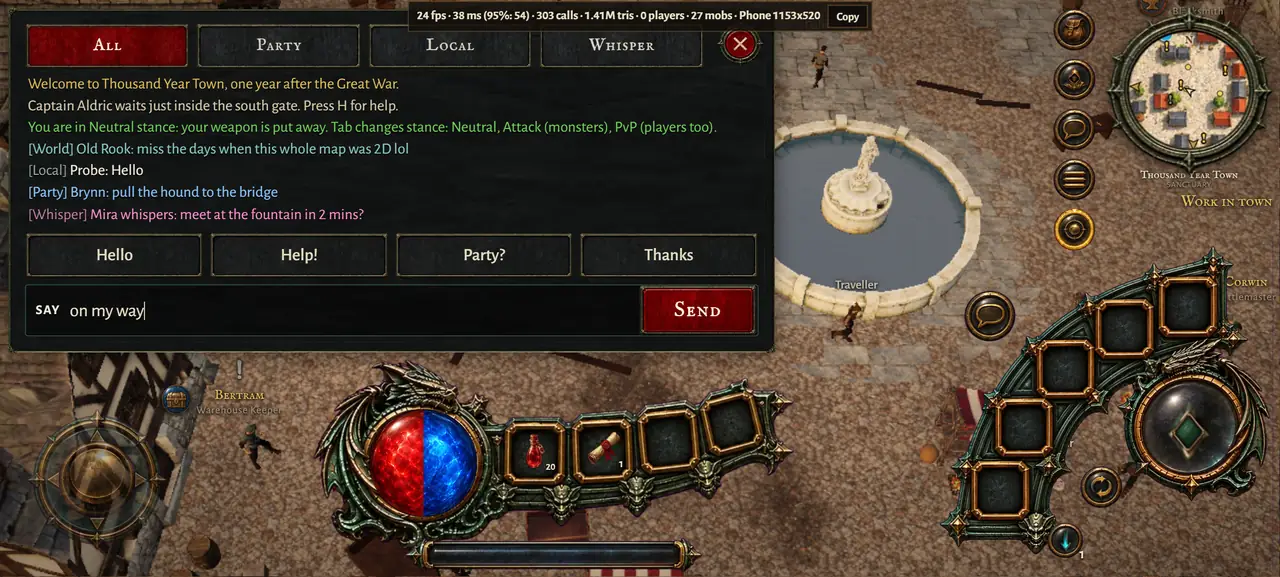
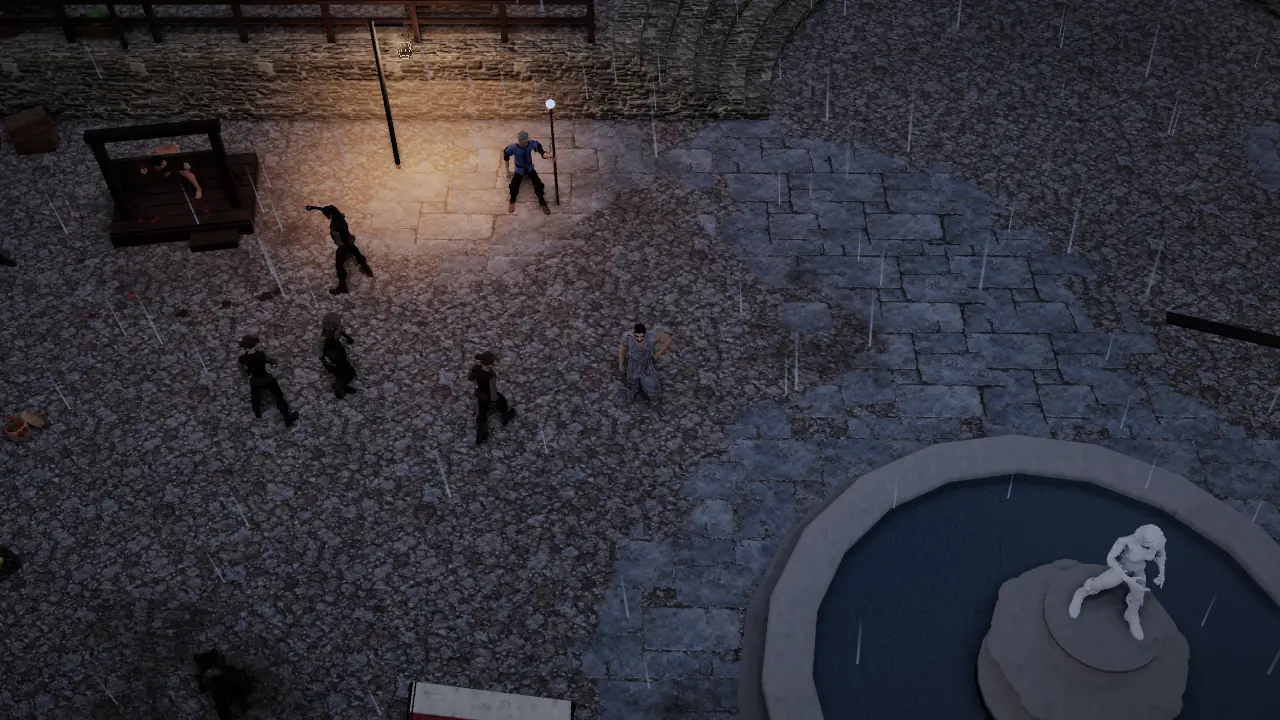
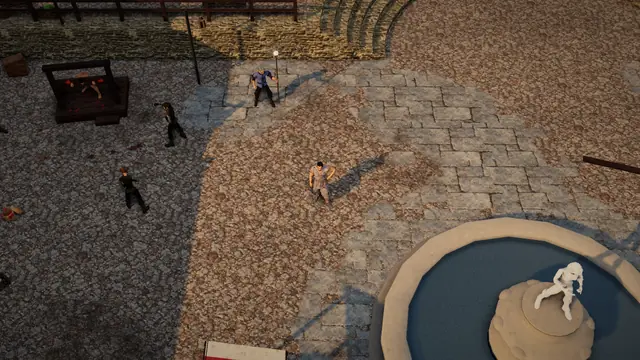
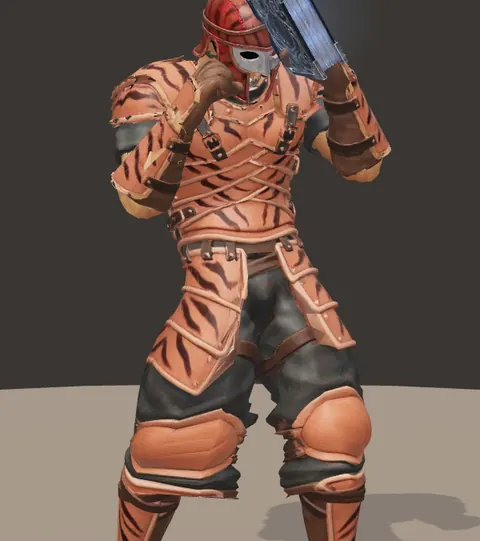
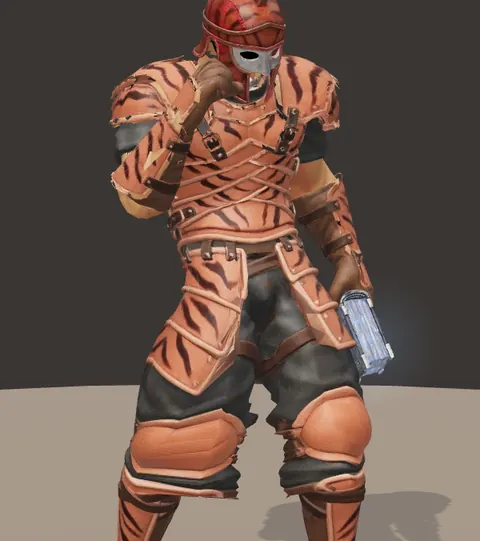
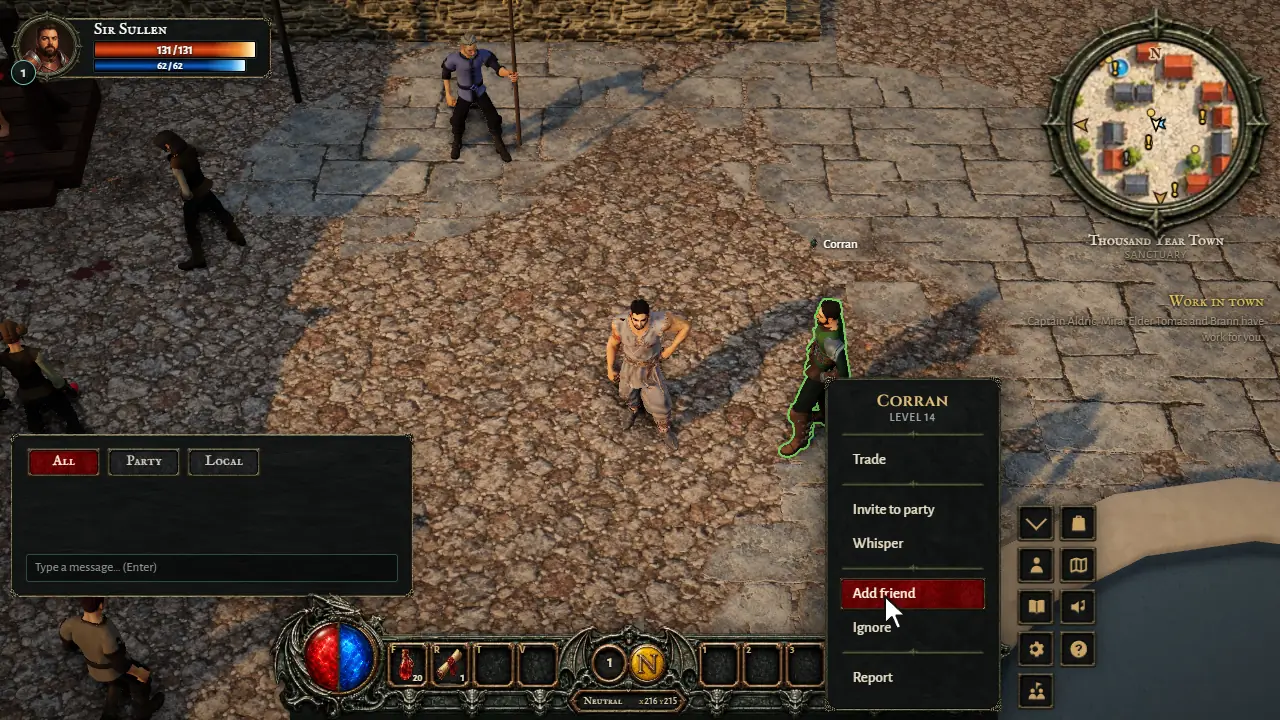
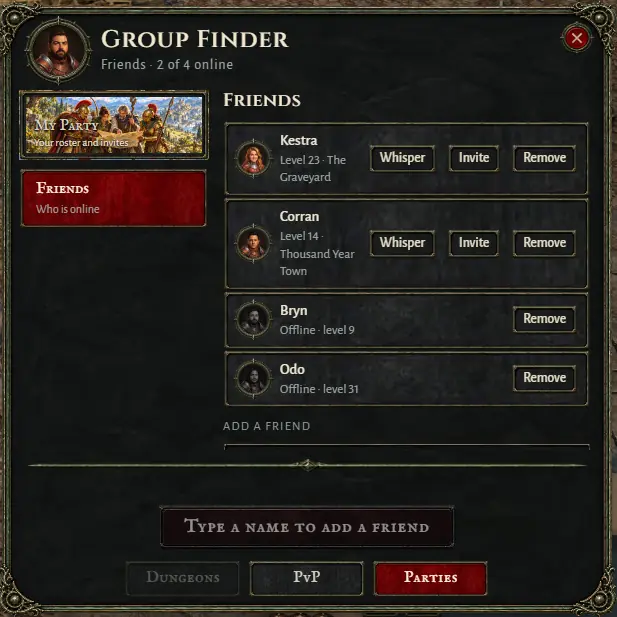
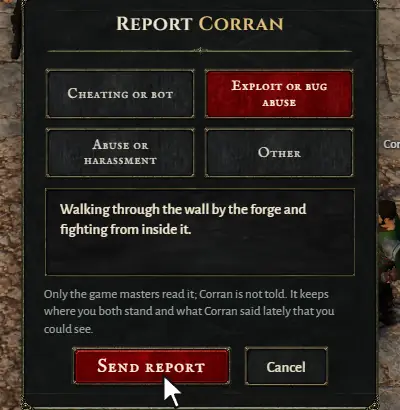
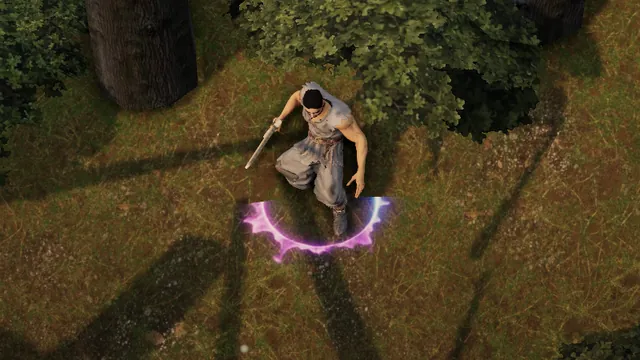
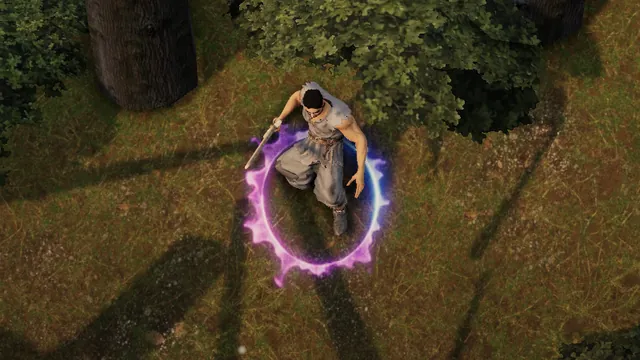
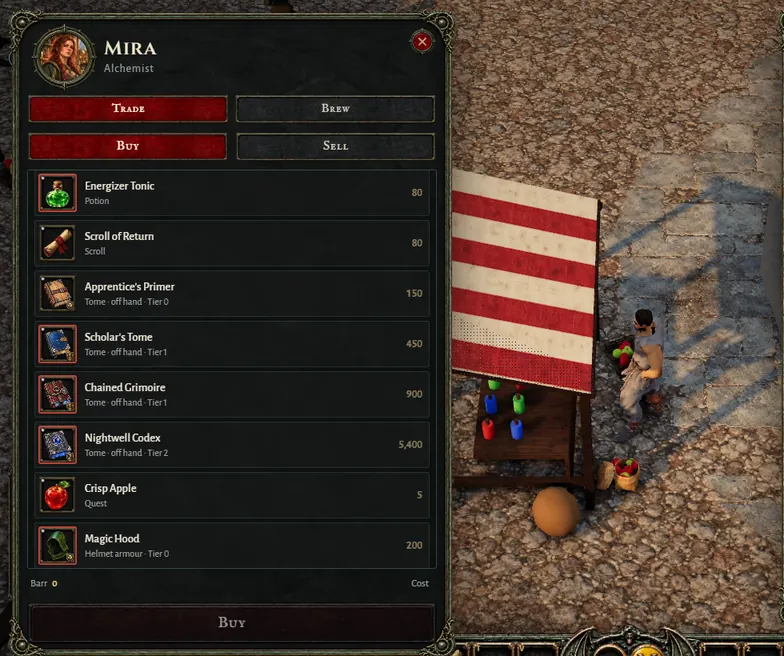
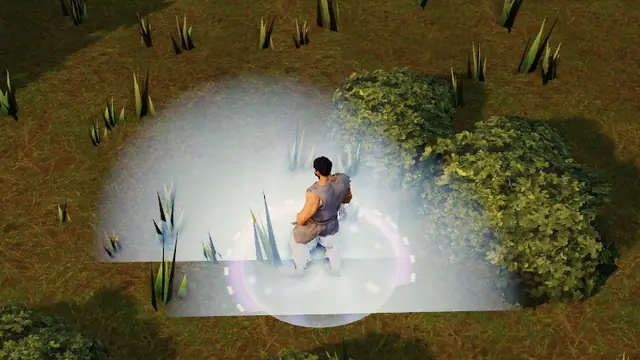
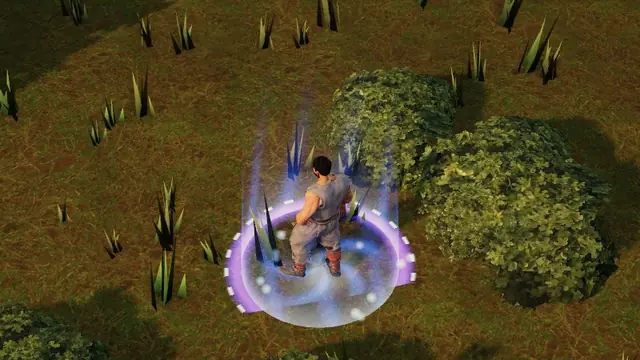
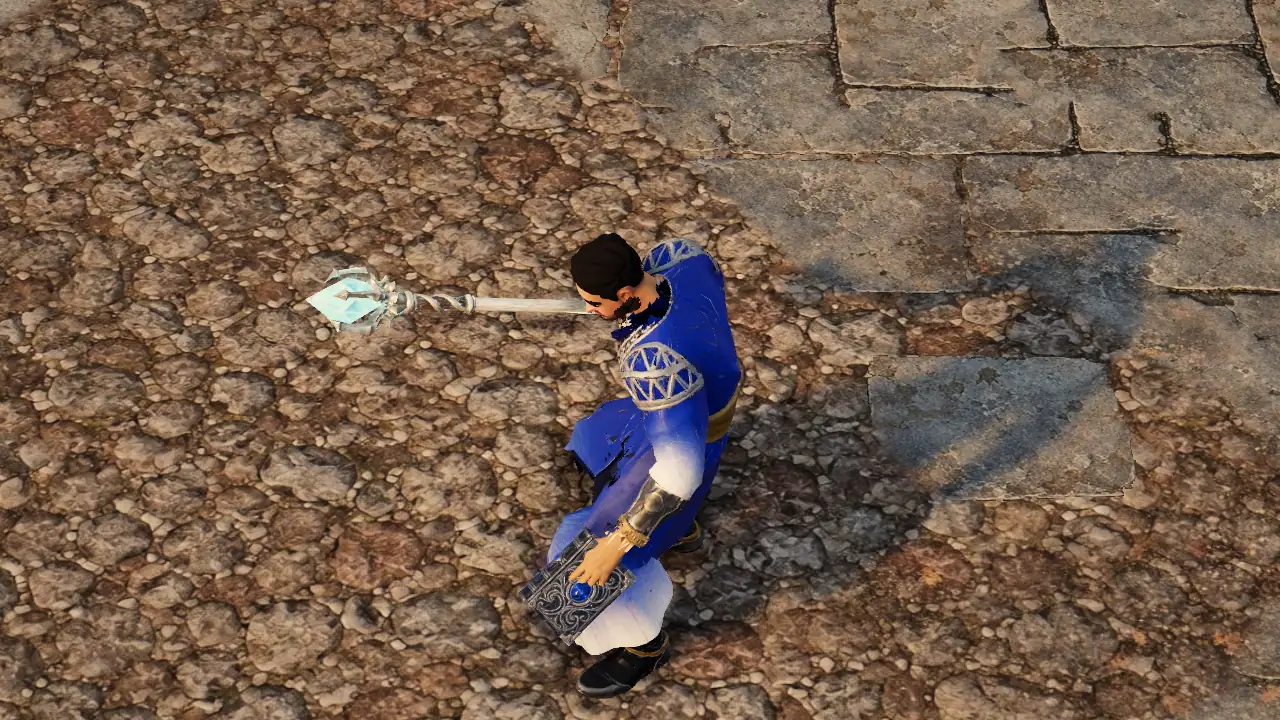

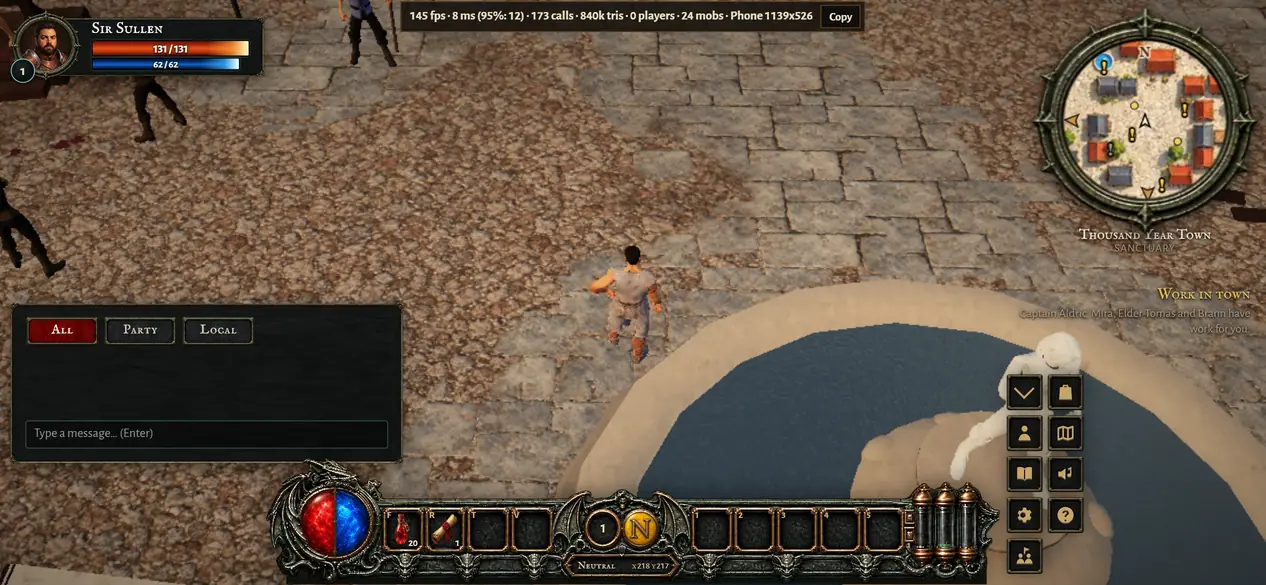
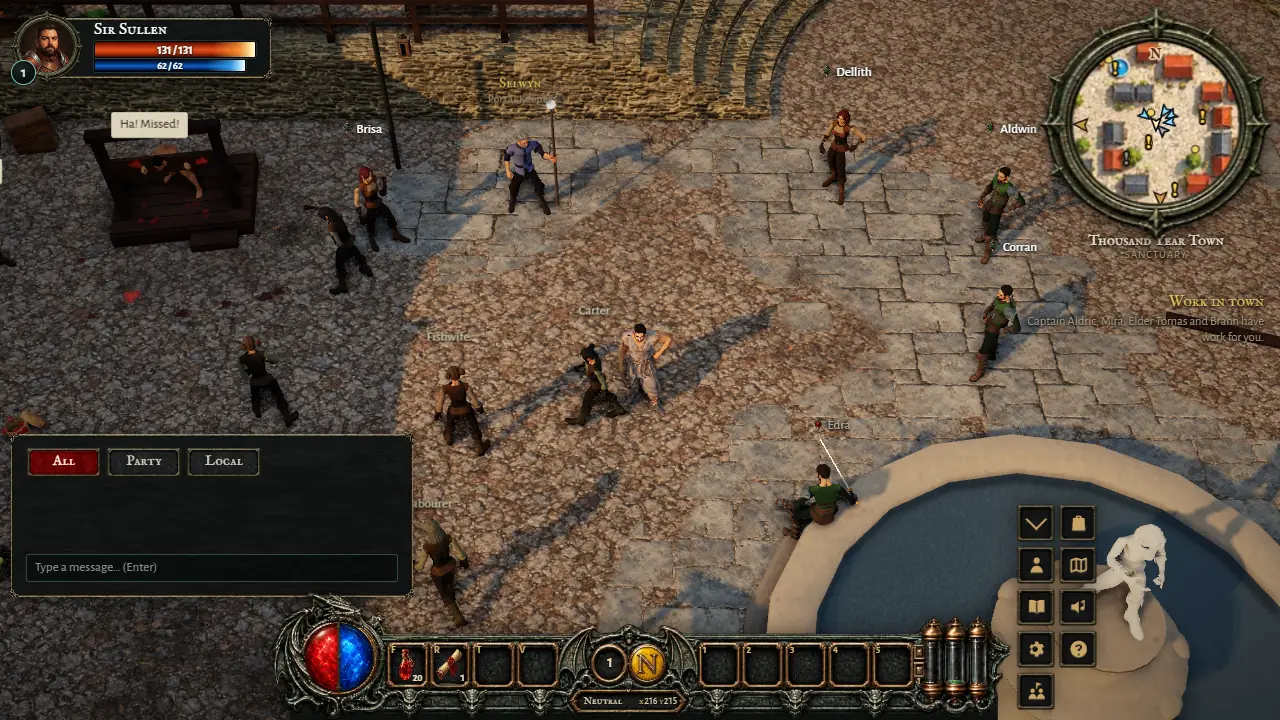
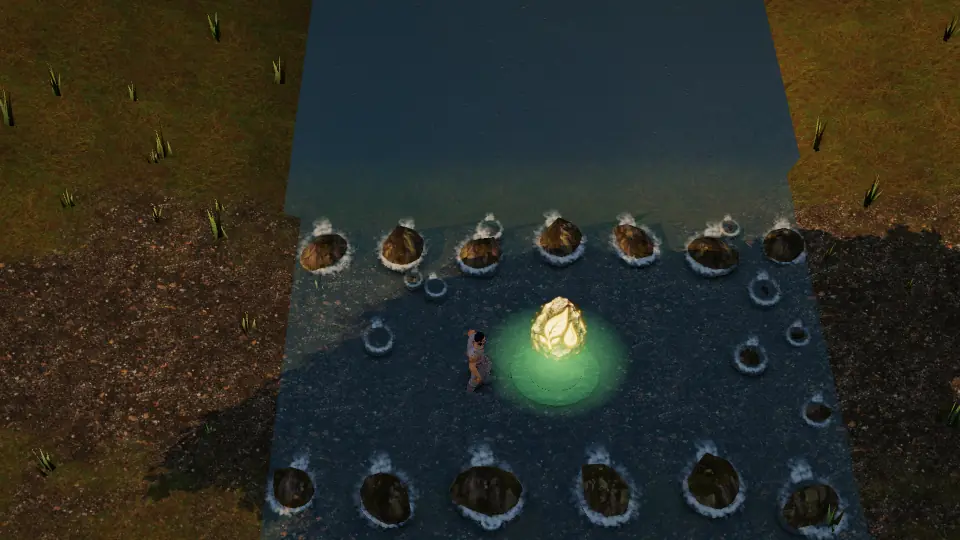

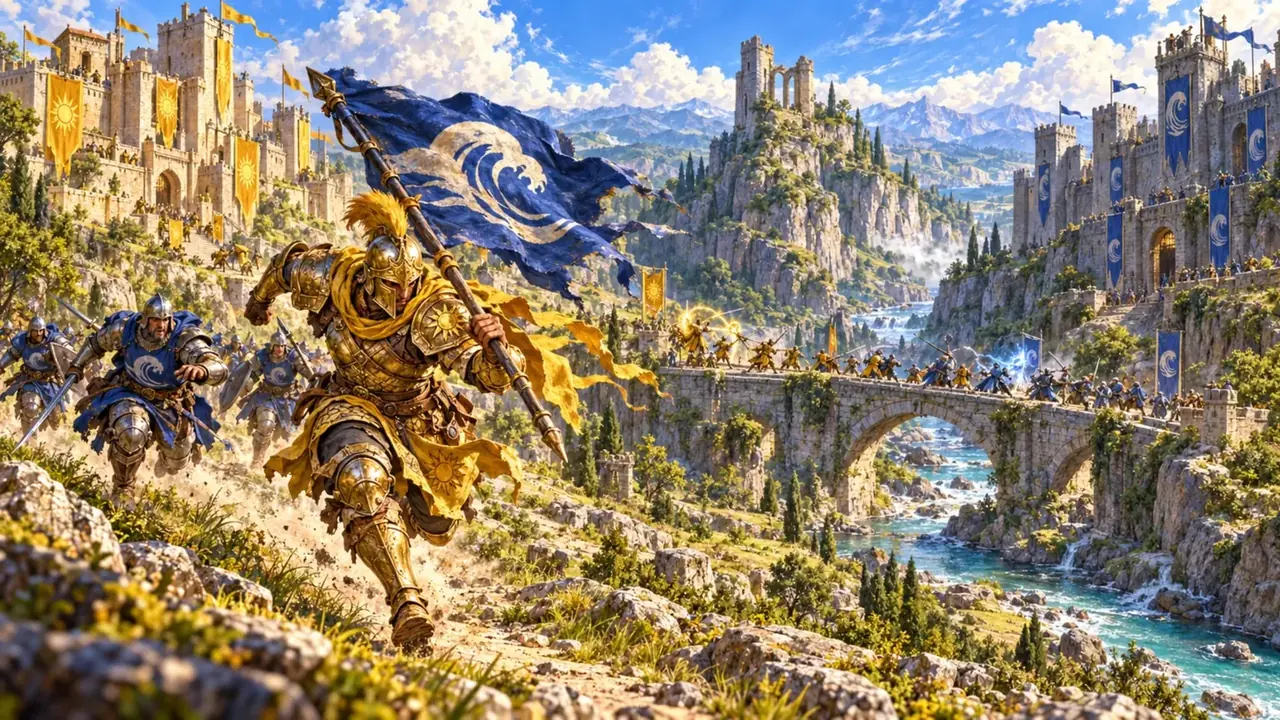
 Swiftness
 Mending
 Fury
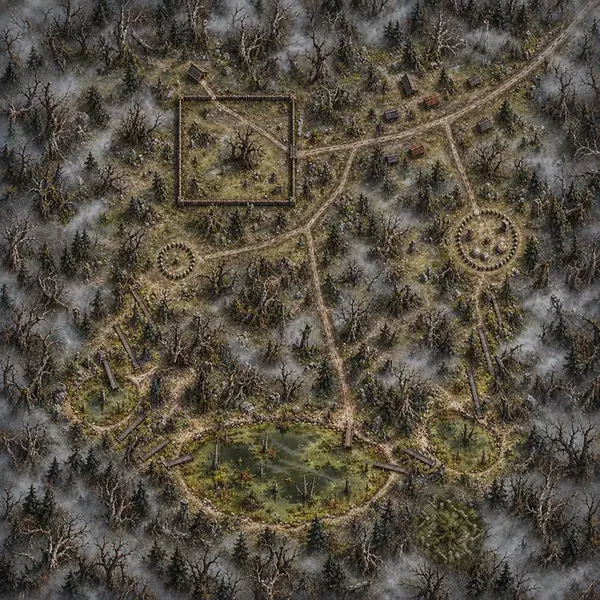
 Triple Slash
 Sword Aura
 Whirlwind
 Axe Aura
 Piercing Blow
 Attack Aura
 Enraged Flurry
 Blow Aura
 Exploding Arrow
 Arrow Aura
 Spell Surge
 Rapid MP Recovery
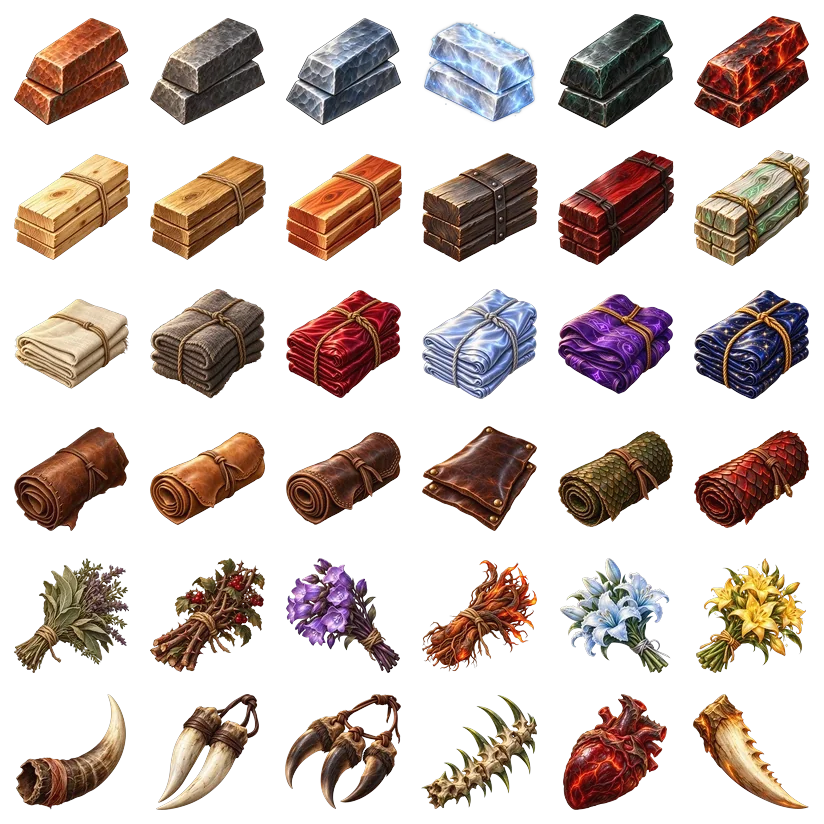
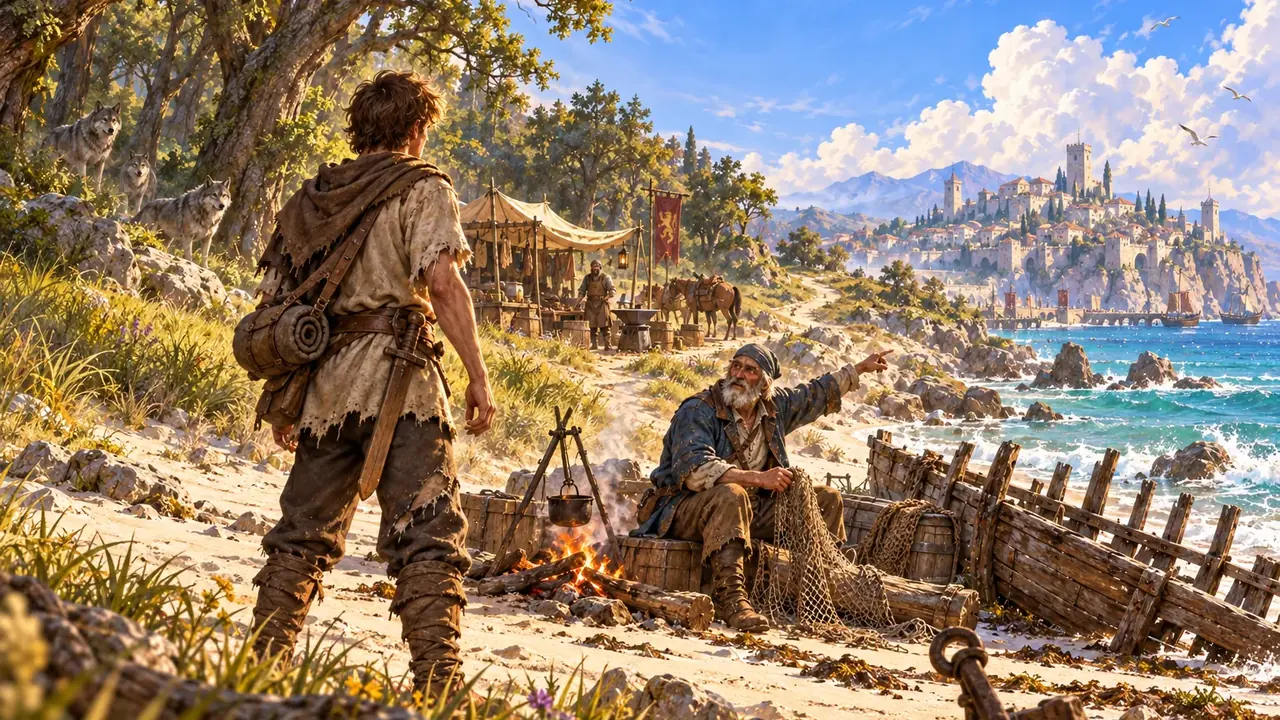
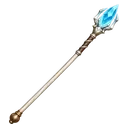
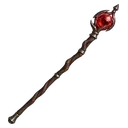
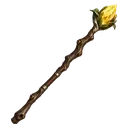
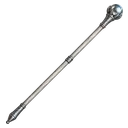
 Neutral
 Attack
 PvP


 Brann
 Mira
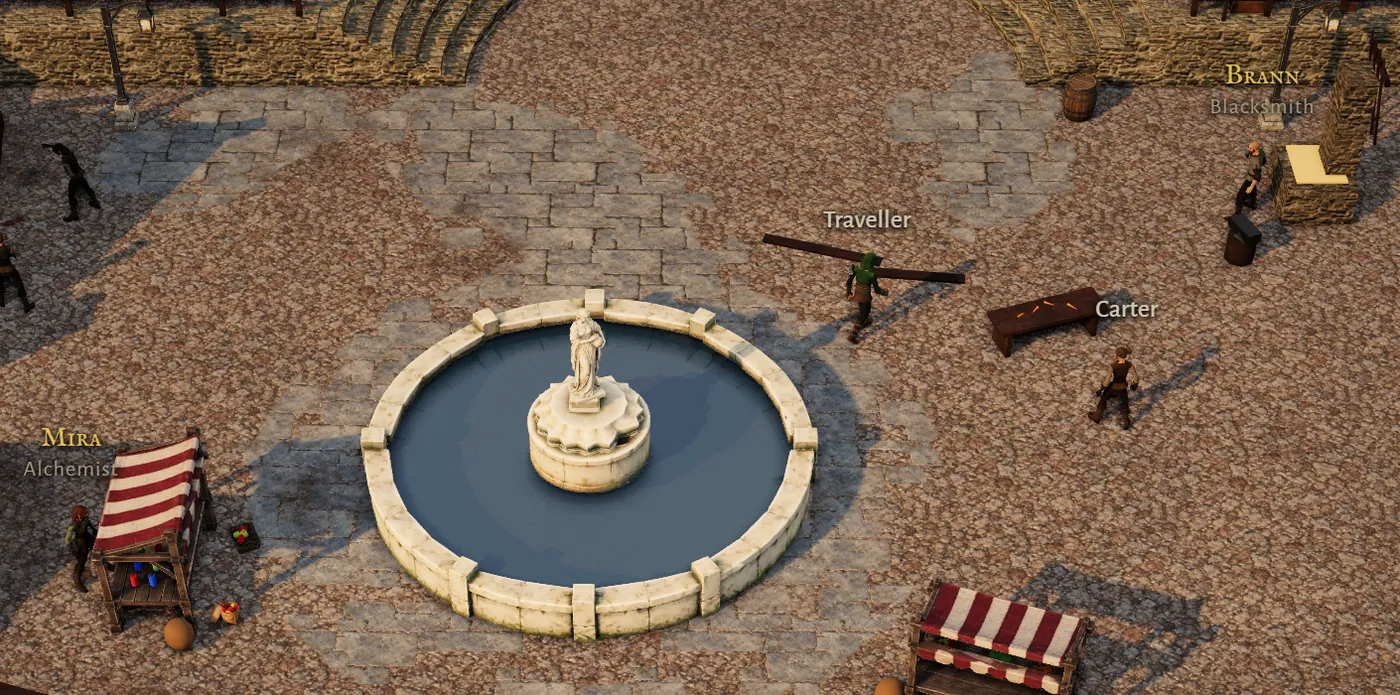
 Healing
 Fireball
 Protection
 Light Arrow
 Cure Poison
 Light Sword
 Flame Bolt
 Spirit Sword
 Poison Curse